

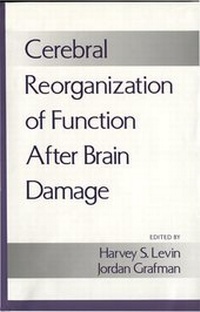
Cerebral Reorganization of Function After Brain Damage
Published on 24. August 2000
Book
Hardback
412 pages
978-0-19-512026-4 (ISBN)
Description
This book integrates neuroscience research on neuroplasticity with clinical investigation of reorganization of function after brain injury, especially from the perspective of eventually translating the findings to rehabilitation. Historical foundationw in neuroplasticity research are presented to provide a perspective for recent findings. Leading investigators synthesize their work with research from other laboratories to provide a current update on neuroanatomic features which enhance enuroplasticity and provide a substrate for reorginaization of function. The capacity for recovery from brain injury associated with focal lesions as compared to diffuse cerebral insult is discussed. Interventions such as environmental enhancement and drugs to enhance reorganizatioin of function after brain injury have been studied in animalmodels and in human studies. Methodologies to study neurophysiological measures, trancranial magnetic stimulation, and computational modeling. Implications of neuroplasticity research for innovations in rehabilitation of persons with brain injury are critically reviewed.
Reviews / Votes
"The purpose of this book is to provide an update of important neuroplasticity research and to identify how this work can be translated into practical gains in the clinical setting. This is an important goal and is largely achieved."--anadian Journal of Surgery, Vol. 44, No 2, April 2001Journal of Nervous and Mental Disease
More details
Language
English
Place of publication
New York
United States
Target group
Professional and scholarly
Illustrations
6 colour plates, 8 halftones, numerous line illustrations
Dimensions
Height: 234 mm
Width: 157 mm
Thickness: 33 mm
Weight
794 gr
ISBN-13
978-0-19-512026-4 (9780195120264)
Copyright in bibliographic data and cover images is held by Nielsen Book Services Limited or by the publishers or by their respective licensors: all rights reserved.
Schweitzer Classification
Other editions
Additional editions
Harvey S. Levin | Jordan Grafman
Cerebral Reorganization of Function after Brain Damage
E-Book
07/2000
1st Edition
OUP eBook
€47.49
Available for download
Persons
Content
Foreword byMary Ellen Cheung:
1: Arthur Benton and Daniel Tranel: Historical Notes on the Reorganization of Function and Neuroplasticity
PART I: NEUROSCIENCE RESEARCH ON NEUROPLASTICITY AND REORGANIZATION OF FUNCTION
2: Jocelyne Bachevalier and Ludise Malkova: Neuropsychological Indices of Early Medical Temporal Lobe Dysfunction in Primates
3: Robert J. Hamm, Meredith D. Temple, Deanna L. Buck, S. Michelle DeFord, and Candace L. Floyd: Cognitive Recovery from Traumatic Brain injury: Results of Post-Traumatic Experimental Interventions
4: E.R. Ergenzinger and T.P. Pons: Growth of New Connections and Adult Reorganizational Plasticity in the Somatosensory System
5: Helen Barbas: Neuroanatomic Basis for Reorganization of Function After Prefrontal Damage in Primates
6: Bryan Kolb and Ian Q. Whishaw: Reorganization of Function After Cortical Lesions in Rodents
7: J. Xu and J.T. Wall: Rapid Reorganization of Subcortical and Cortical Maps in Adult Primates
8: Timothy Schallert, Sondra Bland, J. Leigh Humm, Jennifer Tillerson, Reuben Gonzales, Lawrence Williams, Jaroslaw Aronowski, and James Grotta: Motor Rehabilitation, Use-related Neural Events, and Reorganization of the Brain After Injury
9: Randolph J. Nudo, Scott Barbay, and Jeffrey A. Kleim: Role of Neuroplasticity in Functional Recovery After Stroke
PART II DEVELOPMENTAL STUDIES OF NEUROPLASTICITY
10: Joan Stiles: Spatial Cognitive Development Following Pre- or Perinatal Focal Brain Injury
11: Harvey S. Levin, James Song, Sandra B. Chapman, and Harriet Harward: Neuroplasticity Following Traumatic Diffuse vs. Focal Brain Injury in Children: Studies of Verbal Fluency
12: Goeran Carlsson and Kenneth Hugdahl: Cerebral Reorganization in Children With Congenital Hemiplegia: Evidence From Dichotic Listening Test
13: L.J. Carr: Reorganization of Function After Brain Injury
PART III TECHNIQUES FOR STUDYING NEUROPLASTICITY IN HUMANS
14: Pauline A. Filipek: The Developmental Disorders: Does Plasticity Play a Role?
15: Eric M. Wasserman, Leonardo G. Cohen, and Mark Hallett: Transcranial Magnetic Stimulation as a Tool for Detecting Change in the Organization of the Human Motor System After Central and Peripheral Lesions
16: Timothy C. Rickard: Methodological Issues in fMRI Studies of Plasticity Following Brain Injury
17: Randy L. Buckner and Steven E. Petersen: Neuroimaging of Functional Recovery
18: James A. Reggia, Sharon Goodall, Ken Revett, and Eytan Ruppin: Computational Modeling of the Cortical Response to Focal Damage
PART IV: SYNTHESIS AND IMPLICATIONS FOR REHABILITATION
19: Paul Bach-y-Rita: Conceputal Issues in Neuroplasticity and Reorganization of Function After Brain Injury
1: Arthur Benton and Daniel Tranel: Historical Notes on the Reorganization of Function and Neuroplasticity
PART I: NEUROSCIENCE RESEARCH ON NEUROPLASTICITY AND REORGANIZATION OF FUNCTION
2: Jocelyne Bachevalier and Ludise Malkova: Neuropsychological Indices of Early Medical Temporal Lobe Dysfunction in Primates
3: Robert J. Hamm, Meredith D. Temple, Deanna L. Buck, S. Michelle DeFord, and Candace L. Floyd: Cognitive Recovery from Traumatic Brain injury: Results of Post-Traumatic Experimental Interventions
4: E.R. Ergenzinger and T.P. Pons: Growth of New Connections and Adult Reorganizational Plasticity in the Somatosensory System
5: Helen Barbas: Neuroanatomic Basis for Reorganization of Function After Prefrontal Damage in Primates
6: Bryan Kolb and Ian Q. Whishaw: Reorganization of Function After Cortical Lesions in Rodents
7: J. Xu and J.T. Wall: Rapid Reorganization of Subcortical and Cortical Maps in Adult Primates
8: Timothy Schallert, Sondra Bland, J. Leigh Humm, Jennifer Tillerson, Reuben Gonzales, Lawrence Williams, Jaroslaw Aronowski, and James Grotta: Motor Rehabilitation, Use-related Neural Events, and Reorganization of the Brain After Injury
9: Randolph J. Nudo, Scott Barbay, and Jeffrey A. Kleim: Role of Neuroplasticity in Functional Recovery After Stroke
PART II DEVELOPMENTAL STUDIES OF NEUROPLASTICITY
10: Joan Stiles: Spatial Cognitive Development Following Pre- or Perinatal Focal Brain Injury
11: Harvey S. Levin, James Song, Sandra B. Chapman, and Harriet Harward: Neuroplasticity Following Traumatic Diffuse vs. Focal Brain Injury in Children: Studies of Verbal Fluency
12: Goeran Carlsson and Kenneth Hugdahl: Cerebral Reorganization in Children With Congenital Hemiplegia: Evidence From Dichotic Listening Test
13: L.J. Carr: Reorganization of Function After Brain Injury
PART III TECHNIQUES FOR STUDYING NEUROPLASTICITY IN HUMANS
14: Pauline A. Filipek: The Developmental Disorders: Does Plasticity Play a Role?
15: Eric M. Wasserman, Leonardo G. Cohen, and Mark Hallett: Transcranial Magnetic Stimulation as a Tool for Detecting Change in the Organization of the Human Motor System After Central and Peripheral Lesions
16: Timothy C. Rickard: Methodological Issues in fMRI Studies of Plasticity Following Brain Injury
17: Randy L. Buckner and Steven E. Petersen: Neuroimaging of Functional Recovery
18: James A. Reggia, Sharon Goodall, Ken Revett, and Eytan Ruppin: Computational Modeling of the Cortical Response to Focal Damage
PART IV: SYNTHESIS AND IMPLICATIONS FOR REHABILITATION
19: Paul Bach-y-Rita: Conceputal Issues in Neuroplasticity and Reorganization of Function After Brain Injury