

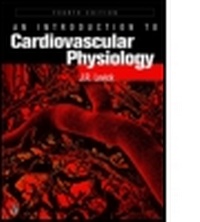
An Introduction to Cardiovascular Physiology, 4Ed
4th Edition
Published on 31. October 2003
Book
Paperback/Softback
432 pages
978-0-340-80921-1 (ISBN)
Description
A good understanding of the physiology of the cardiovascular system is fundamental to understanding cardiovascular disease processes. Thus cardiovascular physiology is a major component of all undergraduate courses in physiology, biomedical science and medicine as well as postgraduate study programmes for MRCP and FRCA.
The extensively revised fourth edition of this well-respected textbook continues to provide all the information that these students and examination candidates will need. Coverage extends from basic outlines of the fundamental principles of how the cardiovascular system works in health and disease, through to more advanced physiological mechanisms and intracellular transduction pathways. The updated text incorporates the major advances in the field since the first edition of 1990, while retaining the original balance and style without excessive, unwieldy expansion. New sections include the contribution of wave reflection to systolic hypertension and the role of kinases in vascular contraction, while increased coverage of myocardial ischaemia and advances in understanding cardiac failure and arrhythmogenesis enhance the clinical relevance of the text.
Other key features of this fourth edition include:
A? Introductory Overviews at the start of many chapters to guide the reader through the material that follows
A? New Concept Boxes provide 'at a glance' outlines of key concepts in cardiovascular physiology
A? Learning Objectives at the start of every chapter and bulleted Summaries at the end provide invaluable directions for study and helpful aids to revision
A? Inclusion of Clinical Cases in a self-assessment format encourages active, problem-based learning and relates the physiology to practical medicine
A? Larger format and new page design for enhanced user-friendliness
A? Over 250 illustrations, many new to this edition, with all line diagrams redrawn in 2-colour for improved clarity
An Introduction to Cardiovascular Physiology continues to provide an up-to-date, comprehensive but accessible account of the fascinating world of cardiovascular physiology, to be referred to often by the student and lecturer alike.
The extensively revised fourth edition of this well-respected textbook continues to provide all the information that these students and examination candidates will need. Coverage extends from basic outlines of the fundamental principles of how the cardiovascular system works in health and disease, through to more advanced physiological mechanisms and intracellular transduction pathways. The updated text incorporates the major advances in the field since the first edition of 1990, while retaining the original balance and style without excessive, unwieldy expansion. New sections include the contribution of wave reflection to systolic hypertension and the role of kinases in vascular contraction, while increased coverage of myocardial ischaemia and advances in understanding cardiac failure and arrhythmogenesis enhance the clinical relevance of the text.
Other key features of this fourth edition include:
A? Introductory Overviews at the start of many chapters to guide the reader through the material that follows
A? New Concept Boxes provide 'at a glance' outlines of key concepts in cardiovascular physiology
A? Learning Objectives at the start of every chapter and bulleted Summaries at the end provide invaluable directions for study and helpful aids to revision
A? Inclusion of Clinical Cases in a self-assessment format encourages active, problem-based learning and relates the physiology to practical medicine
A? Larger format and new page design for enhanced user-friendliness
A? Over 250 illustrations, many new to this edition, with all line diagrams redrawn in 2-colour for improved clarity
An Introduction to Cardiovascular Physiology continues to provide an up-to-date, comprehensive but accessible account of the fascinating world of cardiovascular physiology, to be referred to often by the student and lecturer alike.
Reviews / Votes
Up to date exposition by an experienced and effective teacher; suitable for undergraduates and graduates.BMJ, September 1995 (of the second edition)
Excellent coverage and scientific approach, use of original research figures superb, scholarly book, excellent for bridging between 'text book' and original sources.
Dr Adrian Rees, University of Newcastle upon Tyne
This is an excellent book. I recommend it to all students, from 1st year to postgraduates.
Dr P Fraser, Kings College London
More details
Edition
4th New edition
Language
English
Place of publication
London
United Kingdom
Publishing group
Taylor & Francis Ltd
Target group
College/higher education
Professional and scholarly
Edition type
New edition
Illustrations
295 illus
Dimensions
Height: 270 mm
Width: 202 mm
ISBN-13
978-0-340-80921-1 (9780340809211)
Copyright in bibliographic data and cover images is held by Nielsen Book Services Limited or by the publishers or by their respective licensors: all rights reserved.
Schweitzer Classification
Other editions
New editions
Neil Herring | David J. Paterson
Levick's Introduction to Cardiovascular Physiology
Book
04/2018
6th Edition
CRC Press
€56.00
Shipment within 15-20 days
Rodney J. Levick
An Introduction to Cardiovascular Physiology 5E
Book
12/2009
5th Edition
Hodder Arnold
€65.79
Article exhausted; check for reprint
Person
J. Rodney Levick is Professor of Physiology at St George's Hospital Medical School, University of London, UK
Content
A note on active and problem-based learning
Overview of the cardiovascular system
The cardiac cycle
The cardiac myocyte: excitation and contraction
Initiation and nervous control of the heart
Electrocardiography and arrhythmias
Control of stroke volume and cardiac output
Assessment of cardiac output and peripheral pulse
Haemodynamics: flow, pressure and resistance
The endothelial cell
The microcirculation and solute exchange
Circulation of fluid between plasma, interstitium and lymph
Vascular smooth muscle: excitation, contraction & relaxation
Control of blood vessels I: Intrinsic control
Control of blood vessels II: Extrinsic control
Specialisation in individual circulations
Cardiovascular receptors, reflexes and central control
Co-ordinated cardiovascular responses
Cardiovascular responses in pathological situations
Clinical cases for problem-based learning
Overview of the cardiovascular system
The cardiac cycle
The cardiac myocyte: excitation and contraction
Initiation and nervous control of the heart
Electrocardiography and arrhythmias
Control of stroke volume and cardiac output
Assessment of cardiac output and peripheral pulse
Haemodynamics: flow, pressure and resistance
The endothelial cell
The microcirculation and solute exchange
Circulation of fluid between plasma, interstitium and lymph
Vascular smooth muscle: excitation, contraction & relaxation
Control of blood vessels I: Intrinsic control
Control of blood vessels II: Extrinsic control
Specialisation in individual circulations
Cardiovascular receptors, reflexes and central control
Co-ordinated cardiovascular responses
Cardiovascular responses in pathological situations
Clinical cases for problem-based learning