

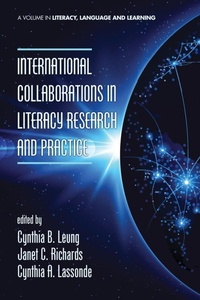
International Collaborations in Literacy Research and Practice
Published on 2. January 2014
Book
Paperback/Softback
326 pages
978-1-62396-565-5 (ISBN)
Description
Literacy researchers and educators are currently involved in exciting international literacy projects. However, many in the field are not aware of these initiatives. In compiling this edited volume, our intent is to provide a resource book for university instructors and research faculty with examples of international literacy projects and what was learned from the projects. Chapter contributors offer stories of real people who collaborate across nations to exchange ideas, promote literacy development, and increase global understandings. The literacy initiatives presented in this book show how literacy colleagues have provided opportunities for students and educators of different countries to communicate in meaningful ways. Through international literacy projects and research, participants work to forge relationships based on mutual respect, despite their differing cultures and languages. They see their work as based on the mutual connectedness to the human community.
More details
Series
Language
English
Place of publication
United States
Publishing group
Emerald Publishing Inc
Dimensions
Height: 234 mm
Width: 156 mm
Thickness: 18 mm
Weight
497 gr
ISBN-13
978-1-62396-565-5 (9781623965655)
Copyright in bibliographic data and cover images is held by Nielsen Book Services Limited or by the publishers or by their respective licensors: all rights reserved.
Schweitzer Classification
Other editions
Additional editions
Cynthia B. Leung | Janet C. Richards
International Collaborations in Literacy Research and Practice
E-Book
01/2014
1st Edition
Information Age Publishing
from
€62.33
Available for download
Content
Introduction, Alan E. Farstrup.
Chapter 1. Framing Collaborative Efforts for Literacy, Cynthia B. Leung, Janet C. Richards, and Cynthia A. Lassonde.
Part 1: Literature as a Lens for Understanding Other Cultures.
Chapter 2. Ethiopia for Teachers: A Collaborative Celebration of Culture and Literacy, Laurie J. Curtis.
Chapter 3. United Arab Emirate and U.S. Preservice Teachers Share Perspectives in Online Literature Circle Discussions, Patience A. Sowa and Cynthia M. Schmidt.
Chapter 4. Reading Across Continents: Creating Adolescent Literacy Leaders in Washington, D.C., Abuja, Nigeria, and Accra, Ghana, Elizabeth V. Primas and Liane Rosenblatt.
Chapter 5. An Exploratory Inquiry of Wordless Picture Book Oral Compositions Across Cultures, Carole Janisch, Xiaoming Liu, Amma Akrofi, and Mary Napoli.
Part 2: Teaching and Researching Reading and Writing in International Settings.
Chapter 6. Getting Past Didactic Instruction: Understanding the Literacy Curriculum for Students with Developmental Disabilities in Tanzania, Angela Stone-MacDonald.
Chapter 7. Chinese Adolescents and U.S. Teachers Meet in a Digital Story Writing Workshop, Marylou M. Matoush, Danling Fu, and C. William "Sandy" Miller.
Chapter 8. Preparing U.S. Preservice Teachers for Literacy Instruction Through Student Teaching in New Zealand, Julie Winneur Ankrum and Allan Nail.
Chapter 9. Increasing U.S. Inservice Teachers' Cultural Awareness Through Summer Teaching in China, Cheryl M. North and Nancy Rankie Shelton.
Part 3: Collaborating for School-Wide Literacy Initiatives and Professional Development.
Chapter 10. Promoting Reading Achievement in Malawian Primary Schools: An International Collaboration, Misty Sailors, Henri Chilora, Davie Kaambankadzanja, and James V. Hoffman.
Chapter 11. The Guatemalan Literacy Project: Collaboration Among Literacy Educators, Mayra C. Daniel, Marcia Mondschein, and Lucrecia de Palomo.
Chapter 12. You Are One of Us: Forging the Development of Dialogic Communities of Practice in the Bahamas, Gertrude Tinker Sachs.
Chapter 13. Improving Elementary School Literacy in Mauritius Through Project ZEP, William L. Edwards, Janet Condy, and Sakil Malik.
Part 4: Collaborating for Critical Thinking Through Professional Development.
Chapter 14. The Reading and Writing for Critical Thinking (RWCT) Project: Working in the Thai Jungle with Indigenous Myanmar (Burmese) Teachers, Janet C. Richards.
Chapter 15. Active Learning and Critical Thinking: A Higher Education Professional Development Program in Croatia, Sharon B. Kletzien, Vlasta Vizek Vidovic, and Visnja Grozdanic.
Chapter 1. Framing Collaborative Efforts for Literacy, Cynthia B. Leung, Janet C. Richards, and Cynthia A. Lassonde.
Part 1: Literature as a Lens for Understanding Other Cultures.
Chapter 2. Ethiopia for Teachers: A Collaborative Celebration of Culture and Literacy, Laurie J. Curtis.
Chapter 3. United Arab Emirate and U.S. Preservice Teachers Share Perspectives in Online Literature Circle Discussions, Patience A. Sowa and Cynthia M. Schmidt.
Chapter 4. Reading Across Continents: Creating Adolescent Literacy Leaders in Washington, D.C., Abuja, Nigeria, and Accra, Ghana, Elizabeth V. Primas and Liane Rosenblatt.
Chapter 5. An Exploratory Inquiry of Wordless Picture Book Oral Compositions Across Cultures, Carole Janisch, Xiaoming Liu, Amma Akrofi, and Mary Napoli.
Part 2: Teaching and Researching Reading and Writing in International Settings.
Chapter 6. Getting Past Didactic Instruction: Understanding the Literacy Curriculum for Students with Developmental Disabilities in Tanzania, Angela Stone-MacDonald.
Chapter 7. Chinese Adolescents and U.S. Teachers Meet in a Digital Story Writing Workshop, Marylou M. Matoush, Danling Fu, and C. William "Sandy" Miller.
Chapter 8. Preparing U.S. Preservice Teachers for Literacy Instruction Through Student Teaching in New Zealand, Julie Winneur Ankrum and Allan Nail.
Chapter 9. Increasing U.S. Inservice Teachers' Cultural Awareness Through Summer Teaching in China, Cheryl M. North and Nancy Rankie Shelton.
Part 3: Collaborating for School-Wide Literacy Initiatives and Professional Development.
Chapter 10. Promoting Reading Achievement in Malawian Primary Schools: An International Collaboration, Misty Sailors, Henri Chilora, Davie Kaambankadzanja, and James V. Hoffman.
Chapter 11. The Guatemalan Literacy Project: Collaboration Among Literacy Educators, Mayra C. Daniel, Marcia Mondschein, and Lucrecia de Palomo.
Chapter 12. You Are One of Us: Forging the Development of Dialogic Communities of Practice in the Bahamas, Gertrude Tinker Sachs.
Chapter 13. Improving Elementary School Literacy in Mauritius Through Project ZEP, William L. Edwards, Janet Condy, and Sakil Malik.
Part 4: Collaborating for Critical Thinking Through Professional Development.
Chapter 14. The Reading and Writing for Critical Thinking (RWCT) Project: Working in the Thai Jungle with Indigenous Myanmar (Burmese) Teachers, Janet C. Richards.
Chapter 15. Active Learning and Critical Thinking: A Higher Education Professional Development Program in Croatia, Sharon B. Kletzien, Vlasta Vizek Vidovic, and Visnja Grozdanic.