

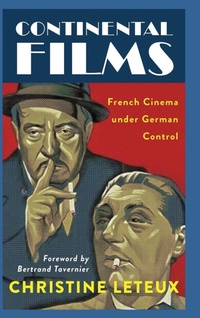
Continental Films
French Cinema Under German Control
Published on 30. November 2022
Book
Hardback
264 pages
978-0-299-33980-7 (ISBN)
Description
From 1940 to 1944, the German-owned Continental Films dominated the French film landscape, producing thirty features throughout the Nazi occupation. Charged with producing entertaining and profitable films rather than propaganda, producer Alfred Greven employed some of the greatest French actors and most prestigious directors of the time, including Maurice Tourneur, Henri Decoin, Henri-Georges Clouzot, and Marcel CarnE.
Using recently opened archival documents, including reams of testimony from the Epuration (purification) hearings conducted shortly after the war, Christine Leteux has produced the most authoritative and complete history of the company and its impact on the French film industry-both during the war and after. She captures the wide range of responses to the firm from those who were eager to work for a company whose ideology matched their own, to others who reluctantly accepted contracts out of necessity, to those who abhorred the company but felt compelled to participate in order to protect family members from Nazi reprisals. She examines not only the formation and management of Continental Films but also the personalities involved, the fraught and often deadly political circumstances of the period, the critical reception of the films, and many of the more notorious and controversial events.
As Bertrand Tavernier explains in his foreword, Leteux overturns many of the preconceptions and clichEs that have come to be associated with Continental Films. Published to rave reviews in French and translated by the author into English, this work shatters expectations and will reinvigorate study of a lesser-known but significant period of French film history.
Using recently opened archival documents, including reams of testimony from the Epuration (purification) hearings conducted shortly after the war, Christine Leteux has produced the most authoritative and complete history of the company and its impact on the French film industry-both during the war and after. She captures the wide range of responses to the firm from those who were eager to work for a company whose ideology matched their own, to others who reluctantly accepted contracts out of necessity, to those who abhorred the company but felt compelled to participate in order to protect family members from Nazi reprisals. She examines not only the formation and management of Continental Films but also the personalities involved, the fraught and often deadly political circumstances of the period, the critical reception of the films, and many of the more notorious and controversial events.
As Bertrand Tavernier explains in his foreword, Leteux overturns many of the preconceptions and clichEs that have come to be associated with Continental Films. Published to rave reviews in French and translated by the author into English, this work shatters expectations and will reinvigorate study of a lesser-known but significant period of French film history.
More details
Series
Language
English
Place of publication
Wisconsin
United States
Target group
Professional and scholarly
Product notice
Laminated cover
Illustrations
31 b&w illus
Dimensions
Height: 232 mm
Width: 155 mm
Thickness: 20 mm
Weight
524 gr
ISBN-13
978-0-299-33980-7 (9780299339807)
Copyright in bibliographic data and cover images is held by Nielsen Book Services Limited or by the publishers or by their respective licensors: all rights reserved.
Schweitzer Classification
Persons
Christine Leteux is the author of the biographies Albert Capellani: Cinéaste du romanesque (self-translated into English as Albert Capellani: Pioneer of the Silent Screen) and Maurice Tourneur: Réalisateur sans frontières. She is the translator of several books by British film historian and filmmaker Kevin Brownlow and the winner of the Raymond Chirat Prize, awarded by the Lumière Institute in Lyon.
Content
Preface
Prologue
Chapter 1: Paris, Autumn 1940
Chapter 2: Alfred Greven
Chapter 3: The beginnings of a society
Chapter 4: Early productions
Chapter 5: Decoin and Greven
Chapter 6: Henri-Georges Clouzot, scriptwriter
Chapter 7: Les Inconnus dans la maison (The Strangers in the House)
Chapter 8: Greven's empire
Chapter 9: Leaving Continental
Chapter 10: The Russians of Billancourt
Chapter 11: A Trip to Berlin
Chapter 12: The Harry Baur affair
Chapter 13: Filming in the afternoon
Chapter 14: New directors
Chapter 15: The Caprices affair
Chapter 16: Richard Pottier
Chapter 17: Maurice Tourneur
Chapter 18: La Main du diable (Carnival of Sinners)
Chapter 19: Maneuvers in a neutral zone
Chapter 20: Documentaries
Chapter 21: Le Corbeau (The Raven)
Chapter 22: Les AnnEes difficiles (Difficult Years)
Chapter 23: La Vie de plaisir (Life of Pleasure)
Chapter 24: Endgame
Chapter 25: Purge
Chapter 26: Greven's last years
Filmography
Bibliography
Prologue
Chapter 1: Paris, Autumn 1940
Chapter 2: Alfred Greven
Chapter 3: The beginnings of a society
Chapter 4: Early productions
Chapter 5: Decoin and Greven
Chapter 6: Henri-Georges Clouzot, scriptwriter
Chapter 7: Les Inconnus dans la maison (The Strangers in the House)
Chapter 8: Greven's empire
Chapter 9: Leaving Continental
Chapter 10: The Russians of Billancourt
Chapter 11: A Trip to Berlin
Chapter 12: The Harry Baur affair
Chapter 13: Filming in the afternoon
Chapter 14: New directors
Chapter 15: The Caprices affair
Chapter 16: Richard Pottier
Chapter 17: Maurice Tourneur
Chapter 18: La Main du diable (Carnival of Sinners)
Chapter 19: Maneuvers in a neutral zone
Chapter 20: Documentaries
Chapter 21: Le Corbeau (The Raven)
Chapter 22: Les AnnEes difficiles (Difficult Years)
Chapter 23: La Vie de plaisir (Life of Pleasure)
Chapter 24: Endgame
Chapter 25: Purge
Chapter 26: Greven's last years
Filmography
Bibliography