


A View of the River
Published on 30. June 1994
Book
Hardback
310 pages
978-0-674-93732-1 (ISBN)
Description
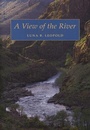
With the Midwest under water, America had a chance to see how effectively it had "improved" its rivers. Too often physical changes made to a river conflict with natural processes, resulting in - rather than alleviating - damage. Applying available knowledge on how rivers form and act could prevent such problems. In this book Luna Leopold seeks to organize such knowledge, presenting a coherent description of rivers, their shape, size, organization and action, along with a consistent theory that explains much of the observed character of channels. Grounded in hydraulics, geomorphology and surveying, as well as in extensive fieldwork on rivers in the eastern and Rocky Mountain states, Leopold's view of a river is at once technical and personal, providing both a firm foundation for understanding the behaviour of rivers - including instructions for getting started in backyard hydrology - and a wealth of firsthand observations by a thoughtful and experienced scientist. It should be of immediate interest and great use as researchers seek to develop, preserve and appreciate the earth's most fluid natural resource.
More details
Language
English
Place of publication
Cambridge, Mass
United States
Target group
College/higher education
Professional and scholarly
Illustrations
24 halftones, 103 line illustrations, 14 tables, indexes
Dimensions
Height: 242 mm
Width: 172 mm
Weight
600 gr
ISBN-13
978-0-674-93732-1 (9780674937321)
Copyright in bibliographic data is held by Nielsen Book Services Limited or its licensors: all rights reserved.
Schweitzer Classification
Other editions
New editions
Luna B. Leopold
A View of the River
Book
02/2006
Harvard University Press
€58.38
Shipment within 15-20 days
Content
The river channel; river measurement; down the channel system; meanders and bars; distribution of discharge in space and time; rivers of the world; flow variability and floods; relationships between channel and discharge; a field example - watts branch; the hydraulic geometry; sediment load; the drainage network; energy utilization; river morphology - the most probable state.