

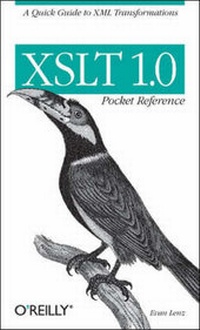
XSLT 1.0 Pocket Reference
A Quick Guide to XML Transformations
1st Edition
Published on 20. September 2005
Book
Paperback/Softback
176 pages
978-0-596-10008-7 (ISBN)
Description
XSLT is an essential tool for converting XML into other kinds of documents: HTML, PDF file, and many others. It's a critical technology for XML-based platforms such as Microsoft.NET, Sun Microsystems' Sun One, as well as for most web browsers and authoring tools. As useful as XSLT is, however, most people have a difficult time getting used to its peculiar characteristics. The ability to use advanced techniques depends on a clear and exact understanding of how XSLT templates work and interact.
The XSLT 1.0 Pocket Reference from O'Reilly wants to make sure you achieve that level of understanding. With its concise approach, this handy pocket guide quickly gets you up to speed on XSLT 1.0 so you can covert XML like a seasoned pro. In addition to covering the basics of stylesheet structure, it also explains how to:
* use template rules
* create a result tree
* apply conditional processing
* transform multiple source documents
* employ number formatting
Thanks to their convenient, quick-reference format, O'Reilly's Pocket References spare you from having to hunt through larger books for answers. They deliver just what you need to get the job done in a timely fashion. And the XSLT 1.0 Pocket Reference is no different--it's the ideal companion to have at your desk when you need an answer fast.
More details
Other editions
Additional editions
E-Book
08/2005
1st Edition
O'Reilly
€7.99
Available for download
E-Book
08/2005
O'Reilly
€6.49
Available for download
Person
Evan Lenz is an application developer whose primary expertise is in XSLT. As a member of the W3C XSL Working Group, he has been contributing to the development of XPath 2.0, XSLT 2.0, and XQuery 1.0. He has spoken at various XML conferences and helped author books including Wrox's "Professional XML, 2nd Edition", and "Early Adopter XQuery" (foreword). Evan holds a Bachelor of Music degree from Wheaton College, with majors in Piano Performance and Philosophy. He currently lives in Seattle, Washington, with his wife Lisa and son Samuel. Website: http://www.xmlportfolio.com.
Content
1. Data Model Node Types Node Properties 2. The XPath Language Data Types Expression Context Kinds of Expressions Node-Set Expressions Number Expressions String Expressions Boolean Expressions 3. How XSLT Works Stylesheet Structure Processing Model Template Rule Content Whitespace Stripping Serializing the Result Tree XSLT Elements by Use Case 4. Elements Top-Level Elements Instructions Special Elements QNames Element Reference 5. Functions XPath Functions XSLT Functions Data Type Conversions Function Reference 6. Extending XSLT Extension Functions Extension Elements EXSLT EXSLT-Common EXSLT-Dates and Times EXSLT-Functions EXSLT-Math EXSLT-Random EXSLT-Sets EXSLT-Dynamic EXSLT-Regular Expressions EXSLT-Strings Appendix A. XPath 1.0 Grammar Appendix B. XSLT Pattern Grammar Index