

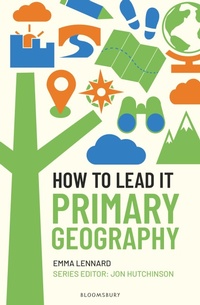
How to Lead it: Primary Geography
Published on 11. September 2025
Book
Paperback/Softback
160 pages
978-1-80199-624-2 (ISBN)
Description
Finding it hard to know what to prioritise as subject lead or how to work out which research is relevant and how it applies to your subject? The How to Lead It series are the go-to guides for primary subject leads in schools and trusts. In them you will find:
- clear summaries of relevant research and thinking around best practice
- age-specific and inclusive classroom examples
- case studies
- reflective questions
- suggestions for short PD sessions with colleagues
Everything in the book is applied thoughtfully to the specific subject area of geography. These books enable busy subject leaders to confidently make good decisions for effective teaching and impactful curricula.
All the key elements of the primary geography curriculum are explored including curriculum design, assessment, writing, questioning, fieldwork and map work as well as support on how to approach research and a step-by-step guide to implementing changes in realistic and inclusive ways.
- clear summaries of relevant research and thinking around best practice
- age-specific and inclusive classroom examples
- case studies
- reflective questions
- suggestions for short PD sessions with colleagues
Everything in the book is applied thoughtfully to the specific subject area of geography. These books enable busy subject leaders to confidently make good decisions for effective teaching and impactful curricula.
All the key elements of the primary geography curriculum are explored including curriculum design, assessment, writing, questioning, fieldwork and map work as well as support on how to approach research and a step-by-step guide to implementing changes in realistic and inclusive ways.
Reviews / Votes
How to Lead It: Primary Geography is an essential guide for anyone involved in shaping and delivering geography education in the primary schools. This insightful book supports us to bridge theory and practice, offering clear, research-informed strategies to deepen geographical understanding in the classroom. From curriculum design to assessment, cognitive science to fieldwork, it provides practical tools and thoughtful reflection for developing excellent young geographers in our primary schools. Whether you're a subject leader, classroom teacher, or senior leader, this book is a wonderful companion for making geography meaningful and accessible for all children. -- Seamus Gibbons * Executive Principal of 5 Primary Schools in London * How to Lead It: Primary Geography provides a comprehensive guide for leading the subject in your school. Ms Lennard eloquently synthesises contemporary research in curriculum and pedagogy with her own professional expertise to provide the reader with a consummate intellectual and practical resource. This includes teaching mapwork, fieldwork, SEND, where to find research but also teaching about places, space and a sense of belonging. Geography's role in developing a sense of belonging is too often overlooked but of great value in helping children to develop identity and to establish roots. -- Dr Alex Standish * Associate Professor of Geography, UCL Institute of Education * The perennial challenge for primary leaders is supporting colleagues to teach everything well-often without specialist training or time. This series meets that challenge head on. It's full of evidence-based strategies that will help leaders to build powerful, knowledge-rich curriculums and teaching practices in a range of subjects. -- Daisy Christodoulou * Director of Education, No More Marking *More details
Series
Language
English
Place of publication
United Kingdom
Publishing group
Bloomsbury Publishing PLC
Target group
Primary & secondary/elementary & high school
Dimensions
Height: 152 mm
Width: 233 mm
Thickness: 11 mm
Weight
250 gr
ISBN-13
978-1-80199-624-2 (9781801996242)
Copyright in bibliographic data and cover images is held by Nielsen Book Services Limited or by the publishers or by their respective licensors: all rights reserved.
Schweitzer Classification
Persons
Emma Lennard is an experienced teacher and a curriculum advisor for Primary Knowledge Curriculum, working with schools across the country. She is the co-author of Sequencing the Primary Curriculum. Follow Emma @emlennard.
Series editor Jon Hutchinson is Director of Curriculum and Teacher Development at the Reach Foundation. Prior to this, Jon was a primary school teacher, A level religious studies teacher, and assistant headteacher at Reach Academy Feltham. Jon was also a Visiting Fellow with Ambition Institute, tutoring on a Master's in Expert Teaching programme. During the Covid-19 pandemic, Jon was a founding member of Oak National Academy, leading the primary humanities curriculum. He has acted as an expert adviser to the DfE on various groups, including as a member of the core group which developed the Early Career Framework. Jon has written several chapters in educational books, is regularly published by the TES, Schools Week and Teach Primary, and is currently writing two books on education. Follow Jon @jon_hutchinson_ on X and Bluesky.
Series editor Jon Hutchinson is Director of Curriculum and Teacher Development at the Reach Foundation. Prior to this, Jon was a primary school teacher, A level religious studies teacher, and assistant headteacher at Reach Academy Feltham. Jon was also a Visiting Fellow with Ambition Institute, tutoring on a Master's in Expert Teaching programme. During the Covid-19 pandemic, Jon was a founding member of Oak National Academy, leading the primary humanities curriculum. He has acted as an expert adviser to the DfE on various groups, including as a member of the core group which developed the Early Career Framework. Jon has written several chapters in educational books, is regularly published by the TES, Schools Week and Teach Primary, and is currently writing two books on education. Follow Jon @jon_hutchinson_ on X and Bluesky.
Content
1. Leading geography
2. Getting the best from research evidence
3. Cognitive science and implications for the classroom
4. Developing a sense of place, space and belonging
5. Curriculum design
6. Geography for all: scaffolding for success
7. Map work
8. Fieldwork
9. Assessment
10. Implementing change
2. Getting the best from research evidence
3. Cognitive science and implications for the classroom
4. Developing a sense of place, space and belonging
5. Curriculum design
6. Geography for all: scaffolding for success
7. Map work
8. Fieldwork
9. Assessment
10. Implementing change