

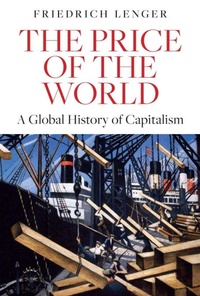
The Price of the World
A Global History of Capitalism
1st Edition
Will be published approx. on 25. June 2026
Book
Hardback
608 pages
978-1-5095-6681-5 (ISBN)
Description
Over the last 500 years, capitalism has produced a world that is highly interdependent and at the same time highly asymmetrical. These asymmetries were often established by violent means and are in many cases vigorously defended to this day. In his ambitious global history of capitalism, Friedrich Lenger charts the course of these developments, which have left no one unaffected - from the indigenous people of America to the silk weavers of Bengal. This is a story of flagrant wealth and extreme poverty, of violence and oppression, and of the relentless exploitation both of labour and of our planet, for which we are now paying the price.
Among the global inequalities produced by capitalism are the unequal consumption of fossil fuels and the environmental degradation that affects different parts of the world in different ways and to different extents. The indifference capitalists display towards the natural world resembles their past indifference to human suffering. The millions of slaves forced to work on American plantations until well into the nineteenth century are just one example of how oppressive labour and a capitalist economy go hand in hand.
This brilliant and wide-ranging book tells the story of the rise and triumph of capitalism from the fifteenth century to the present day and lays bare its fundamental dynamic: capitalism will never place limits on itself, underlining the fact that any restrictions have to be imposed from outside. It is essential reading for anyone who wants to understand the modern world, the fundamental problems we face today, and the economic solutions upon which our survival as a species will depend.
Among the global inequalities produced by capitalism are the unequal consumption of fossil fuels and the environmental degradation that affects different parts of the world in different ways and to different extents. The indifference capitalists display towards the natural world resembles their past indifference to human suffering. The millions of slaves forced to work on American plantations until well into the nineteenth century are just one example of how oppressive labour and a capitalist economy go hand in hand.
This brilliant and wide-ranging book tells the story of the rise and triumph of capitalism from the fifteenth century to the present day and lays bare its fundamental dynamic: capitalism will never place limits on itself, underlining the fact that any restrictions have to be imposed from outside. It is essential reading for anyone who wants to understand the modern world, the fundamental problems we face today, and the economic solutions upon which our survival as a species will depend.
Reviews / Votes
"Each generation needs to rehearse its history from the perspective of its times, and Friedrich Lenger's successfully ambitious history of global capitalism does that for our day, bringing out themes that earlier scholars either preferred to overlook or of whose significance they were unaware. The industrial revolution is set in the context of its predecessors. Slavery is not seen as a minor unpleasantness, but as fundamental to the capital accumulation that enabled that revolution. The impact of capitalist activity on natural resources is also shown to have a long history and not to be just a phenomenon of the present day."Colin Crouch, University of Warwick Business School
More details
Persons
Friedrich Lenger is Professor of Medieval and Modern History at the University of Giessen.
Content
Preface
Introduction
Chapter I: Merchant Capitalism and European Expansionism: From the Late Fifteenth to the Early Eighteenth Century
1. World Trade before the Discovery of the New World
2. Portuguese Crown Capitalism (Sixteenth and Early Seventeenth Century)
3. Colonies instead of Trading Posts: Spain and Portugal on the American Continent (Sixteenth Century and First Half of the Seventeenth Century)
4. Aggressive Trading Power and First Modern Economy: The Netherlands between the Late Sixteenth and the Early Eighteenth Century
5. The Fiscal-Military State and the Early Days of Gentlemanly Capitalism: England in the Seventeenth and Early Eighteenth Century
6. A Look Back and Ahead
Chapter II: Merchant Capitalism, Plantation Slavery, and Colonialism: From the Mid-Seventeenth Century to the Second Half of the Nineteenth Century
1. Transatlantic Slave Trade
2. The Caribbean Sugar Islands as Engine of the Atlantic Economy
3. The Mainland Colonies of North America and the Early United States
4. The East India Company and India: Stages in the Colonization Process
Chapter III: From Merchant Capitalism to Industrial Capitalism: The Industrial Revolution from a Global Perspective
1. Major and Minor Divergences and the Role of Overseas Trade
2. The Industrial Revolution in England
3. Early Latecomers: Continental Europe and the USA
4. Neo-Europe and another West
5. Asia and Africa during the Period of Free Trade Imperialism
Chapter IV: The Second Industrial Revolution, Globalization and the Role of Imperialism 1870-1930
1. The Rise of Modern Large-Scale Enterprises and the Second Industrial Revolution
2. Imperialist Metropolises and Peripheral Providers of Raw Materials I: The Anglo-World and Latin America
3. Imperialist Metropolises and Peripheral Providers of Raw Materials II: Africa and Asia
Chapter V: Planning and Development: Capitalism in Crisis, Second World War, and Cold War. From the Great Depression to the Early 1970s
1. Failed Attempts at Restoration and a Controversial New International Economic Order
2. Ways out of the Great Depression and into World War II
3. The United States and the Industrial Nations of the West: Twenty-five Years of US Dominance?
4. Paths towards Industrialization and Approaches to Development: Dependent Development and Neo-colonialism in Asia, Latin America, and Africa
Chapter VI: New Global Value Chains, Expansion of World Trade, and the Rise of Finance Capitalism: the 1970s to the Present
1. The Neoliberal Order and the Dramatic Expansion of the Capitalist World Economy
2. Industrial Capitalism in the Era of New Value Chains
3. The Expansion of World Trade and Reorganization of Distribution
4. Finance Capitalism: Its Structure and Proneness to Crises
Conclusion
Acknowledgements
Abbreviations
Notes
Index
Introduction
Chapter I: Merchant Capitalism and European Expansionism: From the Late Fifteenth to the Early Eighteenth Century
1. World Trade before the Discovery of the New World
2. Portuguese Crown Capitalism (Sixteenth and Early Seventeenth Century)
3. Colonies instead of Trading Posts: Spain and Portugal on the American Continent (Sixteenth Century and First Half of the Seventeenth Century)
4. Aggressive Trading Power and First Modern Economy: The Netherlands between the Late Sixteenth and the Early Eighteenth Century
5. The Fiscal-Military State and the Early Days of Gentlemanly Capitalism: England in the Seventeenth and Early Eighteenth Century
6. A Look Back and Ahead
Chapter II: Merchant Capitalism, Plantation Slavery, and Colonialism: From the Mid-Seventeenth Century to the Second Half of the Nineteenth Century
1. Transatlantic Slave Trade
2. The Caribbean Sugar Islands as Engine of the Atlantic Economy
3. The Mainland Colonies of North America and the Early United States
4. The East India Company and India: Stages in the Colonization Process
Chapter III: From Merchant Capitalism to Industrial Capitalism: The Industrial Revolution from a Global Perspective
1. Major and Minor Divergences and the Role of Overseas Trade
2. The Industrial Revolution in England
3. Early Latecomers: Continental Europe and the USA
4. Neo-Europe and another West
5. Asia and Africa during the Period of Free Trade Imperialism
Chapter IV: The Second Industrial Revolution, Globalization and the Role of Imperialism 1870-1930
1. The Rise of Modern Large-Scale Enterprises and the Second Industrial Revolution
2. Imperialist Metropolises and Peripheral Providers of Raw Materials I: The Anglo-World and Latin America
3. Imperialist Metropolises and Peripheral Providers of Raw Materials II: Africa and Asia
Chapter V: Planning and Development: Capitalism in Crisis, Second World War, and Cold War. From the Great Depression to the Early 1970s
1. Failed Attempts at Restoration and a Controversial New International Economic Order
2. Ways out of the Great Depression and into World War II
3. The United States and the Industrial Nations of the West: Twenty-five Years of US Dominance?
4. Paths towards Industrialization and Approaches to Development: Dependent Development and Neo-colonialism in Asia, Latin America, and Africa
Chapter VI: New Global Value Chains, Expansion of World Trade, and the Rise of Finance Capitalism: the 1970s to the Present
1. The Neoliberal Order and the Dramatic Expansion of the Capitalist World Economy
2. Industrial Capitalism in the Era of New Value Chains
3. The Expansion of World Trade and Reorganization of Distribution
4. Finance Capitalism: Its Structure and Proneness to Crises
Conclusion
Acknowledgements
Abbreviations
Notes
Index