


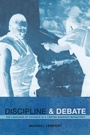
Discipline and Debate
The Language of Violence in a Tibetan Buddhist Monastery
1st Edition
Will be published approx. on 30. April 2012
Book
Paperback/Softback
238 pages
978-0-520-26947-7 (ISBN)
Description
The Dalai Lama has represented Buddhism as a religion of non-violence, compassion, and world peace, but this does not reflect how monks learn their vocation. This book shows how monasteries use harsh methods to make monks of men, and how this tradition is changing as modernist reformers - like the Dalai Lama - adopt liberal and democratic ideals, such as natural rights and individual autonomy. In the first in-depth account of disciplinary practices at a Tibetan monastery in India, Michael Lempert looks closely at everyday education rites - from debate to reprimand and corporal punishment. His analysis explores how the idioms of violence inscribed in these socialization rites help produce educated, moral persons but in ways that trouble Tibetans who aspire to modernity. Bringing the study of language and social interaction to our understanding of Buddhism for the first time, Lempert shows and why liberal ideals are being acted out by monks in India, offering a provocative alternative view of liberalism as a globalizing discourse.
More details
Edition
First Edition
Language
English
Place of publication
Berkerley
United States
Target group
College/higher education
Product notice
Paperback (trade)
Illustrations
2 line drawings, 3 charts, 3 tables, 1 map
Dimensions
Height: 229 mm
Width: 152 mm
Thickness: 18 mm
Weight
318 gr
ISBN-13
978-0-520-26947-7 (9780520269477)
Copyright in bibliographic data and cover images is held by Nielsen Book Services Limited or by the publishers or by their respective licensors: all rights reserved.
Schweitzer Classification
Other editions
Additional editions
E-Book
04/2012
1st Edition
Naval Institute Press
€34.49
Available for download
Person
Michael Lempert is Assistant Professor of Anthropology at the University of Michigan.
Content
List of Illustrations Acknowledgments Technical Note on Transcription and Research Methods Introduction: Liberal Sympathies Part I. Debate 1. Dissensus by Design 2. Debate as a Rite of Institution 3. Debate as a Diasporic Pedagogy Part II. Discipline 4. Public Reprimand Is Serious Theatre 5. Affected Signs, Sincere Subjects Conclusion: The Liberal Subject, in Pieces References Notes Index