

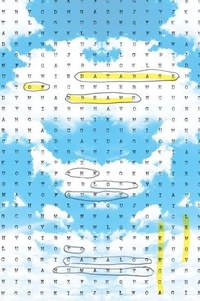
Database of Dreams
The Lost Quest to Catalog Humanity
Published on 24. November 2015
Book
Hardback
368 pages
978-0-300-20952-5 (ISBN)
Description
An acclaimed science historian uncovers the fascinating story of a "lost" project to unlock humanity's common denominator that prefigured the emergence of Big Data
Just a few years before the dawn of the digital age, Harvard psychologist Bert Kaplan set out to build the largest database of sociological information ever assembled. It was the mid-1950s, and social scientists were entranced by the human insights promised by Rorschach tests and other innovative scientific protocols. Kaplan, along with anthropologist A. I. Hallowell and a team of researchers, sought out a varied range of non-European subjects among remote and largely non-literate peoples around the globe. Recording their dreams, stories, and innermost thoughts in a vast database, Kaplan envisioned future researchers accessing the data through the cutting-edge Readex machine. Almost immediately, however, technological developments and the obsolescence of the theoretical framework rendered the project irrelevant, and eventually it was forgotten.
Just a few years before the dawn of the digital age, Harvard psychologist Bert Kaplan set out to build the largest database of sociological information ever assembled. It was the mid-1950s, and social scientists were entranced by the human insights promised by Rorschach tests and other innovative scientific protocols. Kaplan, along with anthropologist A. I. Hallowell and a team of researchers, sought out a varied range of non-European subjects among remote and largely non-literate peoples around the globe. Recording their dreams, stories, and innermost thoughts in a vast database, Kaplan envisioned future researchers accessing the data through the cutting-edge Readex machine. Almost immediately, however, technological developments and the obsolescence of the theoretical framework rendered the project irrelevant, and eventually it was forgotten.
Reviews / Votes
"Unique, well-curated brain food for readers intrigued with the human psyche and how it can be recorded, indexed, and cross-referenced."-Kirkus Reviews * Kirkus Reviews * "Humane, hilarious, and smart . . . The book shows that, although some things are forgotten because they are unimportant, others lose importance because they are forgotten."-Science * Science * "Lemov, a professor of the History of Science at Harvard, recollects with flair, affection and dazzling detail, a post World War II project to do away with mornings after like this one: those episodes of mourning that follow some lost telling of some last secret of some human heart. . . . Riveting."-New Republic * New Republic * "A compelling account."-Wall Street Journal * Wall Street Journal * "Lemov's contribution informs our understanding not only of how psychological research is managed but also of our own daily contributions, voluntary and otherwise, to a 'forever' database already being probed in increasingly intimate fashion."-Psychology Today * Psychology Today *More details
Language
English
Place of publication
United States
Product notice
Cloth over boards
Dimensions
Height: 241 mm
Width: 161 mm
Thickness: 30 mm
Weight
673 gr
ISBN-13
978-0-300-20952-5 (9780300209525)
Copyright in bibliographic data and cover images is held by Nielsen Book Services Limited or by the publishers or by their respective licensors: all rights reserved.
Schweitzer Classification
Other editions
Additional editions
E-Book
11/2015
1st Edition
Yale University Press
€27.35
Available for download
Person
Rebecca Lemov is associate professor of the history of science at Harvard University and past visiting scholar at the Max Planck Institute for the History of Science. She is the author of World as Laboratory: Experiments with Mice, Mazes, and Men, named a 2006 New York Times Editor's Choice. She lives in Cambridge, MA.