

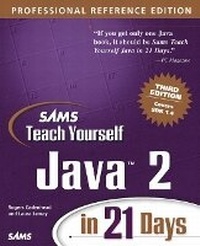
Sams Teach Yourself Java 2 in 21 Days, Professional Reference Edition
3rd Edition
Published on 8. January 2003
Book
Mixed media product
888 pages
978-0-672-32455-0 (ISBN)
Description
Sams Teach Yourself Java in 21 Days, Professional Reference Edition, 3/E continues to be one of the most popular, best-selling Java tutorials on the market. Written by two expert technical writers, it has been acclaimed for its clear and personable writing, for its extensive use of examples, and for its logical and complete organization.This new edition maintains and improves upon all these qualities, while updating, revising, and reorganizing the material to cover the latest developments in Java and to expand the book's coverage of core Java programming topics.The Professional Reference Edition includes seven additional bonus chapters, a complete Java reference section, and a CD containing Sun's Java SDK.
More details
Edition
3rd edition
Language
English
Place of publication
Indianapolis
United States
Publishing group
Pearson Education (US)
Target group
College/higher education
Dimensions
Height: 231 mm
Width: 187 mm
Thickness: 49 mm
Weight
1480 gr
ISBN-13
978-0-672-32455-0 (9780672324550)
Copyright in bibliographic data and cover images is held by Nielsen Book Services Limited or by the publishers or by their respective licensors: all rights reserved.
Schweitzer Classification
Other editions
New editions
Rogers Cadenhead | Laura Lemay
Sams Teach Yourself Java 2 in 21 Days
Book
05/2004
4th Edition
Sams Publishing
€35.97
Article exhausted; check for reprint
Previous edition
Laura Lemay | Rogers Cadenhead
Sams Teach Yourself Java 2 in 21 Days, Professional Reference Edition
Book
05/2001
2nd Edition
Sams Publishing
€45.30
Article exhausted; check for reprint
Persons
Laura Lemay is one of the world's most popular authors on Web development topics. Her books have sold over two million copies worldwide. Known for her ability to clearly explain even the most difficult technical topics, she complements her discussions with interesting yet practical examples.
Rogers Cadenhead is a writer, computer programmers, and Web developer who has written nine books on Internet-related topics. He maintains the Cruel Site of the Day and several other popular Internet sites.
Rogers Cadenhead is a writer, computer programmers, and Web developer who has written nine books on Internet-related topics. He maintains the Cruel Site of the Day and several other popular Internet sites.
Content
Most chapter end with a Summary, Q&A, Quiz and Exercises.
Introduction.
WEEK 1. THE JAVA LANGUAGE.
Day 1. Getting Started with Java.
The Java Language. Object-Oriented Programming. Objects and Classes. Attributes and Behavior. Organizing Classes and Class Behavior.
Day 2. The ABCs of Programming.
Statements and Expressions. Variables and Data Types. Comments. Literals. Expressions and Operators. String Arithmetic.
Day 3. Working with Objects.
Creating New Objects. Accessing and Setting Class and Instance Variables. Calling Methods. References to Objects. Casting and Converting Objects and Primitive Types. Comparing Object Values and Classes.
Day 4. Lists, Logic, and Loops.
Arrays. Block Statements. if Conditionals. switch Conditionals. for Loops. while and do Loops. Breaking Out of Loops.
Day 5. Creating Classes and Methods.
Defining Classes. Creating Instance and Class Variables. Creating Methods. Creating Java Applications. Java Applications and Command-Line Arguments. Creating Methods with the Same Name, Different Arguments. Constructor Methods. Overriding Methods. Finalizer Methods.
Day 6. Packages, Interfaces, and Other Class Features.
Modifiers. Static Variables and Methods. Final Classes, Methods, and Variables. Abstract Classes and Methods. Packages. Using Packages. Creating Your Own Packages. Interfaces. Creating and Extending Interfaces. Inner Classes.
Day 7. Threads and Exceptions.
Exceptions. Managing Exceptions. Declaring Methods That Might Throw Exceptions. Creating and Throwing Your Own Exceptions. When to and When Not to Use Exceptions. Assertions. Threads.
WEEK 2. THE JAVA CLASS LIBRARY.
Day 8. Data Structures and Strings.
Data Structures. Java Data Structures.
Day 9. Working with Swing.
Creating an Application. Working with Components.
Day 10. Building a Swing Interface.
Swing Features.
Day 11. Arranging Components on a User Interface.
Basic Interface Layout. Mixing Layout Managers. Card Layout. Grid Bag Layout. Cell Padding and Insets.
Day 12. Responding to User Input.
Event Listeners. Working with Methods. Creating a Swing Application.
Day 13. Color, Fonts, and Graphics.
The Graphics2D Class. Drawing Text. Color. Drawing Lines and Polygons.
Day 14. Writing Java Applets.
How Applets and Applications Are Different. Applet Security Restrictions. Creating Applets. Including an Applet on a Web Page. Java Archives. Passing Parameters to Applets.
WEEK 3. JAVA PROGRAMMING.
Day 15. Working with Input and Output.
Introduction to Streams. Byte Streams. Filtering a Stream. Character Streams. Files and Filename Filters.
Day 16. Serializing and Examining Objects.
Object Serialization. Inspecting Classes and Methodswith Reflection. Remote Method Invocation.
Day 17. Communicating Across the Internet.
Networking in Java. The java.nio Package.
Day 18. JavaSound.
Retrieving and Using Sounds. JavaSound. MIDI Files.
Day 19. Creating and Using JavaBeans.
Reusable Software Components. Development Tools. Working with JavaBeans.
Day 20. Reading and Writing Data Using JDBC.
Java Database Connectivity.
Day 21. Reading and Writing XML Data.
Using XML.Processing XML with Java.
BONUS WEEK. ADVANCED JAVA PROGRAMMING.
Day 22. Writing Java Servlets.
Using Web Servlets. Developing Servlets.
Day 23. JavaServer Pages.
JavaServer Pages.
Day 24. Writing Java 1.0 Applets.
Java 1.0 Programming.
Day 25. Accessibility.
Making Programs More Accessible. Using Accessibility Features. An Accessible Application: PageData.
Day 26. Java Web Start.
Java Web Start. Using Java Web Start.
Day 27. Creating Web Services with XML-RPC.
Introduction to XML-RPC. Communicating with XML-RPC. Choosing an XML-RPC Implementation. Using an XML-RPC Web Service. Creating an XML-RPC Web Service.
Day 28. Regular Expressions.
Introduction to Pattern Matching. Using Regular Expressions. Patterns.
APPENDIXES.
Appendix A. Choosing Java.
Java's Past, Present, and Future. Why Choose Java.
Appendix B. Using the Java 2 Software Development Kit.
Choosing a Java Development Tool. Configuring the Software Development Kit. Using a Text Editor. Creating a Sample Program.
Appendix C. Programming with the Java 2 Software Development Kit.
An Overview of the SDK. The java Interpreter. The javac Compiler. The appletviewer Browser. The javadoc Documentation Tool. The jar Java File Archival Tool. The jdb Debugger. Using System Properties.
Appendix D. Using Sun ONE Studio.
Choosing a Java Development Tool. Configuring Sun ONE Studio. Creating a Sample Program.
Appendix E. Where to Go from Here: Java Resources.
Other Books to Consider. Sun's Official Java Site. Other Java Web Sites. Java Newsgroups. Job Opportunities.
Appendix F. This Book's Web Site.
Index.
Introduction.
WEEK 1. THE JAVA LANGUAGE.
Day 1. Getting Started with Java.
The Java Language. Object-Oriented Programming. Objects and Classes. Attributes and Behavior. Organizing Classes and Class Behavior.
Day 2. The ABCs of Programming.
Statements and Expressions. Variables and Data Types. Comments. Literals. Expressions and Operators. String Arithmetic.
Day 3. Working with Objects.
Creating New Objects. Accessing and Setting Class and Instance Variables. Calling Methods. References to Objects. Casting and Converting Objects and Primitive Types. Comparing Object Values and Classes.
Day 4. Lists, Logic, and Loops.
Arrays. Block Statements. if Conditionals. switch Conditionals. for Loops. while and do Loops. Breaking Out of Loops.
Day 5. Creating Classes and Methods.
Defining Classes. Creating Instance and Class Variables. Creating Methods. Creating Java Applications. Java Applications and Command-Line Arguments. Creating Methods with the Same Name, Different Arguments. Constructor Methods. Overriding Methods. Finalizer Methods.
Day 6. Packages, Interfaces, and Other Class Features.
Modifiers. Static Variables and Methods. Final Classes, Methods, and Variables. Abstract Classes and Methods. Packages. Using Packages. Creating Your Own Packages. Interfaces. Creating and Extending Interfaces. Inner Classes.
Day 7. Threads and Exceptions.
Exceptions. Managing Exceptions. Declaring Methods That Might Throw Exceptions. Creating and Throwing Your Own Exceptions. When to and When Not to Use Exceptions. Assertions. Threads.
WEEK 2. THE JAVA CLASS LIBRARY.
Day 8. Data Structures and Strings.
Data Structures. Java Data Structures.
Day 9. Working with Swing.
Creating an Application. Working with Components.
Day 10. Building a Swing Interface.
Swing Features.
Day 11. Arranging Components on a User Interface.
Basic Interface Layout. Mixing Layout Managers. Card Layout. Grid Bag Layout. Cell Padding and Insets.
Day 12. Responding to User Input.
Event Listeners. Working with Methods. Creating a Swing Application.
Day 13. Color, Fonts, and Graphics.
The Graphics2D Class. Drawing Text. Color. Drawing Lines and Polygons.
Day 14. Writing Java Applets.
How Applets and Applications Are Different. Applet Security Restrictions. Creating Applets. Including an Applet on a Web Page. Java Archives. Passing Parameters to Applets.
WEEK 3. JAVA PROGRAMMING.
Day 15. Working with Input and Output.
Introduction to Streams. Byte Streams. Filtering a Stream. Character Streams. Files and Filename Filters.
Day 16. Serializing and Examining Objects.
Object Serialization. Inspecting Classes and Methodswith Reflection. Remote Method Invocation.
Day 17. Communicating Across the Internet.
Networking in Java. The java.nio Package.
Day 18. JavaSound.
Retrieving and Using Sounds. JavaSound. MIDI Files.
Day 19. Creating and Using JavaBeans.
Reusable Software Components. Development Tools. Working with JavaBeans.
Day 20. Reading and Writing Data Using JDBC.
Java Database Connectivity.
Day 21. Reading and Writing XML Data.
Using XML.Processing XML with Java.
BONUS WEEK. ADVANCED JAVA PROGRAMMING.
Day 22. Writing Java Servlets.
Using Web Servlets. Developing Servlets.
Day 23. JavaServer Pages.
JavaServer Pages.
Day 24. Writing Java 1.0 Applets.
Java 1.0 Programming.
Day 25. Accessibility.
Making Programs More Accessible. Using Accessibility Features. An Accessible Application: PageData.
Day 26. Java Web Start.
Java Web Start. Using Java Web Start.
Day 27. Creating Web Services with XML-RPC.
Introduction to XML-RPC. Communicating with XML-RPC. Choosing an XML-RPC Implementation. Using an XML-RPC Web Service. Creating an XML-RPC Web Service.
Day 28. Regular Expressions.
Introduction to Pattern Matching. Using Regular Expressions. Patterns.
APPENDIXES.
Appendix A. Choosing Java.
Java's Past, Present, and Future. Why Choose Java.
Appendix B. Using the Java 2 Software Development Kit.
Choosing a Java Development Tool. Configuring the Software Development Kit. Using a Text Editor. Creating a Sample Program.
Appendix C. Programming with the Java 2 Software Development Kit.
An Overview of the SDK. The java Interpreter. The javac Compiler. The appletviewer Browser. The javadoc Documentation Tool. The jar Java File Archival Tool. The jdb Debugger. Using System Properties.
Appendix D. Using Sun ONE Studio.
Choosing a Java Development Tool. Configuring Sun ONE Studio. Creating a Sample Program.
Appendix E. Where to Go from Here: Java Resources.
Other Books to Consider. Sun's Official Java Site. Other Java Web Sites. Java Newsgroups. Job Opportunities.
Appendix F. This Book's Web Site.
Index.