

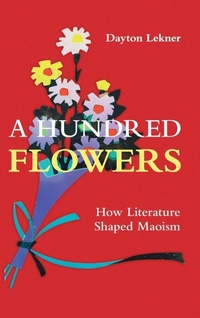
A Hundred Flowers
How Literature Shaped Maoism
Will be published approx. on 31. December 2025
Book
Hardback
288 pages
978-1-009-60053-8 (ISBN)
Description
In 1957, Shanghai journalism student Xu Chengmiao faced persecution for a poem about flowers. Why did his classmates, teachers, and eventually the full force of the Party-state react so intensely to Xu's floral poetry? What connection did his writing have to the flowers that had adorned Chinese literature, art, reportage, and fashion since 1954? In this captivating book, Dayton Lekner tells the story of the Hundred Flowers, from its early blooms to its transformation into the Anti-Rightist campaign. Through the work and lives of creative writers, he shows that the literary circulation and practices that had long characterized China not only survived under Maoism but animated political and social movements. Texts 'went viral,' writers rose and fell, and metaphors mattered. Exploring the dynamism, nuance, and legion authors of 'official discourse,' he relocates creative writing not in tension with Mao era politics but as a central medium of the revolution.
Reviews / Votes
'Like his subjects - the Chinese writers whose metaphors fuelled the Hundred Flowers movement of the 1950s - Dayton Lekner has a way with words. Writing with laugh-out-loud wit, Lekner reveals a complex literary ecosystem full of bravery, treachery, uncertainty, and, above all, a dynamic interplay of ideas and personalities.' Jeremy Brown, author of June Fourth 'In this vivid account of literature and politics in Mao's China we get a challenging assessment of the notorious Hundred Flowers campaign stretching it back to 1951 and revealing the dangerous agency of China's literary intellectuals and their perilous synergy with their Party-State. Lekner's account not only reshapes our understanding of politics under Mao but also explains the political power of fuzzy metaphors in Xi Jinping's China today.' Timothy Cheek, author of The Intellectual in Modern Chinese History 'Connecting literature and politics through botanics, A Hundred Flowers is a pathbreaking study of Socialist China's world of letters. With a cornucopia of sources, Dayton Lekner illuminates surprising cross-pollinations between poetry and bureaucracy, metaphors and movements, from fragrant flowers to poisonous weeds, from changing political climates to their literary seeds.' Jie Li, author of Cinematic Guerrillas: Propaganda, Projectionists and Audiences in Socialist China 'Lekner's work is nothing short of remarkable, and has changed the way I view Mao's China. He sifted through thousands of pages of poetry and propaganda, sought out and interviewed aging figures branded as rightists in 1957, and then put together a narrative that illustrates the depth and range of the intellectual agency that fuelled China's Hundred Flowers movement and the subsequent anti-rightist campaign. Yes, Mao was conniving and of course the Party-State was authoritarian, but the movement and its ultimate suppression grew out of an extended conversation between the Party and intellectuals based on the richness of China's literary heritage as well as the promise of its revolutionary experience. This book is an eye-opener and a must-read.' David Ownby, founder of the website Reading the China DreamMore details
Series
Language
English
Place of publication
Cambridge
United Kingdom
Illustrations
Worked examples or Exercises
Dimensions
Height: 235 mm
Width: 157 mm
Thickness: 20 mm
Weight
563 gr
ISBN-13
978-1-009-60053-8 (9781009600538)
Copyright in bibliographic data and cover images is held by Nielsen Book Services Limited or by the publishers or by their respective licensors: all rights reserved.
Schweitzer Classification
Person
Content
Acknowledgements; Prologue; Buds introduction; Part I. Flowers: 1. Who wrote the campaign?; 2. Mao Zedong, Guo Moruo, and Sino-Soviet propagation; 3. Springtime for Mao: Ai Qing, Zhou Shoujuan, and the writing of a season; 4. Community Gardens: movement and meaning among the flora; Part II. Weeds: 5. Grass: Biodiversity and reactions to the hundred flowers; 6. Thorns: botanical imagery as critique; 7. Early Spring: Fei Xiaotong and climate control; Part III. Weather: 8. Amateur Meteorology: the two rivers of Sichuan and an absence of rain; 9. Late Spring: Centre-Provincial Climatology and attempts to change the weather; Part IV. Seeds: 10. What gets left behind: history, memory and Image; 11. Who gets left behind: Wu Mi and the split life of a poet; Conclusion: campaign, literary, and historical time; Bibliography.