

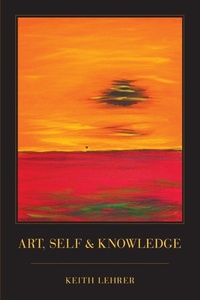
Art, Self and Knowledge
1st Edition
Published on 15. December 2011
Book
Paperback/Softback
224 pages
978-0-19-530499-2 (ISBN)
Description
Art can provide us with a sensory experience that provokes us to reconfigure how we think about our world and ourselves. Theories of art have often sought to find some feature of art that isolates it from the rest of experience. Keith Lehrer argues, in opposition, that art is connected, not isolated, from how we think and feel, represent and react. When art directs our attention to sensory exemplars in aesthetic experience of which we become conscious in a special way, it also shows us our autonomy as we represent ourselves and our world, ourselves in our world, and our world in ourselves. This form of representation, exemplar representation, uses the exemplar as a term of representation and exhibits the nature of the content it represents in terms of itself. It shows us both what our world is like and how we represent the world thereby revealing the nature of intentionality to us. Issues of general interest in philosophy such as knowledge, autonomy, rationality and self-trust enter the book along with more specifically aesthetic issues of formalism, expressionism, representation, artistic creativity and beauty. The author goes on to demonstrate how the connection between art and broader issues of feminism, globalization, collective wisdom, and death show us the connection between art, life, politics and the self.
Drawing from Hume, Reid, Goodman, Danto, Brand, Ismael and Lopes, Lehrer argues here that the artwork is a mentalized physical object engaging us philosophically with the content of exemplar experience. The exemplar representation of experience provoked by art ties art and science, mind and body, self and world, together in a dynamic loop, reconfiguring them all as it reconfigures art itself.
Drawing from Hume, Reid, Goodman, Danto, Brand, Ismael and Lopes, Lehrer argues here that the artwork is a mentalized physical object engaging us philosophically with the content of exemplar experience. The exemplar representation of experience provoked by art ties art and science, mind and body, self and world, together in a dynamic loop, reconfiguring them all as it reconfigures art itself.
Reviews / Votes
Lehrer is a rare aesthetician; he is both an artist and an epistemologist. Moreover, he brings a feminist perspective to the process of understanding and appreciating art: one that explores and exposes the self as neither disinterested nor dispassionate but rather intimately connected to (and transformed by) the sensory experience of a work of art. We are the creators of our own aesthetic destinies: if only we allow artworks in, to work their magic in our worlds. * Peg Zeglin Brand, Indiana University *More details
Language
English
Place of publication
New York
United States
Target group
Adult education
Philosophers and a general audience interested in the connection between philosophy and art.
Illustrations
10 halftones
Dimensions
Height: 234 mm
Width: 156 mm
Thickness: 13 mm
Weight
392 gr
ISBN-13
978-0-19-530499-2 (9780195304992)
Copyright in bibliographic data and cover images is held by Nielsen Book Services Limited or by the publishers or by their respective licensors: all rights reserved.
Schweitzer Classification
Other editions
Additional editions
Keith Lehrer
Art, Self and Knowledge
Book
12/2011
1st Edition
Oxford University Press Inc
€139.28
Shipment within 15-20 days
Person
Keith Lehrer is Professor of Philosophy, University of Arizona.
Content
Forward: Website Information, Summary and Acknowledgements ; Introduction ; 1. Knowing the Content of Art ; 2. Consciousness, Exemplars and Art ; 3. Aesthetic Theory, Feminist Art and Autonomy ; 4. Value, Expression and Globalization ; 5. Artistic Creation, Freedom, and Self ; 6. Aesthetics, Death and Beauty ; 7. Aesthetic Experience, Intentionality and the Form of Representation ; 8. Theories of Art, and Art as Theory of the World ; 9. Self-Trust, Disagreement, and Reasonable Acceptance ; 10. Social Reason, Aggregation and Collective Wisdom ; 11. Knowledge, Autonomy and Art in Loop Theory