

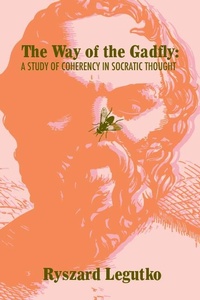
The Way of the Gadfly
A Study of Coherency in Socratic Thought
Published on 20. December 2024
Book
Paperback/Softback
300 pages
978-1-58731-593-0 (ISBN)
Description
This new series of scholarly reflections on the interpretation of Socratic philosophy is an inviting combination of intuition and meticulous analysis. Ryszard Legutko provides the reader a monumental service in his confrontation of the most important and influential literature written on the subject to date. He likewise opens the conversation to European contributions and renders Socrates truly a figurehead of future philosophy far beyond being a pillar in ancient thought.
Legutko argues that Socrates was systematic, and his moral views were ultimately grounded in his theory of knowledge that was composed of logically connected propositions (logoi). Reading Plato, Legutko's intuition that Socrates was quite the opposite of the quirky, ironic, and enigmatic character is supported by his demonstration of Socrates' consistency, unity, and hierarchy of thought. He extends Socrates' coherency to a criticism of the democratic mind, framing him even less as a random spit-fire and more the grounded observer. Socrates, argues Letgutko, is well aware of the importance of general concepts and he intended to free these concepts from democratic distortions and give them firm and independent foundations.
In short, 'the way of the gadfly' is a beautiful and precise exploration of order that seeks to be changed by the awareness of this order, and how to wield concepts apart from the motives of arrogance and chaos--neither of which represent nature, and therefore are foreign to the way of the gadfly.
Legutko argues that Socrates was systematic, and his moral views were ultimately grounded in his theory of knowledge that was composed of logically connected propositions (logoi). Reading Plato, Legutko's intuition that Socrates was quite the opposite of the quirky, ironic, and enigmatic character is supported by his demonstration of Socrates' consistency, unity, and hierarchy of thought. He extends Socrates' coherency to a criticism of the democratic mind, framing him even less as a random spit-fire and more the grounded observer. Socrates, argues Letgutko, is well aware of the importance of general concepts and he intended to free these concepts from democratic distortions and give them firm and independent foundations.
In short, 'the way of the gadfly' is a beautiful and precise exploration of order that seeks to be changed by the awareness of this order, and how to wield concepts apart from the motives of arrogance and chaos--neither of which represent nature, and therefore are foreign to the way of the gadfly.
More details
Language
English
Place of publication
Indiana
United States
Target group
College/higher education
Product notice
Paperback (trade)
Unsewn / adhesive bound
Dimensions
Height: 229 mm
Width: 152 mm
Thickness: 23 mm
Weight
399 gr
ISBN-13
978-1-58731-593-0 (9781587315930)
Copyright in bibliographic data and cover images is held by Nielsen Book Services Limited or by the publishers or by their respective licensors: all rights reserved.
Schweitzer Classification
Person
Ryszard Legutko, a Polish philosopher, taught ancient philosophy and political theory at the Jagiellonian University in Krakow, Poland. He has also been a politician - a former Minister of Education, Deputy Speaker of the Senate, and Secretary of State in the Chancellery of the President of Poland. He is Chairman of the European Conservatives and Reformists Group in the European Parliament. He published many books in Polish, the most recent being The Presocratic Philosophy: From Thales to Democritus (2020). He translated four of Plato's dialogues into Polish: Apology, Euthyphro, Phaedo, and Crito. He is working on the translation of Plato's Republic. Among the books published in English are The Demon in Democracy (Encounter Books 2016) and The Cunning of Freedom (Encounter Books 2021). The Demon of Democracy, which explores the problem of totalitarian tendencies in modern liberal democracy, was widely reviewed and translated into several languages, including French, Spanish, and German.
Content
INTRODUCTION
CHAPTER I - KNOWLEDGE
1. In search of knowledge
1.1 Socrates' criteria of knowledge (SCK)
1.2 Knowledge of knowledge
2. Definitions
3. Elenchus
4. True opinion
5. Midwifery, anamnesis, activation
5.1 Midwifery and intellectual activation
5.2 Anamnesis
6. Ignorance and knowledge
6.1 What Socrates did not know
6.2 What Socrates knew
6.3 Socrates' basic theses (SBT)
CHAPTER II - VIRTUE AND THE SOCRATIC MAN
1. Background
2. The unity of virtues
2.1 Popular definitions
2.2 Parts-of-face definitions
2.3 Parts-of-gold definitions
2.4 The eidos incarnate
3. The hedonistic argument
3.1 The hedonistic argument: Parts one and two
3.2 The hedonistic argument: Part three
3.3 The hedonistic argument part four and the problem of courage
3.3.1 Courage, confidence, techne
3.3.2 Fear of injustice and fear of disgrace
4. The argument from human nature
4.1 Socrates' first thesis: the tyrant does not do what he wishes
4.2 Polus' responses
4.3 Socrates' second thesis: The greatest evil is adikein
4.4 Socrates' third thesis: adikein is worse than adikeisthai
4.5 Socrates' fourth thesis: injustice is a disease of the soul
CHAPTER III - POLITICS
1. Socrates, the craft of politics, and the democratic man
2. Avoidance of politics
3. True politics
3.1 True politics and political order
3.2 True politics and knowledge
3.3 The just polis
4. Good laws
5. Parental state and tacit consent.
5.1 Crito's offer and Socrates' reply
5.2 The Laws of Athens speak
5.2.1 The fourth logos
5.2.2 The state as parents
5.2.3 Tacit consent
5.2.4 Persuading the state
5.2.5 The Laws' concluding remarks and Socrates' final words
CHAPTER IV - PHILOSOPHER IN ACTION
1. Philosopher and the city
2. Irony
2.1 Self-deprecation
2.2 Not speaking seriously
2.3 Serious playfulness
3. The educational value of the elenchus
4. Socrates' mission
5. Mission, the god and elenchus
5.1 Wisdom and ignorance
5.2 Virtue and goodness
5.3 Gadfly
6. Socrates' charm
6.1 Enchanting
6.2 Benumbing
CHAPTER I - KNOWLEDGE
1. In search of knowledge
1.1 Socrates' criteria of knowledge (SCK)
1.2 Knowledge of knowledge
2. Definitions
3. Elenchus
4. True opinion
5. Midwifery, anamnesis, activation
5.1 Midwifery and intellectual activation
5.2 Anamnesis
6. Ignorance and knowledge
6.1 What Socrates did not know
6.2 What Socrates knew
6.3 Socrates' basic theses (SBT)
CHAPTER II - VIRTUE AND THE SOCRATIC MAN
1. Background
2. The unity of virtues
2.1 Popular definitions
2.2 Parts-of-face definitions
2.3 Parts-of-gold definitions
2.4 The eidos incarnate
3. The hedonistic argument
3.1 The hedonistic argument: Parts one and two
3.2 The hedonistic argument: Part three
3.3 The hedonistic argument part four and the problem of courage
3.3.1 Courage, confidence, techne
3.3.2 Fear of injustice and fear of disgrace
4. The argument from human nature
4.1 Socrates' first thesis: the tyrant does not do what he wishes
4.2 Polus' responses
4.3 Socrates' second thesis: The greatest evil is adikein
4.4 Socrates' third thesis: adikein is worse than adikeisthai
4.5 Socrates' fourth thesis: injustice is a disease of the soul
CHAPTER III - POLITICS
1. Socrates, the craft of politics, and the democratic man
2. Avoidance of politics
3. True politics
3.1 True politics and political order
3.2 True politics and knowledge
3.3 The just polis
4. Good laws
5. Parental state and tacit consent.
5.1 Crito's offer and Socrates' reply
5.2 The Laws of Athens speak
5.2.1 The fourth logos
5.2.2 The state as parents
5.2.3 Tacit consent
5.2.4 Persuading the state
5.2.5 The Laws' concluding remarks and Socrates' final words
CHAPTER IV - PHILOSOPHER IN ACTION
1. Philosopher and the city
2. Irony
2.1 Self-deprecation
2.2 Not speaking seriously
2.3 Serious playfulness
3. The educational value of the elenchus
4. Socrates' mission
5. Mission, the god and elenchus
5.1 Wisdom and ignorance
5.2 Virtue and goodness
5.3 Gadfly
6. Socrates' charm
6.1 Enchanting
6.2 Benumbing