

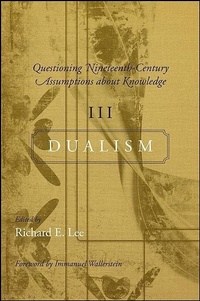
Questioning Nineteenth-Century Assumptions about Knowledge, III
Dualism
Published on 30. November 2010
Book
Paperback/Softback
204 pages
978-1-4384-3408-7 (ISBN)
Description
A provocative survey of interdisciplinary challenges to the concept of dualism.
During the last few decades, the fundamental premises of the modern view of knowledge have been increasingly called into question. Questioning Nineteenth-Century Assumptions about Knowledge III: Dualism provides an in-depth look at the debates surrounding the status of "dualism" in the sciences, social sciences, and the humanities in detailed and wide-ranging discussions among experts from across the disciplines. The extent to which the questionable necessity of a transcendent nomos; individualistic approaches versus systems ontology; rationality-material and formal-and how scholars might overcome the two cultures divide might impinge on the possibility, but not the inevitability, of progress are among the issues explored here. Weaving together in-depth articles and invigorating follow up discussions, this volume showcases debates over the status and validity of dualism. Of special interest are developing alternatives to traditional dualistic categories through an innovative, new approach based on biological naturalism; challenges to the dualism of people and things; the imperfectness and subjectivity of perception; and the overcoming the dualism of philosophy and science.
During the last few decades, the fundamental premises of the modern view of knowledge have been increasingly called into question. Questioning Nineteenth-Century Assumptions about Knowledge III: Dualism provides an in-depth look at the debates surrounding the status of "dualism" in the sciences, social sciences, and the humanities in detailed and wide-ranging discussions among experts from across the disciplines. The extent to which the questionable necessity of a transcendent nomos; individualistic approaches versus systems ontology; rationality-material and formal-and how scholars might overcome the two cultures divide might impinge on the possibility, but not the inevitability, of progress are among the issues explored here. Weaving together in-depth articles and invigorating follow up discussions, this volume showcases debates over the status and validity of dualism. Of special interest are developing alternatives to traditional dualistic categories through an innovative, new approach based on biological naturalism; challenges to the dualism of people and things; the imperfectness and subjectivity of perception; and the overcoming the dualism of philosophy and science.
More details
Series
Language
English
Place of publication
Albany, NY
United States
Target group
College/higher education
US School Grade: From College Freshman to College Graduate Student
Product notice
Paperback (trade)
Illustrations
1 Tables, black and white
Dimensions
Height: 226 mm
Width: 152 mm
Thickness: 15 mm
Weight
295 gr
ISBN-13
978-1-4384-3408-7 (9781438434087)
Copyright in bibliographic data and cover images is held by Nielsen Book Services Limited or by the publishers or by their respective licensors: all rights reserved.
Schweitzer Classification
Other editions
Additional editions
E-Book
11/2010
1st Edition
De Gruyter
€35.99
Available for download
Persons
Richard E. Lee is Professor of Sociology and Director of the Fernand Braudel Center at Binghamton University, State University of New York. He is the author of Life and Times of Cultural Studies: The Politics and Transformation of the Structures of Knowledge and the coeditor (with Immanuel Wallerstein) of Overcoming the Two Cultures: Science versus the Humanities in the Modern World-System.
Content
Participants
Illustrations
Foreword
Immanuel Wallerstein
Introduction
Richard E. Lee
SESSION I. Why Dualism (and Materialism) Fail to Account for Consciousness
John R. Searle
Discussion
SESSION II. After Dualism
Andrew Pickering
Discussion
SESSION III. The Imperfect Observer: Mind, Machines, and Materialism in the Twenty-First Century
Judith Donath
Discussion
SESSION IV. Organizers' Opening Remarks Jean-Pierre Dupuy: Preserving Distinctions, Complexifying Relationships
Immanuel Wallerstein
Discussion
Index
Illustrations
Foreword
Immanuel Wallerstein
Introduction
Richard E. Lee
SESSION I. Why Dualism (and Materialism) Fail to Account for Consciousness
John R. Searle
Discussion
SESSION II. After Dualism
Andrew Pickering
Discussion
SESSION III. The Imperfect Observer: Mind, Machines, and Materialism in the Twenty-First Century
Judith Donath
Discussion
SESSION IV. Organizers' Opening Remarks Jean-Pierre Dupuy: Preserving Distinctions, Complexifying Relationships
Immanuel Wallerstein
Discussion
Index