


Financial Derivatives and the Globalization of Risk
Published on 29. September 2004
Book
Paperback/Softback
224 pages
978-0-8223-3418-7 (ISBN)
Description
The market for financial derivatives is far and away the largest and most powerful market in the world, and it is growing exponentially. In 1970 the yearly valuation of financial derivatives was only a few million dollars. By 1980 the sum had swollen to nearly one hundred million dollars. By 1990 it had climbed to almost one hundred billion dollars, and in 2000 it approached one hundred trillion. Created and sustained by a small number of European and American banks, corporations, and hedge funds, the derivatives market has an enormous impact on the economies of nations-particularly poorer nations-because it controls the price of money. Derivatives bought and sold by means of computer keystrokes in London and New York affect the price of food, clothing, and housing in Johannesburg, Kuala Lumpur, and Buenos Aires. Arguing that social theorists concerned with globalization must familiarize themselves with the mechanisms of a world economy based on the rapid circulation of capital, Edward LiPuma and Benjamin Lee offer a concise introduction to financial derivatives.LiPuma and Lee explain how derivatives are essentially wagers-often on the fluctuations of national currencies-based on models that aggregate and price risk. They describe how these financial instruments are changing the face of capitalism, undermining the power of nations and perpetrating a new and less visible form of domination on postcolonial societies. As they ask: How does one know about, let alone demonstrate against, an unlisted, virtual, offshore corporation that operates in an unregulated electronic space using a secret proprietary trading strategy to buy and sell arcane financial instruments? LiPuma and Lee provide a necessary look at the obscure but consequential role of financial derivatives in the global economy.
Reviews / Votes
"The prominence of a new kind of speculative finance capital in organizing global order and disorder is a topic of vital contemporary importance. By addressing this topic, this short, clear account advances the somewhat muddled debates over economic globalization."-Craig Calhoun, president of the Social Science Research CouncilMore details
Series
Language
English
Place of publication
North Carolina
United States
Target group
Professional and scholarly
Product notice
Paperback (trade)
Dimensions
Height: 205 mm
Width: 134 mm
Thickness: 19 mm
Weight
241 gr
ISBN-13
978-0-8223-3418-7 (9780822334187)
Copyright in bibliographic data and cover images is held by Nielsen Book Services Limited or by the publishers or by their respective licensors: all rights reserved.
Schweitzer Classification
Other editions
Additional editions
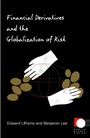
Benjamin Lee | Edward LiPuma | Dilip Parameshwar Gaonkar
Financial Derivatives and the Globalization of Risk
E-Book
09/2004
1st Edition
De Gruyter
€198.99
Available for download
Persons
Edward LiPuma is Professor of Anthropology at the University of Miami. He is the author of Encompassing Others: The Magic of Modernity in Melanesia and coeditor of Bourdieu: Critical Perspectives.
Benjamin Lee is Professor of Anthropology and Philosophy at New School University and Dean of its Graduate Faculty of Political and Social Science. He is the author of Talking Heads: Language, Metalanguage, and the Semiotics of Subjectivity (published by Duke University Press) and coeditor of Semiotics, Self, and Society.
Benjamin Lee is Professor of Anthropology and Philosophy at New School University and Dean of its Graduate Faculty of Political and Social Science. He is the author of Talking Heads: Language, Metalanguage, and the Semiotics of Subjectivity (published by Duke University Press) and coeditor of Semiotics, Self, and Society.
Content
Preface ix
1. Global Flows and the Politics of Circulation 1
2. Derivatives, Risk, and Speculative Capital 33
3. Historical Conjunctures 67
4. The Institutional Basis of Derivatives 85
5. Deriving the Derivative 107
6. The World of Risk 141
7. Derivatives and the Stability of the State 161
Glossary 191
Notes 195
Bibliography 201
Index 207
1. Global Flows and the Politics of Circulation 1
2. Derivatives, Risk, and Speculative Capital 33
3. Historical Conjunctures 67
4. The Institutional Basis of Derivatives 85
5. Deriving the Derivative 107
6. The World of Risk 141
7. Derivatives and the Stability of the State 161
Glossary 191
Notes 195
Bibliography 201
Index 207