

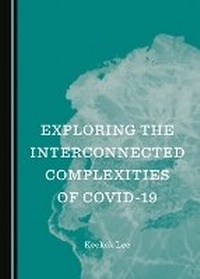
Exploring the Interconnected Complexities of COVID-19
Published on 16. August 2023
Book
Hardback
126 pages
978-1-5275-2532-0 (ISBN)
Description
This book explores the nature of COVID-19 through posing four questions: What could be said to be the cause of COVID-19? Who is likely to be infected? Where is infection likely to take place? When is infection likely to occur? It will demonstrate that these four W questions are interconnected, that they are the very ones which pre-occupy biomedicine today, whether in the form of clinical medicine or epidemiology. Epidemiology is often portrayed as "sub-standard", while clinical medicine is put on a pedestal, marked as "superior" and "methodologically impeccable/privileged". This book challenges this standard assessment. It argues that the causal model underpinning epidemiology is more adequate to account for medical data and evidence, across the board. Epidemiological Thinking is Medical Thinking, which this book calls Ecosystem Thinking and, through it, explores the values underpinning Medical Thinking, including geopolitical values.
More details
Edition
Unabridged edition
Language
English
Place of publication
Newcastle upon Tyne
United Kingdom
Target group
Professional and scholarly
Edition type
Unabridged edition
Product notice
With dust jacket
Dimensions
Height: 212 mm
Width: 148 mm
ISBN-13
978-1-5275-2532-0 (9781527525320)
Copyright in bibliographic data and cover images is held by Nielsen Book Services Limited or by the publishers or by their respective licensors: all rights reserved.
Schweitzer Classification
Other editions
Additional editions

Book
05/2024
1st Edition
Cambridge Scholars Publishing
€60.84
Shipment within 15-20 days
E-Book
08/2023
1st Edition
Cambridge Scholars Publishing
€226.99
Available for download
Person
Keekok Lee is a philosopher trained in the analytical tradition of "Anglo-Saxon philosophy". She taught at the National University of Singapore before moving to the University of Manchester, UK. Since taking early retirement in 1999, she has continued to research and publish in several philosophical domains, including the philosophy of biology and genetics and the philosophy of medicine. The latter domain has investigated both biomedicine and classical Chinese medicine. Of late, her academic interests have expanded to include the notion of coloniality, both exogenous and endogenous, with regard to non-European systems of knowledge.