

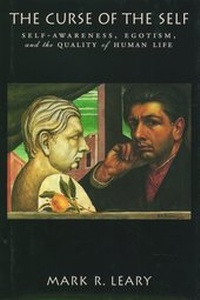
The Curse of the Self
Self-awareness, Egotism, and the Quality of Human Life
Published on 29. July 2004
Book
Hardback
237 pages
978-0-19-517242-3 (ISBN)
Description
Human beings have the ability to be self reflective, or to think consciously about themselves, which allows them, among other things, to imagine themselves in the future, anticipate the consequences of their behaviour, plan ahead, and take steps to improve themselves. Despite these obvious advantages, self-reflection comes at a high price. Most people occasionally realize that it causes problems, such as when they cannot stop dwelling on some past failure or future worry, when their ego fuels conflicts with other people, or when their mental chatter keeps them awake at night. Yet few people realize neither how profoundly their lives are affected by their self-reflection, nor how frequently this inner chatter interferes with their success, pollutes their relationships with others, and undermines their happiness. The mental apparatus that enables us to be self-reflective is the same one responsible for most of the personal and social difficulties we face as individuals and as a species. The egocentric, egotistical self blinds people to their own shortcomings, undermines their relationships with others, and leads to social conflict.Self-reflection distorts peoples perceptions of the world, leading them to make bad decisions based on faulty information.
By allowing people to ruminate about the past or imagine what might happen in the future, it also conjures up a great deal of personal suffering in the form of depression, anxiety, anger, jealousy, and other negative emotions. A great deal of unhappiness, in the form of addictions, overeating, and domestic violence, is due to peoples inability to exert control over their thoughts and behaviour. This lack of control has led visionaries throughout history to proclaim that the egoic self stymies our quest for spiritual fulfilment and leads to immoral behaviour. Is it possible to direct our self reflection in a way that will minimize the disadvantages and maximize the advantages? Is there a way to affect the egotistical self through self-reflection? In this volume Mark Leary explores the personal and social problems that are created by the capacity for self-reflection, and by drawing upon psychology and other behavioural sciences, offers insights into how these problems can be minimized.
By allowing people to ruminate about the past or imagine what might happen in the future, it also conjures up a great deal of personal suffering in the form of depression, anxiety, anger, jealousy, and other negative emotions. A great deal of unhappiness, in the form of addictions, overeating, and domestic violence, is due to peoples inability to exert control over their thoughts and behaviour. This lack of control has led visionaries throughout history to proclaim that the egoic self stymies our quest for spiritual fulfilment and leads to immoral behaviour. Is it possible to direct our self reflection in a way that will minimize the disadvantages and maximize the advantages? Is there a way to affect the egotistical self through self-reflection? In this volume Mark Leary explores the personal and social problems that are created by the capacity for self-reflection, and by drawing upon psychology and other behavioural sciences, offers insights into how these problems can be minimized.
More details
Language
English
Place of publication
New York
United States
Target group
Professional and scholarly
Researchers and students in social and clinical psychology and sociology
Illustrations
1line drawing
Dimensions
Height: 234 mm
Width: 156 mm
ISBN-13
978-0-19-517242-3 (9780195172423)
Copyright in bibliographic data and cover images is held by Nielsen Book Services Limited or by the publishers or by their respective licensors: all rights reserved.
Schweitzer Classification
Other editions
Additional editions
E-Book
07/2004
1st Edition
OUP eBook
€18.99
Available for download
E-Book
07/2004
1st Edition
OUP eBook
€18.99
Available for download
Person
Mark R. Leary, Professor of Psychology, Wake Forest University, USA