

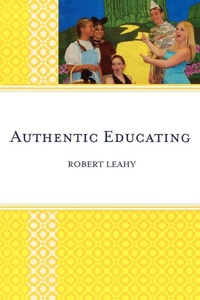
Authentic Educating
Solutions for a World at Risk
Published on 24. August 2009
Book
Paperback/Softback
190 pages
978-0-7618-4592-8 (ISBN)
Description
In Authentic Educating, Leahy describes teaching methods that can be used in every discipline and strategies that work in classrooms from elementary to graduate school. Authentic educating integrates several philosophic perspectives to yield theory and practice that encourages high levels of teaching and learning in elementary through graduate school. Authentic educating helps students to understand concepts from mathematics to chemistry to music and language arts in ways that engage them cognitively and emotionally.
Authentic educative events are project-oriented and include personal and academic products. Projects entail students doing and making things guided by powerful learning tools. Personal products include: reaction papers, personal journals, concept maps, performing plays, and constructing Vee diagrams. Academic products include: essays, term papers, field journals, exams, concept maps to summarize novels and articles, panel presentations and discussions, and Vees.
The aim of this book is to create authentic relationships that resonate within the principles of democracy upon which this country was founded.
Readers can gain a deeper understanding of the teaching methods described in this book by viewing the video samples featured on the Authentic Educating website, www.authenticeducating.com.
Authentic educative events are project-oriented and include personal and academic products. Projects entail students doing and making things guided by powerful learning tools. Personal products include: reaction papers, personal journals, concept maps, performing plays, and constructing Vee diagrams. Academic products include: essays, term papers, field journals, exams, concept maps to summarize novels and articles, panel presentations and discussions, and Vees.
The aim of this book is to create authentic relationships that resonate within the principles of democracy upon which this country was founded.
Readers can gain a deeper understanding of the teaching methods described in this book by viewing the video samples featured on the Authentic Educating website, www.authenticeducating.com.
Reviews / Votes
The text, a worthy resource for philosophy of education and methods courses, provides numerous examples of ways students can use concept maps and Vee diagrams in their papers, presentations, and panel discussions. With the current emphasis on assessment as a vital aspect of educating reform, the chapter on how to score concept maps is especially helpful.... Recommended. * Choice Reviews * Professor Leahy is in the very best sense a progressive. He believes that education is an integration of thoughts, feelings, and actions which leads not only to knowledge but to character...Authentic Educating is a well-written treatise on how and why education is complicated, transformative, and fundamental to our social fabric. -- Nicholas Colangelo, Myron and Jacqueline Blank Professor of Gifted Education, College of Education, The University of IowaMore details
Language
English
Place of publication
Lanham, MD
United States
Target group
Professional and scholarly
Dimensions
Height: 229 mm
Width: 152 mm
Thickness: 10 mm
Weight
259 gr
ISBN-13
978-0-7618-4592-8 (9780761845928)
Copyright in bibliographic data and cover images is held by Nielsen Book Services Limited or by the publishers or by their respective licensors: all rights reserved.
Schweitzer Classification
Other editions
Additional editions
E-Book
08/2009
Bloomsbury eBooks US
€42.49
Available for download
Person
Robert M. Leahy, Ph.D. and M.Ed., is an associate professor in the Department of Teacher Education at Stetson University. This book is the product of almost forty years of teaching and writing about education.
Content
Chapter 1 Foreword
Chapter 2 Preface
Chapter 3 Chapter 1: Introducing Authentic Educating
Chapter 4 Chapter 2: Developing a Philosophy of Education
Chapter 5 Chapter 3: How to Use Concept Maps
Chapter 6 Chapter 4: The Vee as a Learning Tool
Chapter 7 Chapter 5: Authenticity in the Classroom: From Literature to Personal Journals and One-Act Plays
Chapter 8 Chapter 6: Authentic Presentations, Panels, Projects, and Papers
Chapter 9 Chapter 7: The Future of Authentic Educating
Chapter 10 References
Chapter 11 Index
Chapter 12 About the Author
Chapter 2 Preface
Chapter 3 Chapter 1: Introducing Authentic Educating
Chapter 4 Chapter 2: Developing a Philosophy of Education
Chapter 5 Chapter 3: How to Use Concept Maps
Chapter 6 Chapter 4: The Vee as a Learning Tool
Chapter 7 Chapter 5: Authenticity in the Classroom: From Literature to Personal Journals and One-Act Plays
Chapter 8 Chapter 6: Authentic Presentations, Panels, Projects, and Papers
Chapter 9 Chapter 7: The Future of Authentic Educating
Chapter 10 References
Chapter 11 Index
Chapter 12 About the Author