

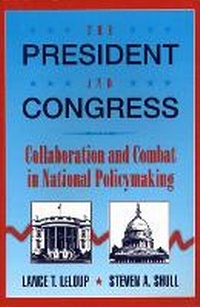
The President and Congress
Collaboration and Combat in National Policymaking
Published on 25. September 1998
Book
Paperback/Softback
278 pages
978-0-205-26534-3 (ISBN)
Description
The book provides students with a comprehensive, up-to-date, and balanced view of how the two major branches of national government work together to make public policy. The authors, one a presidential scholar and the other a congressional scholar, view the two branches as coequals in policymaking, operating as "tandem institutions" in a separated system.
The text is organized around an original framework that identifies four patterns of policymaking: presidential leadership, congressional leadership, consensus/cooperation, and deadlock/extraordinary resolution. The text employs a policy focus, looking not only at the policy process but also evaluating policy results in the areas of foreign policy, civil rights, economic and budget policy, and social welfare. A separate case study illustrates each of the four patterns in each of the four policy areas, serving as an integral part of the text to enhance the student's understanding. Timely and complete, the text provides the most recent research on Congress, the President, and divided government and reflects the important changes of the 1990s, such as the Republican takeover of Congress in 1994 and the wide variety of patterns that have developed between President Clinton and Congress. The four patterns of policymaking and the case studies comprise an effective tool for helping students understand the increasingly complex relations between Congress and the President.
The text is organized around an original framework that identifies four patterns of policymaking: presidential leadership, congressional leadership, consensus/cooperation, and deadlock/extraordinary resolution. The text employs a policy focus, looking not only at the policy process but also evaluating policy results in the areas of foreign policy, civil rights, economic and budget policy, and social welfare. A separate case study illustrates each of the four patterns in each of the four policy areas, serving as an integral part of the text to enhance the student's understanding. Timely and complete, the text provides the most recent research on Congress, the President, and divided government and reflects the important changes of the 1990s, such as the Republican takeover of Congress in 1994 and the wide variety of patterns that have developed between President Clinton and Congress. The four patterns of policymaking and the case studies comprise an effective tool for helping students understand the increasingly complex relations between Congress and the President.
More details
Language
English
Place of publication
United States
Publishing group
Pearson Education (US)
Target group
Professional and scholarly
Dimensions
Height: 229 mm
Width: 147 mm
Thickness: 19 mm
Weight
460 gr
ISBN-13
978-0-205-26534-3 (9780205265343)
Copyright in bibliographic data and cover images is held by Nielsen Book Services Limited or by the publishers or by their respective licensors: all rights reserved.
Schweitzer Classification
Other editions
New editions
Lance T. LeLoup | Steven A. Shull
The President and Congress
Collaboration and Combat in National Policymaking
Book
08/2002
2nd Edition
Pearson
€102.74
Article is exhausted; no reprint
Content
1. Patterns of Policymaking: Collaboration or Combat?
Perspectives on Legislative and Executive Power.
Divided Government.
Examining Policymaking.
Determinants of Policymaking Patterns.
Consequences of Presidential-Congressional Policymaking.
2. The Constitution and Shared Policymaking.
Prelude to Constitution Making.
Shaping the Legislative and Executive Branches.
Policymaking Patterns in the Early Republic.
Policymaking Patterns from the Jackson Era to the Civil War.
Policymaking Patterns from Reconstruction to the Depression.
Policymaking Patterns in the Modern Era.
The Courts: Helping Shape Legislative-Executive Boundaries.
3. The Presidency and Policymaking.
The Potential for Presidential Leadership.
The Policymaking Environment.
Presidential Institutions.
Personal Leadership.
The Presidential Agenda.
The Presidents' Legislative Records.
4. Congress and Policymaking.
The Potential for Congressional Leadership.
The Policymaking Environment.
Congressional Institutions.
Congressional Leadership and the Policy Agenda.
5. Foreign Policy.
The Evolution of U.S. Foreign Policy.
The Cold War and Containment of Communism.
The New International Environment.
Making Foreign Policy.
Presidential Leadership: The Persian Gulf War (1991).
Congressional Leadership: Cuba Sanctions Legislation (1996).
Consensus/Cooperation: The Panama Canal Treaties (1978).
Deadlock/Extraordinary Resolution: Aid to the Nicaraguan Contras (1982-89).
6. Civil Rights Policy.
The Evolution of Civil Rights Policy.
The Environment for Civil Rights Policy.
Making Civil Rights Policy.
Presidential Leadership: The Civil Rights Act (1964).
Congressional Leadership: The Civil Rights Restoration Act (1988).
Cooperation/Consensus: Same Sex Marriage Law (1996).
Deadlock/Extraordinary Resolution: The Civil Rights Act (1991).
7. Economic and Budget Policy.
The Development of U.S. Economic and Budget Policy.
The Environment for Economic and Budget Policy.
Making Economic and Budget Policy.
Presidential Leadership: the Economic and Budget Plan (1981).
Congressional Leadership: The Shareholder Lawsuits Bill (1995).
Consensus/Cooperation: The Tax Reform Act (1986).
Deadlock/Extraordinary Resolution: The Balanced Budget Standoff (1995-96).
8. Social Welfare Policy.
The Evolution of Social Welfare Policy.
The Environment for Social Welfare Policy.
Making Social Welfare Policy.
Presidential Leadership: The Economic Opportunity Act (1964).
Congressional Leadership: Catastrophic Health Care Insurance (1988-1989).
Cooperation/Consensus: Comprehensive Welfare Reform (1996).
Deadlock/Extraordinary Resolution: The Social Security Bailout (1983).
9. Patterns and Consequences: Can Presidential-Congressional Policymaking Be Improved?
Presidential Leadership.
Congressional Leadership.
Consensus/Cooperation.
Deadlock/Extraordinary Resolution.
Can Presidential-Congressional Policymaking Be Improved?
Perspectives on Legislative and Executive Power.
Divided Government.
Examining Policymaking.
Determinants of Policymaking Patterns.
Consequences of Presidential-Congressional Policymaking.
2. The Constitution and Shared Policymaking.
Prelude to Constitution Making.
Shaping the Legislative and Executive Branches.
Policymaking Patterns in the Early Republic.
Policymaking Patterns from the Jackson Era to the Civil War.
Policymaking Patterns from Reconstruction to the Depression.
Policymaking Patterns in the Modern Era.
The Courts: Helping Shape Legislative-Executive Boundaries.
3. The Presidency and Policymaking.
The Potential for Presidential Leadership.
The Policymaking Environment.
Presidential Institutions.
Personal Leadership.
The Presidential Agenda.
The Presidents' Legislative Records.
4. Congress and Policymaking.
The Potential for Congressional Leadership.
The Policymaking Environment.
Congressional Institutions.
Congressional Leadership and the Policy Agenda.
5. Foreign Policy.
The Evolution of U.S. Foreign Policy.
The Cold War and Containment of Communism.
The New International Environment.
Making Foreign Policy.
Presidential Leadership: The Persian Gulf War (1991).
Congressional Leadership: Cuba Sanctions Legislation (1996).
Consensus/Cooperation: The Panama Canal Treaties (1978).
Deadlock/Extraordinary Resolution: Aid to the Nicaraguan Contras (1982-89).
6. Civil Rights Policy.
The Evolution of Civil Rights Policy.
The Environment for Civil Rights Policy.
Making Civil Rights Policy.
Presidential Leadership: The Civil Rights Act (1964).
Congressional Leadership: The Civil Rights Restoration Act (1988).
Cooperation/Consensus: Same Sex Marriage Law (1996).
Deadlock/Extraordinary Resolution: The Civil Rights Act (1991).
7. Economic and Budget Policy.
The Development of U.S. Economic and Budget Policy.
The Environment for Economic and Budget Policy.
Making Economic and Budget Policy.
Presidential Leadership: the Economic and Budget Plan (1981).
Congressional Leadership: The Shareholder Lawsuits Bill (1995).
Consensus/Cooperation: The Tax Reform Act (1986).
Deadlock/Extraordinary Resolution: The Balanced Budget Standoff (1995-96).
8. Social Welfare Policy.
The Evolution of Social Welfare Policy.
The Environment for Social Welfare Policy.
Making Social Welfare Policy.
Presidential Leadership: The Economic Opportunity Act (1964).
Congressional Leadership: Catastrophic Health Care Insurance (1988-1989).
Cooperation/Consensus: Comprehensive Welfare Reform (1996).
Deadlock/Extraordinary Resolution: The Social Security Bailout (1983).
9. Patterns and Consequences: Can Presidential-Congressional Policymaking Be Improved?
Presidential Leadership.
Congressional Leadership.
Consensus/Cooperation.
Deadlock/Extraordinary Resolution.
Can Presidential-Congressional Policymaking Be Improved?