

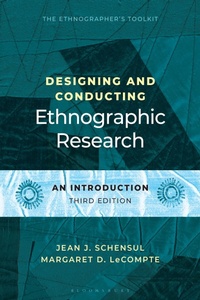
Designing and Conducting Ethnographic Research
An Introduction
3rd Edition
Will be published approx. on 6. August 2026
Book
Paperback/Softback
416 pages
978-1-5381-9124-8 (ISBN)
Description
Who can and should conduct ethnographic research? How can we transform an idea into a research question, and how can that question, in turn, be developed into a research design that produces comprehensible data?
Designing and Conducting Ethnographic Research, Third Edition, is a comprehensive introduction to ethnographic methods. It opens by defining ethnography and considering ethical challenges in the field before exploring major theories and ways of thinking in ethnographic research. The book then offers a general overview of qualitative and quantitative research, including the many different approaches to designing studies, and dives into developing a good research question. A discussion of data collection and analysis are then followed by an exploration of how ethnography is used to solve critical social, health, education, and cultural issues as well as emerging trends in ethnography.
Designing and Conducting Ethnographic Research is the first book in The Ethnographer's Toolkit, a series of texts on how to plan, design, carry out, and use the results of applied ethnographic research.
New to This Edition:
--A new discussion of the decolonization of research and changes in researcher stance sheds light on alternative ethnographic interventions and raises questions of what ethnography could and should be
--New Chapter 10, "Emerging Trends in Ethnography," covers burgeoning uses of artificial intelligence and other digital technologies as well as Indigenous and art-based research approaches and methods
--A new discussion of what research questions are, how they are formulated at different levels, and how they guide data collection enables beginner researchers to create stronger studies
--An exploration of new ethical challenges in the field, including in digital and online research, offers early ethnographers the knowledge and tools to address new and emerging ethical concerns
Designing and Conducting Ethnographic Research, Third Edition, is a comprehensive introduction to ethnographic methods. It opens by defining ethnography and considering ethical challenges in the field before exploring major theories and ways of thinking in ethnographic research. The book then offers a general overview of qualitative and quantitative research, including the many different approaches to designing studies, and dives into developing a good research question. A discussion of data collection and analysis are then followed by an exploration of how ethnography is used to solve critical social, health, education, and cultural issues as well as emerging trends in ethnography.
Designing and Conducting Ethnographic Research is the first book in The Ethnographer's Toolkit, a series of texts on how to plan, design, carry out, and use the results of applied ethnographic research.
New to This Edition:
--A new discussion of the decolonization of research and changes in researcher stance sheds light on alternative ethnographic interventions and raises questions of what ethnography could and should be
--New Chapter 10, "Emerging Trends in Ethnography," covers burgeoning uses of artificial intelligence and other digital technologies as well as Indigenous and art-based research approaches and methods
--A new discussion of what research questions are, how they are formulated at different levels, and how they guide data collection enables beginner researchers to create stronger studies
--An exploration of new ethical challenges in the field, including in digital and online research, offers early ethnographers the knowledge and tools to address new and emerging ethical concerns
Reviews / Votes
The third edition of Designing and Conducting Ethnographic Research: An Introduction is an invaluable resource for researchers and their partners interested in using ethnographic methods to find solutions to complex problems in different settings. In addition, to discussing the advantages of ethnographic fieldwork in research and evaluation, the authors review specific methods, ethics of fieldwork, research design, data collection and analysis, and conducting interdisciplinary ethnographic research. New additions to the volume include discussions about the decolonization of research and conducting ethnographic studies of AI and other digital technologies. This is an excellent resource for new and seasoned researchers and their partners in the community, government, and industry. * David Himmelgreen, professor of anthropology, University of South Florida * The volume is a great source for both junior anthropologists and seasoned practitioners, and an indispensable resource in my classroom. Addressing urgent topics, such as the growing use of artificial intelligence and decolonial approaches, this new edition will surely confirm how useful ethnographic methods can be to solve real-world problems. * Karine L. Narahara, University of North Texas * I have been using The Ethnographer's Toolkit in my undergraduate research methodology course for many years. Students find the straightforward chapters, illustrative examples, clear definitions, and step-by-step approach to qualitative methods extremely accessible. I am delighted this updated edition addresses decolonizing research, ethics and power relations, positionality, grounded theory, interdisciplinary collaboration, digital methods and use of AI. This comprehensive resource is essential for all novice researchers. * Mara Leichtman, Michigan State University * I studied the first edition of The Ethnographer's Toolkit in graduate school, and I've been teaching the second edition for nearly a decade. I've found it to be one of the best resources for teaching and learning ethnographic methods, so I'm excited to begin teaching with the third edition of Designing and Conducting Ethnographic Research. It's a sharper, more contemporary guide to fieldwork that rethinks ethics through the lens of power and positionality, adds fuller support for co-created and decolonizing intervention work, and clarifies how theory, design, analysis, and interdisciplinary teamwork fit together. * A. J. Faas, San Jose State University * I have trained decades of anthropology, geography, and environmental psychology students in the ethnography of space and place using the Schensul and LeCompte toolkit with great success. My students like the graphics, boxed examples, additional references, signposts, and practice reminders, and especially the clear writing to navigate their first encounter with research design and fieldwork. In the new edition, the ethical and practical challenges of collaborative and collective research are explored with emphasis on teamwork and how to manage the strains and strengths of interdisciplinary research. As our landscapes of ethnographic inquiry have expanded to include digital and virtual, this edition guides students through the complex epistemologies and methodological problems that emerge and offers guidance on how to tackle our hybrid realities and field sites. The Schensul and LeCompte remains my go-to (favorite) research methods text and with this updated version, exceeds expectations of what is needed to address future research concerns. * Setha Low, The City University of New York * I have used Designing and Conducting Ethnographic Methods in many cultural anthropology courses over the years and was pleased with the new timely and pertinent content regarding contemporary emerging trends. The holistic gaze toward decolonized ethnographic research offers a clear blueprint for what the art and science of ethnography can be. The large cosmic questions of artificial intelligence, digital trends, a renaissance of storytelling and art, and ongoing ethical questions are all introduced, described, explained, and evaluated with balance and tact. There is no better Introductory book for conducting ethnographic research. From research design and data collection to analysis and practical problem solving-this book is a tour de force that is sure to forge a lasting and impactful foundation for students and practitioners of anthropology alike. * Eric J. Montgomery, Michigan State University *More details
Series
Edition
3rd edition
Language
English
Place of publication
United States
Publishing group
Bloomsbury Publishing Plc
Target group
College/higher education
Illustrations
25 tables
Dimensions
Height: 229 mm
Width: 152 mm
Thickness: 28 mm
Weight
454 gr
ISBN-13
978-1-5381-9124-8 (9781538191248)
Copyright in bibliographic data and cover images is held by Nielsen Book Services Limited or by the publishers or by their respective licensors: all rights reserved.
Schweitzer Classification
Other editions
Additional editions

Jean J. Schensul | Margaret D. LeCompte
Designing and Conducting Ethnographic Research
An Introduction
E-Book
approx. 07/2026
3rd Edition
Bloomsbury Academic
€40.99
Available for download

Jean J. Schensul | Margaret D. LeCompte
Designing and Conducting Ethnographic Research
An Introduction
E-Book
approx. 07/2026
3rd Edition
Bloomsbury Academic
€40.99
Available for download
Persons
Jean J. Schensul is adjunct professor of public health and research scientist of anthropology at UCONN and former director of the Institute for Community Research. She plays a national role in promoting community-initiated research partnerships with universities, building community research capacity and mentoring diverse young scholars to conduct community based participatory research.
Margaret D. LeCompte is professor emerita of education and sociology at the University of Colorado, Boulder. She is internationally known as one of the leading proponents of qualitative and ethnographic research and evaluation in education.
Margaret D. LeCompte is professor emerita of education and sociology at the University of Colorado, Boulder. She is internationally known as one of the leading proponents of qualitative and ethnographic research and evaluation in education.
Content
Chapter 1: What is Ethnography
Introducing and defining ethnography
The value of ethnography: why ethnographic research
The characteristics of ethnography
Ethnography is informed by the concept of culture in context
A note on the historical evolution of ethnography as an approach to science: from researcher-led and represented to collaborative and community-led
Transforming ethnographic research into action through diverse approaches to change
Responding to critiques about how cultural politics affect ethnographers' practice, identity and research
Summary
Chapter 2. The ethics of ethnographic field research
What are ethics?
What are social science research ethics? A brief historical review
Negotiating identity, positionality, and power: intersectionality in ethnographic research
The basic ethical principles governing conduct of research with human beings
The Belmont principles: justice, beneficence and respect for persons
Voluntarism, informed consent, risks and benefits, vulnerable subjects and sensitive topics
Disciplinary and professional codes of ethics
Institutional review boards (irbs) and how ethnographers can work with them
Special ethical concerns in site-based ethnographic research
Summary
Chapter 3: Using theory to frame the conduct of ethnographic research
Introduction
Multiple perspectives: how ethnographers frame cultural research
What are research paradigms
A paradigmatic synthesis
Beyond grounded theory: local theoretical models
What are midrange theories
Summary
Chapter 4: an overview of research design
Introduction: research design: a blueprint for action
Research designs in social science research
Qualitative designs
Quantitative designs
Integrating quantitative and experimental with qualitative and multiple methods research designs
Chapter 5. Choosing and designing an ethnographic research project
Introduction
Where do research questions come from?
Deciding what to investigate: transforming research purposes into the elements of a research design
Putting together the elements of a research design
Elaborating research questions
The processes of operationalization and research modeling
Conceptualizing research models and conceptual modeling
Identifying populations and study sites
Strategies for selection of systematic sampling units for study
Summary
Chapter 6. Collecting ethnographic data
Techniques for collecting multiple types of data
Resources and logistics: how ethnographers allocate time, money, and staff
Creating planning documents and timelines
Chapter 7. Data analysis: how ethnographers make sense of their data
Introduction
Analysis as both a cognitive process and a technical procedure
When does data analysis begin and how does it unfold?
"chunking" data into large conceptual categories or "bins"
Defining terms: operational and conceptual levels of analysis
Finding initial themes or regularities
The item level of analysis: isolating empirical "bits" from streams of data
The pattern level of analysis: aggregating groups of items
The structural level of analysis: assembling multiple patterns into structures informed by domains
Seeking complex relationships across domains and structures by using multiple levels and sources of data
Interpreting results: figuring out what the story means
Levels of theory
Summary
Chapter 8: Working together and across disciplines
Introduction
Learning research teamwork by joining or participating in a research team
Partnering in ethnographic research across disciplines, sectors and communities
Building and conducting ethnographic team research
Collecting data with a research team
Building transdisciplinary community research partnerships
Challenges and rewards in ethnographic teamwork and interdisciplinary intersectoral partnerships
Summary
Chapter 9: Applying ethnography to solveproblems and address inequities
Introduction to applying ethnography to solve social problems
Products of ethnographic research
Informing public audiences: dissemination
Developing interventions
Improving quantitative instruments
Influencing teacher/educator practice
Democratizing ethnography through participatory action research
Improving process and outcome evaluations
Influencing policy
Supporting advocacy
Contributing to science
Chapter 10. Evolving Frontiers in Ethnography
Introduction
Ethnography, technology and artificial intelligence
Conducting digital (internet) ethnography
Integrating art into the conduct and dissemination of ethnographic research
Summary
Introducing and defining ethnography
The value of ethnography: why ethnographic research
The characteristics of ethnography
Ethnography is informed by the concept of culture in context
A note on the historical evolution of ethnography as an approach to science: from researcher-led and represented to collaborative and community-led
Transforming ethnographic research into action through diverse approaches to change
Responding to critiques about how cultural politics affect ethnographers' practice, identity and research
Summary
Chapter 2. The ethics of ethnographic field research
What are ethics?
What are social science research ethics? A brief historical review
Negotiating identity, positionality, and power: intersectionality in ethnographic research
The basic ethical principles governing conduct of research with human beings
The Belmont principles: justice, beneficence and respect for persons
Voluntarism, informed consent, risks and benefits, vulnerable subjects and sensitive topics
Disciplinary and professional codes of ethics
Institutional review boards (irbs) and how ethnographers can work with them
Special ethical concerns in site-based ethnographic research
Summary
Chapter 3: Using theory to frame the conduct of ethnographic research
Introduction
Multiple perspectives: how ethnographers frame cultural research
What are research paradigms
A paradigmatic synthesis
Beyond grounded theory: local theoretical models
What are midrange theories
Summary
Chapter 4: an overview of research design
Introduction: research design: a blueprint for action
Research designs in social science research
Qualitative designs
Quantitative designs
Integrating quantitative and experimental with qualitative and multiple methods research designs
Chapter 5. Choosing and designing an ethnographic research project
Introduction
Where do research questions come from?
Deciding what to investigate: transforming research purposes into the elements of a research design
Putting together the elements of a research design
Elaborating research questions
The processes of operationalization and research modeling
Conceptualizing research models and conceptual modeling
Identifying populations and study sites
Strategies for selection of systematic sampling units for study
Summary
Chapter 6. Collecting ethnographic data
Techniques for collecting multiple types of data
Resources and logistics: how ethnographers allocate time, money, and staff
Creating planning documents and timelines
Chapter 7. Data analysis: how ethnographers make sense of their data
Introduction
Analysis as both a cognitive process and a technical procedure
When does data analysis begin and how does it unfold?
"chunking" data into large conceptual categories or "bins"
Defining terms: operational and conceptual levels of analysis
Finding initial themes or regularities
The item level of analysis: isolating empirical "bits" from streams of data
The pattern level of analysis: aggregating groups of items
The structural level of analysis: assembling multiple patterns into structures informed by domains
Seeking complex relationships across domains and structures by using multiple levels and sources of data
Interpreting results: figuring out what the story means
Levels of theory
Summary
Chapter 8: Working together and across disciplines
Introduction
Learning research teamwork by joining or participating in a research team
Partnering in ethnographic research across disciplines, sectors and communities
Building and conducting ethnographic team research
Collecting data with a research team
Building transdisciplinary community research partnerships
Challenges and rewards in ethnographic teamwork and interdisciplinary intersectoral partnerships
Summary
Chapter 9: Applying ethnography to solveproblems and address inequities
Introduction to applying ethnography to solve social problems
Products of ethnographic research
Informing public audiences: dissemination
Developing interventions
Improving quantitative instruments
Influencing teacher/educator practice
Democratizing ethnography through participatory action research
Improving process and outcome evaluations
Influencing policy
Supporting advocacy
Contributing to science
Chapter 10. Evolving Frontiers in Ethnography
Introduction
Ethnography, technology and artificial intelligence
Conducting digital (internet) ethnography
Integrating art into the conduct and dissemination of ethnographic research
Summary