

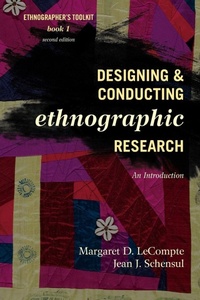
Designing and Conducting Ethnographic Research
An Introduction
2nd Edition
Published on 16. November 2010
Book
Paperback/Softback
376 pages
978-0-7591-1869-0 (ISBN)
Description
This is Book 1 of 7 in the Ethnographer's Toolkit, Second Edition.
The Ethnographer's Toolkit series begins with this primer, which introduces novice and expert practitioners alike to the process of ethnographic research, including answers to questions such as who should and can do ethnography, when it is used most fruitfully, and how research projects are carried out from conceptualization to the uses of research results. Written in practical, straightforward language, this new edition defines the qualitative research enterprise, links research strategies to theoretical paradigms, and outlines the ways in which an ethnographic study can be designed. Use Designing and Conducting Ethnographic Research as a guide to the entire Toolkit or as a stand-alone introduction to ethnographic research.
Other books in the set:
Book 2:
Initiating Ethnographic Research: A Mixed Methods Approach
by Stephen L. Schensul, Jean J. Schensul, and Margaret D. LeCompte
9780759122017
Book 3:
Essential Ethnographic Methods: A Mixed Methods Approach, Second Edition
by Jean J. Schensul and Margaret D. LeCompte
9780759122031
Book 4:
Specialized Ethnographic Methods: A Mixed Methods Approach
edited by Jean J. Schensul and Margaret D. LeCompte
9780759122055
Book 5:
Analysis and Interpretation of Ethnographic Data: A Mixed Methods Approach, Second Edition
by Margaret D. LeCompte and Jean J. Schensul
9780759122079
Book 6:
Ethics in Ethnography: A Mixed Methods Approach
by Margaret D. LeCompte and Jean J. Schensul
9780759122093
Book 7:
Ethnography in Action: A Mixed Methods Approach
by Jean J. Schensul and Margaret D. LeCompte
9780759122116
The Ethnographer's Toolkit series begins with this primer, which introduces novice and expert practitioners alike to the process of ethnographic research, including answers to questions such as who should and can do ethnography, when it is used most fruitfully, and how research projects are carried out from conceptualization to the uses of research results. Written in practical, straightforward language, this new edition defines the qualitative research enterprise, links research strategies to theoretical paradigms, and outlines the ways in which an ethnographic study can be designed. Use Designing and Conducting Ethnographic Research as a guide to the entire Toolkit or as a stand-alone introduction to ethnographic research.
Other books in the set:
Book 2:
Initiating Ethnographic Research: A Mixed Methods Approach
by Stephen L. Schensul, Jean J. Schensul, and Margaret D. LeCompte
9780759122017
Book 3:
Essential Ethnographic Methods: A Mixed Methods Approach, Second Edition
by Jean J. Schensul and Margaret D. LeCompte
9780759122031
Book 4:
Specialized Ethnographic Methods: A Mixed Methods Approach
edited by Jean J. Schensul and Margaret D. LeCompte
9780759122055
Book 5:
Analysis and Interpretation of Ethnographic Data: A Mixed Methods Approach, Second Edition
by Margaret D. LeCompte and Jean J. Schensul
9780759122079
Book 6:
Ethics in Ethnography: A Mixed Methods Approach
by Margaret D. LeCompte and Jean J. Schensul
9780759122093
Book 7:
Ethnography in Action: A Mixed Methods Approach
by Jean J. Schensul and Margaret D. LeCompte
9780759122116
Reviews / Votes
LeCompte & Schensul's Ethnographer's Toolkit is a classic methods text in applied anthropology. The authors combine highly accessible writing, extremely pertinent examples, and a grounded approach to social inquiry that is both creative and versatile. The new edition of the introductory book in the series, Designing and Conducting Ethnographic Research, represents a substantial revision of the previous edition. This edition includes new discussions of the influence of ethnicity and power, expanded entries on design and analysis, and greater emphases on team and partnership building. This text is highly recommended for both graduate and undergraduate students in anthropology and related disciplines... -- Susan Greenbaum, University of South Florida This is an excellent book. It is comprehensive, balanced, and thoughtfully written, with frequent examples from a range of disciplines that bring the text to life. The many definitions and cross references are quite helpful. It includes the best description of various research paradigms, epistemologies, and designs I have seen. -- Janette Klingner, University of Colorado, Boulder Designing and conducting ethnographic research has never made so much sense. In this first volume, LeCompte and Schensul untangle the messiness of ethnographic research in a dynamic yet evident and comprehensive way. With accessible language, relevant examples, and easy-to-adapt checklists and models, this remarkable introduction to the Ethnographer's Toolkit series, now in its second edition, will become a favorite among researchers of all levels and across disciplines. This book provides incomparable insight on an array of research paradigms and topics, resulting in a great resource for those interested in community and institutional ethnographic research, as well as those looking to increase community participation and more democratic knowledge production. -- Federico Cintron-Moscoso, University of South Florida LeCompte & Schensul's Ethnographer's Toolkit is a classic methods text in applied anthropology. The authors combine highly accessible writing, extremely pertinent examples, and a grounded approach to social inquiry that is both creative and versatile. The new edition of the introductory book in the series, Designing and Conducting Ethnographic Research, represents a substantial revision of the previous edition. This edition includes new discussions of the influence of ethnicity and power, expanded entries on design and analysis, and greater emphases on team and partnership building. This text is highly recommended for both graduate and undergraduate students in anthropology and related disciplines. -- Susan Greenbaum, University of South FloridaMore details
Series
Edition
2nd edition
Language
English
Place of publication
California
United States
Target group
College/higher education
Professional and scholarly
Dimensions
Height: 229 mm
Width: 152 mm
Thickness: 20 mm
Weight
547 gr
ISBN-13
978-0-7591-1869-0 (9780759118690)
Copyright in bibliographic data and cover images is held by Nielsen Book Services Limited or by the publishers or by their respective licensors: all rights reserved.
Schweitzer Classification
Other editions
Additional editions
Margaret D. LeCompte | Jean J. Schensul
Designing and Conducting Ethnographic Research
An Introduction
E-Book
09/2010
2nd Edition
AltaMira Press
€47.49
Available for download
Margaret D. LeCompte | Jean J. Schensul
Designing and Conducting Ethnographic Research
An Introduction
E-Book
09/2010
2nd Edition
Bloomsbury eBooks US
€47.49
Available for download
Persons
Margaret D. LeCompte is professor emerita of education and sociology at the University of Colorado, Boulder.
Jean J. Schensul is founding director and senior scientist at the Institute for Community Research, Hartford, Connecticut.
Jean J. Schensul is founding director and senior scientist at the Institute for Community Research, Hartford, Connecticut.
Content
Introduction
List of Tables and Figures
List of Examples
Chapter 1. What Is Ethnography?
Chapter 2. When, Where, and By Whom Should Ethnography Be Used?
Chapter 3. Paradigms for Framing the Research of Ethnographic Research
Chapter 4. An Overview of Research Design
Chapter 5. Choosing and Designing an Ethnographic Research Project
Chapter 6. Collecting Ethnographic Data
Chapter 7. Data Analysis: How Ethnographers Make Sense of their Data
Chapter 8. Identifying and Building Research Items and Research Partnerships
Chapter 9. Applying Ethnography
Chapter 10. Protection of Risk to Human Subjects and the Ethics of Ethnographic Fieldwork
References
Index
List of Tables and Figures
List of Examples
Chapter 1. What Is Ethnography?
Chapter 2. When, Where, and By Whom Should Ethnography Be Used?
Chapter 3. Paradigms for Framing the Research of Ethnographic Research
Chapter 4. An Overview of Research Design
Chapter 5. Choosing and Designing an Ethnographic Research Project
Chapter 6. Collecting Ethnographic Data
Chapter 7. Data Analysis: How Ethnographers Make Sense of their Data
Chapter 8. Identifying and Building Research Items and Research Partnerships
Chapter 9. Applying Ethnography
Chapter 10. Protection of Risk to Human Subjects and the Ethics of Ethnographic Fieldwork
References
Index