

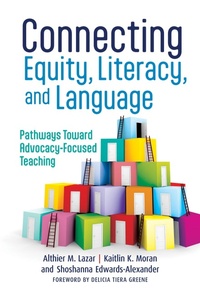
Connecting Equity, Literacy, and Language
Pathways Toward Advocacy-Focused Teaching
Will be published approx. on 22. December 2023
Book
Hardback
160 pages
978-0-8077-6875-4 (ISBN)
Description
This book shows literacy professionals how to develop the dispositions and actions associated with advocacy-focused teaching. While portraits of culturally conscious literacy teachers are now readily available, becoming such a teacher continues to be a challenge. Drawing from 60+ years of experience working with teacher candidates and teachers in the city of Philadelphia, the authors argue that becoming an advocacy-focused literacy teacher requires making moral commitments to students and developing professional competencies that fuse literacy, language, and equity studies. Recognizing that educators can be overwhelmed trying to match the realities they face daily with the theory behind good practice, Connecting Equity, Literacy, and Language packs a lot of big ideas into one readable, concise book that is perfect for use in literacy methods courses. The text includes definitions and examples of equity concepts, relatable teacher vignettes, and "Pause and Reflect" boxes to encourage reflection and classroom conversation.
Book Features:
Examines the central problems of students' disconnection with school, spirit murdering, and the teacher education gap.
Looks at inequities that have become normalized in classrooms and schools through standardized testing, literacy teaching routines and structures, and deficit-laced language about students and families.
Discusses literacies and languages as cultural practices and the need to be vigilant about the linguistic violence that occurs when students' languages are delegitimized.
Describes critically and culturally centered teaching frameworks.
Provides vivid examples of advocacy-focused teaching.
Book Features:
Examines the central problems of students' disconnection with school, spirit murdering, and the teacher education gap.
Looks at inequities that have become normalized in classrooms and schools through standardized testing, literacy teaching routines and structures, and deficit-laced language about students and families.
Discusses literacies and languages as cultural practices and the need to be vigilant about the linguistic violence that occurs when students' languages are delegitimized.
Describes critically and culturally centered teaching frameworks.
Provides vivid examples of advocacy-focused teaching.
More details
Series
Language
English
Place of publication
New York
United States
Target group
Professional and scholarly
Product notice
sewn/stitched
Cloth over boards
Dimensions
Height: 232 mm
Width: 156 mm
Thickness: 14 mm
Weight
363 gr
ISBN-13
978-0-8077-6875-4 (9780807768754)
Copyright in bibliographic data and cover images is held by Nielsen Book Services Limited or by the publishers or by their respective licensors: all rights reserved.
Schweitzer Classification
Persons
Althier M. Lazar is a professor of education at Saint Joseph's University. Her books include Culturally Sustaining Literacy Pedagogies, Schools of Promise for Multilingual Students, Bridging Literacy and Equity, and Practicing What We Teach. Kaitlin K. Moran is an assistant professor of teacher education at Saint Joseph's University. Shoshanna Edwards-Alexander is a clinical assistant professor of social work for the School of Education and Human Development at Saint Joseph's University.
Content
Contents
Foreword Delicia Tiera Greene ?ix
Acknowledgments ?xi
Introduction ?1
Our Purpose ?1
Structure of the Book ?3
Who We Are ?4
1. ?A Need for Advocacy-Focused Literacy Educators ?7
A Reckoning ?7
The Teacher Education Gap ?11
Teacher Development: Building Commitments and Competencies ?13
Connecting Equity, Literacy, and Language in a Landscape of Practice ?17
Conclusion ?20
2. ?Understanding Ourselves and Others ?21
Developing a Critical Awareness of Race ?21
A Pathway to Understanding ?25
Stumbling and Getting Back Up Again ?27
Developing a Critical Awareness of Culture ?29
Developing a Critical Awareness of Intersectionality ?33
Conclusion ?35
3. ?Inequities in Schools and Classrooms ?36
Pushing Kids Out of School ?37
Limitations of Literacy Curricula and Assessment ?40
Literacy Teaching Routines and Structures ?44
Deficit Descriptions and Approaches ?46
Conclusion ?49
4. ?Racism in Schools and Society ?51
The Invention of Race: A Brief History ?51
The Impact of Racial Categorizations ?53
Misinterpreting Critical Race Theory and the Need to Address Racism in School ?57
Literacy Educator Activism: Noticing, Questioning, Challenging ?61
Conclusion ?63
5. ?Many Literacies and Languages ?65
Rethinking Perspectives About Literacy and Language ?65
Autonomous and Ideological Conceptions of Literacy Revisited ?67
A Bit of History: The Heath Study ?68
Critiquing the "Word Gap" Research ?70
Englishes, Raciolinguistics, and Code-Meshing ?71
Multilingualism, Dynamic Bilingualism, and Translanguaging ?75
Conclusion ?77
6. ?Toward Culturally Centered Teaching ?79
Meet Cecilia ?80
Meet Andrea ?84
Examining Teachers and Teaching Through Advocacy-Focused Frameworks ?88
Seeing Teachers Within and Beyond Frameworks ?93
Conclusion ?94
7. ?Toward Critical Teaching ?95
Critical Literacy: Questioning Texts and the World ?96
Meet Jennifer ?99
Revisiting Andrea ?101
Youth and Educator Activism ?103
Revisiting Cecilia ?103
Meet Burton ?104
Connecting With Established Organizations ?106
Conclusion ?108
8. ?Pathways Toward Advocacy-Focused Teaching ?110
Noticing Inequities and Envisioning Change ?110
Noticing Inequities and Forging Change ?113
Meet Kristin ?114
Next Steps ?118
Your Path Begins With You ?118
Envision and Forge Change ?120
Putting It All Together ?124
References ?127
Index ?139
About the Authors ?145
Foreword Delicia Tiera Greene ?ix
Acknowledgments ?xi
Introduction ?1
Our Purpose ?1
Structure of the Book ?3
Who We Are ?4
1. ?A Need for Advocacy-Focused Literacy Educators ?7
A Reckoning ?7
The Teacher Education Gap ?11
Teacher Development: Building Commitments and Competencies ?13
Connecting Equity, Literacy, and Language in a Landscape of Practice ?17
Conclusion ?20
2. ?Understanding Ourselves and Others ?21
Developing a Critical Awareness of Race ?21
A Pathway to Understanding ?25
Stumbling and Getting Back Up Again ?27
Developing a Critical Awareness of Culture ?29
Developing a Critical Awareness of Intersectionality ?33
Conclusion ?35
3. ?Inequities in Schools and Classrooms ?36
Pushing Kids Out of School ?37
Limitations of Literacy Curricula and Assessment ?40
Literacy Teaching Routines and Structures ?44
Deficit Descriptions and Approaches ?46
Conclusion ?49
4. ?Racism in Schools and Society ?51
The Invention of Race: A Brief History ?51
The Impact of Racial Categorizations ?53
Misinterpreting Critical Race Theory and the Need to Address Racism in School ?57
Literacy Educator Activism: Noticing, Questioning, Challenging ?61
Conclusion ?63
5. ?Many Literacies and Languages ?65
Rethinking Perspectives About Literacy and Language ?65
Autonomous and Ideological Conceptions of Literacy Revisited ?67
A Bit of History: The Heath Study ?68
Critiquing the "Word Gap" Research ?70
Englishes, Raciolinguistics, and Code-Meshing ?71
Multilingualism, Dynamic Bilingualism, and Translanguaging ?75
Conclusion ?77
6. ?Toward Culturally Centered Teaching ?79
Meet Cecilia ?80
Meet Andrea ?84
Examining Teachers and Teaching Through Advocacy-Focused Frameworks ?88
Seeing Teachers Within and Beyond Frameworks ?93
Conclusion ?94
7. ?Toward Critical Teaching ?95
Critical Literacy: Questioning Texts and the World ?96
Meet Jennifer ?99
Revisiting Andrea ?101
Youth and Educator Activism ?103
Revisiting Cecilia ?103
Meet Burton ?104
Connecting With Established Organizations ?106
Conclusion ?108
8. ?Pathways Toward Advocacy-Focused Teaching ?110
Noticing Inequities and Envisioning Change ?110
Noticing Inequities and Forging Change ?113
Meet Kristin ?114
Next Steps ?118
Your Path Begins With You ?118
Envision and Forge Change ?120
Putting It All Together ?124
References ?127
Index ?139
About the Authors ?145