

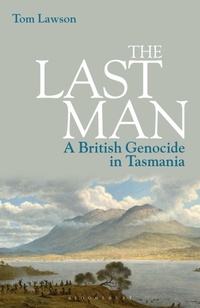
The Last Man
A British Genocide in Tasmania
Published on 25. February 2021
Book
Paperback/Softback
288 pages
978-1-350-22791-0 (ISBN)
Description
Little more than seventy years after the British settled Van Diemen's Land (later Tasmania) in 1803, the indigenous community had been virtually wiped out. Yet this genocide at the hands of the British is virtually forgotten today. The Last Man is the first book specifically to explore the role of the British government and wider British society in this genocide. It positions the destruction as a consequence of British policy, and ideology in the region.
Tom Lawson shows how Britain practised cultural destruction and then came to terms with and evaded its genocidal imperial past. Although the introduction of European diseases undoubtedly contributed to the decline in the indigenous population, Lawson shows that the British government supported what was effectively the ethnic cleansing of Tasmania - particularly in the period of martial law in 1828-1832. By 1835 the vast majority of the surviving indigenous community had been deported to Flinders Island, where the British government took a keen interest in the attempt to transform them into Christians and Englishmen in a campaign of cultural genocide.
Lawson also illustrates the ways in which the destruction of indigenous Tasmanians was reflected in British culture - both at the time and since - and how it came to play a key part in forging particular versions of British imperial identity. Laments for the lost Tasmanians were a common theme in literary and museum culture, and the mistaken assumption that Tasmanians were doomed to complete extinction was an important part of the emerging science of human origins. By exploring the memory of destruction, The Last Man provides the first comprehensive picture of the British role in the destruction of the Tasmanian Aboriginal population.
Tom Lawson shows how Britain practised cultural destruction and then came to terms with and evaded its genocidal imperial past. Although the introduction of European diseases undoubtedly contributed to the decline in the indigenous population, Lawson shows that the British government supported what was effectively the ethnic cleansing of Tasmania - particularly in the period of martial law in 1828-1832. By 1835 the vast majority of the surviving indigenous community had been deported to Flinders Island, where the British government took a keen interest in the attempt to transform them into Christians and Englishmen in a campaign of cultural genocide.
Lawson also illustrates the ways in which the destruction of indigenous Tasmanians was reflected in British culture - both at the time and since - and how it came to play a key part in forging particular versions of British imperial identity. Laments for the lost Tasmanians were a common theme in literary and museum culture, and the mistaken assumption that Tasmanians were doomed to complete extinction was an important part of the emerging science of human origins. By exploring the memory of destruction, The Last Man provides the first comprehensive picture of the British role in the destruction of the Tasmanian Aboriginal population.
More details
Language
English
Place of publication
London
United Kingdom
Publishing group
Bloomsbury Publishing PLC
Target group
College/higher education
Illustrations
8 bw illus
Dimensions
Height: 216 mm
Width: 140 mm
Thickness: 16 mm
Weight
380 gr
ISBN-13
978-1-350-22791-0 (9781350227910)
Copyright in bibliographic data and cover images is held by Nielsen Book Services Limited or by the publishers or by their respective licensors: all rights reserved.
Schweitzer Classification
Other editions
Additional editions
E-Book
01/2014
1st Edition
I.B. Tauris
€27.49
Available for download
Person
Tom Lawson is Professor of History at Northumbria University, UK. He is the author of Debates on the Holocaust and The Church of England and the Holocaust: Christianity, Memory and Nazism.
Content
Introduction: History, Memory and Genocide in Tasmania
Chapter 1: Genocide and Ethnic Cleansing 1804-1832
Chapter 2: Saving Souls and Cultural Genocide 1832-1876
Chapter 3: Memory and Return: Genocide in British Culture 1804-2011
Conclusion
Chapter 1: Genocide and Ethnic Cleansing 1804-1832
Chapter 2: Saving Souls and Cultural Genocide 1832-1876
Chapter 3: Memory and Return: Genocide in British Culture 1804-2011
Conclusion