

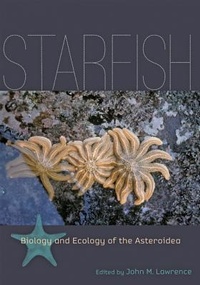
Starfish
Biology and Ecology of the Asteroidea
Will be published approx. on 10. May 2013
Book
Hardback
288 pages
978-1-4214-0787-6 (ISBN)
Description
Among the most fascinating animals in the world's oceans are the more than 2,000 species of starfish. Called "Asteroids" by scientists who study them (after their taxonomic name, Asteroidea) - or sea stars in some parts of the world-starfish are easily recognized because of their star-like form. "Starfish" is a comprehensive volume devoted to the integrative and comparative biology and ecology of starfish. Written by the world's leading experts on starfish, the integrative section covers topics such as reproduction, developmental biology and ecology, larval ecology, and the ecological role of starfish as a group. The comparative section considers the biology and ecology of important species such as Acanthaster planci, Heliaster helianthoides, Asterias amurensis, and Pisaster ochraceus. Replete with detailed, scientifically accurate illustrations and the latest research findings, "Starfish" examines the important role of these invertebrates in the marine environment, a topic of great interest because of their impact on the food web. As major predators that are able to evert their stomach and wrap it around their prey, starfish can have a significant impact on commercial fisheries.
"Starfish" are of interest not only to echinoderm specialists but also to marine biologists and invertebrate zoologists in general and, increasingly, to the medical community. A starfish's ability to regenerate body parts is almost unequalled in the animal world, making them ideal models for basic science studies on the topic. Contributors: Charles D. Amsler, Bill J. Baker, Mario Barahona, Michael F. Barker, Maria Byrne, Juan Carlos Castilla, Katharina Fabricius, Patrick Flammang, Andrew S. Gale, Carlos F. Gaymer, Jean-Francois Hamel, Elise Hennebert, John H. Himmelman, Michel Jangoux, John M. Lawrence, Tatiana Manzur, James B. McClintock, Bruce A. Menge, Annie Mercier, Anna Metaxas, Sergio A. Navarette, Timothy D. O'Hara, John S. Pearse, Carlos Robles, Eric Sanford, Robert E. Scheibling, Richard L. Turner, Carlos Renato R. Ventura, Kristina M. Wasson, and Stephen A. Watts.
"Starfish" are of interest not only to echinoderm specialists but also to marine biologists and invertebrate zoologists in general and, increasingly, to the medical community. A starfish's ability to regenerate body parts is almost unequalled in the animal world, making them ideal models for basic science studies on the topic. Contributors: Charles D. Amsler, Bill J. Baker, Mario Barahona, Michael F. Barker, Maria Byrne, Juan Carlos Castilla, Katharina Fabricius, Patrick Flammang, Andrew S. Gale, Carlos F. Gaymer, Jean-Francois Hamel, Elise Hennebert, John H. Himmelman, Michel Jangoux, John M. Lawrence, Tatiana Manzur, James B. McClintock, Bruce A. Menge, Annie Mercier, Anna Metaxas, Sergio A. Navarette, Timothy D. O'Hara, John S. Pearse, Carlos Robles, Eric Sanford, Robert E. Scheibling, Richard L. Turner, Carlos Renato R. Ventura, Kristina M. Wasson, and Stephen A. Watts.
Reviews / Votes
Color photographs and detailed black-and-white illustrations will aid the layperson looking for basic information, but the extensive references speak to this volume's research value. Library Journal If you want to get serious about starfish, this book is a must for you. -- David Burton International Zoo News Offers a comprehensive review of their biology and ecology. It perfectly integrates the research conducted during the past decades, updating the still-quoted synthesis of Hyman (1955), and complimenting the serial 'Echinoderm Studies' that was last published in 2001... It will be interesting to the widest audience, and is definitively an invitation to a compelling reading. -- Loic Villier Marine Biology Review This scholarly volume will be most useful to researchers on echinoderm biology and teachers of marine invertebrate biology... Recommended. Choice A valuable source of information on sea stars... Useful for all who deal with studies of sea stars. -- A.V. Kalachev & V.I. Kalinin Russian Journal of Marine Biology This book provides both very useful general knowledge on the class of Asteroidea and a very comprehensive understanding of the biology and the ecology of starfish through detailed properties of structure and function... [It] will be particularly useful for students and teachers, and is really welcome in our overspecialized world. -- Dominique Davoult Cahiers de Biologie MarineMore details
Language
English
Place of publication
Baltimore, MD
United States
Target group
Professional and scholarly
Product notice
sewn/stitched
Paper over boards
Illustrations
62 s/w Abbildungen, 101 s/w Zeichnungen, 17 farbige Abbildungen, 2 Karten
2 Maps; 17 Illustrations, color; 101 Line drawings, black and white; 62 Illustrations, black and white
Dimensions
Height: 261 mm
Width: 179 mm
Thickness: 22 mm
Weight
763 gr
ISBN-13
978-1-4214-0787-6 (9781421407876)
DOI
10.1353/book.21986
Copyright in bibliographic data and cover images is held by Nielsen Book Services Limited or by the publishers or by their respective licensors: all rights reserved.
Schweitzer Classification
Other editions
Additional editions
E-Book
05/2013
Johns Hopkins University Press
€77.49
Available for download
Person
John M. Lawrence is a professor of integrative biology at the University of South Florida. He is the author of numerous publications, including A Functional Biology of Echinoderms, also published by Johns Hopkins.
Content
Contributors
Preface
Part I: Comparative Biology and Ecology
Chapter 1. Phylogeny of the Asteroidea
Chapter 2. The Asteroid Arm
Chapter 3. Functional Biology of Asteroid Tube Feet
Chapter 4. Reproduction in Asteroidea
Chapter 5. Asteroid Evolutionary Developmental Biology and Ecology
Chapter 6. Larval Ecology, Settlement, and Recruitment of Asteroids
Chapter 7. Ecological Role of Sea Stars from Populations to Meta-ecosystems
Chapter 8. Chemistry and Ecological Role of Starfish Secondary Metabolites
Chapter 9. Steroids in Asteroidea
Part II: Integrative Biology
Chapter 10. Astropecten
Chapter 11. Luidia
Chapter 12. Odontaster validus
Chapter 13. Acanthaster planci
Chapter 14. Oreaster reticulatus
Chapter 15. Heliaster helianthus
Chapter 16. Pisaster ochraceus
Chapter 17. Asterias amurensis
Chapter 18. Leptasterias polaris
Chapter 19. Coscinasterias
Chapter 20. Echinaster
References
Index
Preface
Part I: Comparative Biology and Ecology
Chapter 1. Phylogeny of the Asteroidea
Chapter 2. The Asteroid Arm
Chapter 3. Functional Biology of Asteroid Tube Feet
Chapter 4. Reproduction in Asteroidea
Chapter 5. Asteroid Evolutionary Developmental Biology and Ecology
Chapter 6. Larval Ecology, Settlement, and Recruitment of Asteroids
Chapter 7. Ecological Role of Sea Stars from Populations to Meta-ecosystems
Chapter 8. Chemistry and Ecological Role of Starfish Secondary Metabolites
Chapter 9. Steroids in Asteroidea
Part II: Integrative Biology
Chapter 10. Astropecten
Chapter 11. Luidia
Chapter 12. Odontaster validus
Chapter 13. Acanthaster planci
Chapter 14. Oreaster reticulatus
Chapter 15. Heliaster helianthus
Chapter 16. Pisaster ochraceus
Chapter 17. Asterias amurensis
Chapter 18. Leptasterias polaris
Chapter 19. Coscinasterias
Chapter 20. Echinaster
References
Index