

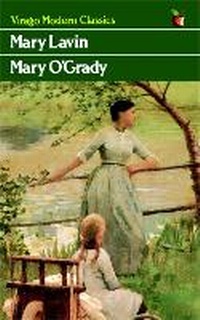
Mary O'grady
Published on 26. November 2004
Book
Paperback/Softback
400 pages
978-1-84408-195-0 (ISBN)
Description
Mary O'Grady, an Irish peasant woman, discovers that motherhood brings her sorrow as it does joy.
'Beautifully and insightfully captured the reality of rural Ireland, just as remote working renews village life' IRISH INDEPENDENT
'An impressive body of work' IRISH TIMES
'There's the immense power with which she depicts the inner lives of women' PARIS REVIEW
In the early 1900s, Mary O'Grady leaves behind the countryside and the family she cares for, to be with her husband in Dublin. Here she puts down new roots and looks forward to the day when she will return to Tullamore with her own sons and daughters. Marriage and motherhood sustain Mary, gradually the memories of her own childhood fade and her life revolves around the secure home she has created. But as her children grow, they seek the freedom of adults as she had done. Slowly Mary comes to realise that a mother's love cannot protect them, as it could not protect herself from the sorrows and tragedies of life.
'Beautifully and insightfully captured the reality of rural Ireland, just as remote working renews village life' IRISH INDEPENDENT
'An impressive body of work' IRISH TIMES
'There's the immense power with which she depicts the inner lives of women' PARIS REVIEW
In the early 1900s, Mary O'Grady leaves behind the countryside and the family she cares for, to be with her husband in Dublin. Here she puts down new roots and looks forward to the day when she will return to Tullamore with her own sons and daughters. Marriage and motherhood sustain Mary, gradually the memories of her own childhood fade and her life revolves around the secure home she has created. But as her children grow, they seek the freedom of adults as she had done. Slowly Mary comes to realise that a mother's love cannot protect them, as it could not protect herself from the sorrows and tragedies of life.
Reviews / Votes
An impressive body of work * Irish Times * Beautifully and insightfully captured the reality of rural Ireland, just as remote working renews village life * Irish Independent * There's the brilliance with which her fiction gets at the stuff of human interaction, in all its awkwardness, in all the ways in which, muddled and mortified, this interaction will have to do us, because it's all we've got. There's the immense power with which she depicts the inner lives of women, particularly mothers and widows, women who have no reason to be anything other than honest with themselves about the realities of their situation. Lavin evokes those situations with sympathy and with candor and with, in many cases, a frank and delicious comedy * Paris Review *More details
Series
Language
English
Place of publication
London
United Kingdom
Publishing group
Little, Brown Book Group
Dimensions
Height: 203 mm
Width: 127 mm
Thickness: 22 mm
Weight
430 gr
ISBN-13
978-1-84408-195-0 (9781844081950)
Copyright in bibliographic data and cover images is held by Nielsen Book Services Limited or by the publishers or by their respective licensors: all rights reserved.
Schweitzer Classification
Other editions
Previous edition

Person
Mary Josephine Lavin (1912-1996) was a notable Irish short story writer and novelist. She is regarded as a pioneering female author in the traditionally male-dominated world of Irish letters. Her subject matter often dealt explicitly with feminist issues and concerns at a time when the primacy of the Roman Catholic Church and its abuses (e.g. the Magdalene Laundries) impinged extensively on Irish society.
Mary Lavin was born in Massachusetts, the only child of Tom and Nora Lavin, an immigrant Irish couple. Mary attended Loreto College in Dublin, before going on to study English and French at University College Dublin (UCD). She taught French at Loreto College for a while. As a postgraduate student, she published her first short story, Miss Holland, which appeared in the Dublin Magazine in 1938.
In 1943, Mary Lavin published her first book. Tales from Bective Bridge, a volume of ten short stories about life in rural Ireland, was a critical success and went on to win the James Tait Black Memorial Prize for fiction. Her literary career flourished; she published several novels and collections of short stories during this period. Her first novel, The House in Clewe Street (1945) was serialised in the Atlantic Monthly before its publication. She continued writing and won several awards for her work, including the Katherine Mansfield Prize in 1961, Guggenheim Fellowships in 1959 and 1961, and an honorary doctorate from UCD in 1968. Some of her stories written during this period, dealing with the topic of widowhood, are acknowledged to be among her finest.
Mary Lavin was born in Massachusetts, the only child of Tom and Nora Lavin, an immigrant Irish couple. Mary attended Loreto College in Dublin, before going on to study English and French at University College Dublin (UCD). She taught French at Loreto College for a while. As a postgraduate student, she published her first short story, Miss Holland, which appeared in the Dublin Magazine in 1938.
In 1943, Mary Lavin published her first book. Tales from Bective Bridge, a volume of ten short stories about life in rural Ireland, was a critical success and went on to win the James Tait Black Memorial Prize for fiction. Her literary career flourished; she published several novels and collections of short stories during this period. Her first novel, The House in Clewe Street (1945) was serialised in the Atlantic Monthly before its publication. She continued writing and won several awards for her work, including the Katherine Mansfield Prize in 1961, Guggenheim Fellowships in 1959 and 1961, and an honorary doctorate from UCD in 1968. Some of her stories written during this period, dealing with the topic of widowhood, are acknowledged to be among her finest.