

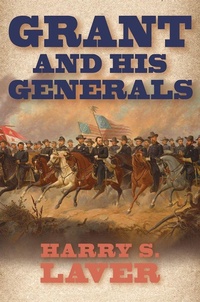
Grant and His Generals
Will be published approx. on 9. November 2026
Book
Paperback/Softback
530 pages
978-0-8093-4003-3 (ISBN)
Description
How Ulysses S. Grant turned disparate commanders into a winning force
The rise of Ulysses S. Grant to the pinnacle of military command is one of the more improbable stories of American?history. To?achieve such success, Grant had to work with, manage, encourage, and?sometimes?berate an eclectic?group of military leaders?who came under his command during the?US?Civil War.?In this deep analysis of Grant's leadership style,?Harry S. Laver reveals how?the introverted soldier?exercised?such?exceptional military leadership?that he won the war and?became?a popular figure in the American public mind.
Rather than focusing solely on battlefield tactics or campaign narratives, this book examines Grant as a leader of men. Focusing on one relationship at a time,?Laver offers a richly textured account of Grant's interactions?with his generals, demonstrating how he evaluated each subordinate on individual merits. Grant emphasized strengths while attempting to mitigate shortcomings, tailoring his approach to the personalities and abilities of those he commanded. He preferred to give his generals latitude whenever possible, but when circumstances demanded it, he issued precise and detailed guidance. This flexible, adaptive leadership style, rare among Civil War commanders, proved central to his success.
Grant's effectiveness is most evident in the productive partnerships he forged. His collaborations with naval commanders Andrew H. Foote and David D. Porter became models of successful army-navy cooperation. He mentored promising officers such as James B. McPherson, whose career was cut short by his death in battle, and the dynamic Philip H. Sheridan, who emerged as one of Grant's most trusted lieutenants. Grant also developed a functional, if strained, working relationship with George G. Meade, the victor at Gettysburg, whose difficult temperament troubled subordinates but did not impede cooperation at the highest level. Grant shared with the fiery William T. Sherman a deep mutual respect and an unyielding commitment to total victory.
Not all relationships were successful. Grant struggled with obstinate and independent-minded commanders such as John A. McClernand, William Rosecrans, and George H. Thomas, removing the first two from command and nearly doing the same with Thomas. His most delicate challenge was Henry W. Halleck, who had sought to undermine Grant's career. When Grant ultimately rose above Halleck in rank, he managed the reversal with professionalism and strategic restraint, transforming a former rival into an effective subordinate.
Marked by an innate generosity of spirit,?Grant?praised his?generals?for their successes and?occasionally shouldered?the blame for their failures.?Laver reveals how this humane yet disciplined approach enabled Grant to weld a disparate group of commanders into an effective fighting force - and to secure Union victory.
The rise of Ulysses S. Grant to the pinnacle of military command is one of the more improbable stories of American?history. To?achieve such success, Grant had to work with, manage, encourage, and?sometimes?berate an eclectic?group of military leaders?who came under his command during the?US?Civil War.?In this deep analysis of Grant's leadership style,?Harry S. Laver reveals how?the introverted soldier?exercised?such?exceptional military leadership?that he won the war and?became?a popular figure in the American public mind.
Rather than focusing solely on battlefield tactics or campaign narratives, this book examines Grant as a leader of men. Focusing on one relationship at a time,?Laver offers a richly textured account of Grant's interactions?with his generals, demonstrating how he evaluated each subordinate on individual merits. Grant emphasized strengths while attempting to mitigate shortcomings, tailoring his approach to the personalities and abilities of those he commanded. He preferred to give his generals latitude whenever possible, but when circumstances demanded it, he issued precise and detailed guidance. This flexible, adaptive leadership style, rare among Civil War commanders, proved central to his success.
Grant's effectiveness is most evident in the productive partnerships he forged. His collaborations with naval commanders Andrew H. Foote and David D. Porter became models of successful army-navy cooperation. He mentored promising officers such as James B. McPherson, whose career was cut short by his death in battle, and the dynamic Philip H. Sheridan, who emerged as one of Grant's most trusted lieutenants. Grant also developed a functional, if strained, working relationship with George G. Meade, the victor at Gettysburg, whose difficult temperament troubled subordinates but did not impede cooperation at the highest level. Grant shared with the fiery William T. Sherman a deep mutual respect and an unyielding commitment to total victory.
Not all relationships were successful. Grant struggled with obstinate and independent-minded commanders such as John A. McClernand, William Rosecrans, and George H. Thomas, removing the first two from command and nearly doing the same with Thomas. His most delicate challenge was Henry W. Halleck, who had sought to undermine Grant's career. When Grant ultimately rose above Halleck in rank, he managed the reversal with professionalism and strategic restraint, transforming a former rival into an effective subordinate.
Marked by an innate generosity of spirit,?Grant?praised his?generals?for their successes and?occasionally shouldered?the blame for their failures.?Laver reveals how this humane yet disciplined approach enabled Grant to weld a disparate group of commanders into an effective fighting force - and to secure Union victory.
More details
Series
Language
English
Place of publication
Carbondale
United States
Target group
Professional and scholarly
Illustrations
14
Dimensions
Height: 229 mm
Width: 152 mm
Weight
522 gr
ISBN-13
978-0-8093-4003-3 (9780809340033)
Copyright in bibliographic data and cover images is held by Nielsen Book Services Limited or by the publishers or by their respective licensors: all rights reserved.
Schweitzer Classification
Person
Harry S. Laver is the Maj. Gen. William A. Stofft Chair of Historical Research at the U.S. Army Command and General Staff College, Fort Leavenworth, Kansas. He is the author of?A General Who Will Fight: The Leadership of Ulysses S. Grant and Citizens More Than Soldiers: The Kentucky Militia and Society in the Early Republic?and?a coeditor of?The Art of Command: American Military Leadership from George Washington to Colin Powell.
Content
Abbreviations
List of Illustrations
Acknowledgments
Introduction
Part I. A General Among Generals: Grant Learns the Art of Command, 1861-1863
1. John A. McClernand, June 1861-April 1862
2. Andrew H. Foote, September 1861-March 1862
3. Henry W. Halleck, November 1861-July 1862
4. William T. Sherman, November 1861-July 1862
5. William S. Rosecrans, July 1862-October 1862
6. John A. McClernand, April 1862-July 1863
7. David D. Porter, December 1862-January 1865
8. James B. McPherson, February 1862-July 1864
9. William T. Sherman, July 1862-July 1863
Part II. The General of Generals: Grant Exercises the Art of Command, 1863-1865
10. George H. Thomas, April 1862-December 1864
11. Henry H. Halleck, July 1862-April 1865
12. George G. Meade, March 1864-April 1865
13. Philip H. Sheridan, November 1863-April 1865
14. William T. Sherman, July 1863-April 1865
Conclusion
Index
List of Illustrations
Acknowledgments
Introduction
Part I. A General Among Generals: Grant Learns the Art of Command, 1861-1863
1. John A. McClernand, June 1861-April 1862
2. Andrew H. Foote, September 1861-March 1862
3. Henry W. Halleck, November 1861-July 1862
4. William T. Sherman, November 1861-July 1862
5. William S. Rosecrans, July 1862-October 1862
6. John A. McClernand, April 1862-July 1863
7. David D. Porter, December 1862-January 1865
8. James B. McPherson, February 1862-July 1864
9. William T. Sherman, July 1862-July 1863
Part II. The General of Generals: Grant Exercises the Art of Command, 1863-1865
10. George H. Thomas, April 1862-December 1864
11. Henry H. Halleck, July 1862-April 1865
12. George G. Meade, March 1864-April 1865
13. Philip H. Sheridan, November 1863-April 1865
14. William T. Sherman, July 1863-April 1865
Conclusion
Index