

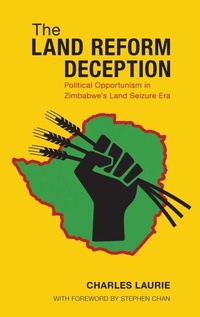
The Land Reform Deception
Political Opportunism in Zimbabwe's Land Seizure Era
Published on 17. March 2016
Book
Hardback
424 pages
978-0-19-939829-4 (ISBN)
Description
The Land Reform Deception looks at a particularly contentious period in Zimbabwe's recent history, from 2000-2008, when the government seized commercial farms using illegal and violent methods against an unarmed population of farmers and workers. Robert Mugabe's government began the seizures on a small, targeted scale in an effort to suppress opposition groups, but they soon escalated into an out-of-control frenzy targeting all farms in the country.
The state claimed that the seizures were carried out in response to a public cry for land redistribution and to rectify colonial-era injustices, but the move was economically and socially disastrous for the country. Land was distributed to those with little or no farming experience, and, as a result, agricultural output contracted and inflation and unemployment rose dramatically. The basic question Charles Laurie raises is why the state would target its own dominant agricultural industry using such violent and illegal methods. He also seeks to uncover the major actors and their motivations and strategies. Laurie argues that the land seizures were carried out by high-ranking officials, mostly veterans of the national war for independence, for financial and political gain. But he argues that the scale on which they were carried out and the violent methods used were never part of a planned government policy. He also argues that Mugabe initially opposed the seizures, knowing that they would wreck the economy, only to later support them to retain his political power. Incorporating unprecedented empirical evidence gathered from in-depth interviews with senior politicians, members of the secretive Central Intelligence Organization, the military and police, along with farmers and workers who were targeted during the invasions, The Land Reform Deception strips away official explanations and delves into the political and economic drivers that triggered the seizure of commercial farms.
The state claimed that the seizures were carried out in response to a public cry for land redistribution and to rectify colonial-era injustices, but the move was economically and socially disastrous for the country. Land was distributed to those with little or no farming experience, and, as a result, agricultural output contracted and inflation and unemployment rose dramatically. The basic question Charles Laurie raises is why the state would target its own dominant agricultural industry using such violent and illegal methods. He also seeks to uncover the major actors and their motivations and strategies. Laurie argues that the land seizures were carried out by high-ranking officials, mostly veterans of the national war for independence, for financial and political gain. But he argues that the scale on which they were carried out and the violent methods used were never part of a planned government policy. He also argues that Mugabe initially opposed the seizures, knowing that they would wreck the economy, only to later support them to retain his political power. Incorporating unprecedented empirical evidence gathered from in-depth interviews with senior politicians, members of the secretive Central Intelligence Organization, the military and police, along with farmers and workers who were targeted during the invasions, The Land Reform Deception strips away official explanations and delves into the political and economic drivers that triggered the seizure of commercial farms.
Reviews / Votes
Laurie's book is a moving account of the controversies of Zimbabwe's land reform exercise. [It] is a refreshing read, well researched and with evidence that it was written by someone with detailed knowledge of the turbulent story of Zimbabwe's land question. * Joyline Takudzwa Kufandirori, Boekresensies *More details
Other editions
Additional editions
E-Book
03/2016
1st Edition
OUP eBook
€19.99
Available for download
E-Book
02/2016
1st Edition
OUP eBook
€19.99
Available for download
Person
Charles Laurie was born and raised in Zimbabwe and has had a lifelong interest in the agricultural politics of the region. With an advanced Master's degree from the University of Cambridge and a doctorate from the University of Oxford, he has dedicated his academic career to understanding the political, social and economic influences that undermine development in southern Africa.
Content
Foreword
Preface
Acknowledgments
Figures
Tables
Abbreviations and Acronyms
Map of Zimbabwe
Liberation War and Gukurahundi Timeline
Land Seizure Era Timeline
Land Seizure Era Violence and Farmer Eviction Timeline
1. Overview of the Land Seizure Era
2. ZANU-PF's Land Redistribution Gamble
3. Mugabe Targets Agriculture: Land Reform or Political Gimmick?
4. Strategy behind Farm Seizures
5. Suppressing the MDC
6. Seizing Land and Agri-Property
7. Moving onto Farms: The Emergence of Extortion and "Protection"
Schemes
8. Farmer Eviction Methods
9. Impact on Commercial Agriculture Production
Conclusion
Appendix A. Research Methodology
Appendix B. Overview of Interview Respondents
Appendix C. Land Seizure Era Flowcharts
Notes
References
Index
Preface
Acknowledgments
Figures
Tables
Abbreviations and Acronyms
Map of Zimbabwe
Liberation War and Gukurahundi Timeline
Land Seizure Era Timeline
Land Seizure Era Violence and Farmer Eviction Timeline
1. Overview of the Land Seizure Era
2. ZANU-PF's Land Redistribution Gamble
3. Mugabe Targets Agriculture: Land Reform or Political Gimmick?
4. Strategy behind Farm Seizures
5. Suppressing the MDC
6. Seizing Land and Agri-Property
7. Moving onto Farms: The Emergence of Extortion and "Protection"
Schemes
8. Farmer Eviction Methods
9. Impact on Commercial Agriculture Production
Conclusion
Appendix A. Research Methodology
Appendix B. Overview of Interview Respondents
Appendix C. Land Seizure Era Flowcharts
Notes
References
Index