

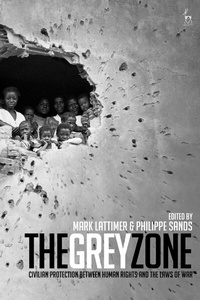
The Grey Zone
Civilian Protection Between Human Rights and the Laws of War
Published on 26. July 2018
Book
Hardback
480 pages
978-1-5099-0863-9 (ISBN)
Description
The high civilian death toll in modern, protracted conflicts such as those in Syria or Iraq indicate the limits of international law in offering protections to civilians at risk. A recent conference of states convened by the International Committee of the Red Cross referred to 'an institutional vacuum in the area of international humanitarian law implementation'. Yet both international humanitarian law and the law of human rights establish a series of rights intended to protect civilians. But which law or laws apply in a particular situation, and what are the obstacles to their implementation? How can the law offer greater protections to civilians caught up in new methods of warfare, such as drone strikes, or targeted by new forms of military organisation, such as transnational armed groups? Can the implementation gap be filled by the growing use of human rights courts to remedy violations of the laws of armed conflict, or are new instruments or mechanisms of civilian legal protection needed?
This volume brings together contributions from leading academic authorities and legal practitioners on the situation of civilians in the grey zone between human rights and the laws of war. The chapters in Part 1 address key contested or boundary issues in defining the rights of civilians or non-combatants in today's conflicts. Those in Part 2 examine remedies and current mechanisms for redress both at the international and national level, and those in Part 3 assess prospects for the development of new mechanisms for addressing violations. As military intervention to protect civilians remains contested, this volume looks at the potential for developing alternative approaches to the protection of civilians and their rights.
This volume brings together contributions from leading academic authorities and legal practitioners on the situation of civilians in the grey zone between human rights and the laws of war. The chapters in Part 1 address key contested or boundary issues in defining the rights of civilians or non-combatants in today's conflicts. Those in Part 2 examine remedies and current mechanisms for redress both at the international and national level, and those in Part 3 assess prospects for the development of new mechanisms for addressing violations. As military intervention to protect civilians remains contested, this volume looks at the potential for developing alternative approaches to the protection of civilians and their rights.
Reviews / Votes
This is an important and insightful book. The chapters are of a uniformly high standard and deftly marry rigorous legal analysis with a sure-footed handling of the political complexities that abound in times of war. They combine to make a compelling whole... Anyone interested in contemporary war and the protection of its victims should read it. -- Alex J Bellamy, The University of Queensland * International Affairs *More details
Language
English
Place of publication
Oxford
United Kingdom
Publishing group
Bloomsbury Publishing PLC
Target group
College/higher education
Product notice
Hardback (stationery)
Dimensions
Height: 234 mm
Width: 156 mm
Weight
839 gr
ISBN-13
978-1-5099-0863-9 (9781509908639)
Copyright in bibliographic data and cover images is held by Nielsen Book Services Limited or by the publishers or by their respective licensors: all rights reserved.
Schweitzer Classification
Other editions
Additional editions
Mark Lattimer | Philippe Sands
The Grey Zone
Civilian Protection Between Human Rights and the Laws of War
E-Book
07/2018
1st Edition
Hart Publishing
€144.99
Available for download
Persons
Mark Lattimer is Executive Director of the Ceasefire Centre for Civilian Rights.
Philippe Sands KC is Professor of International Law at University College London.
Philippe Sands KC is Professor of International Law at University College London.
Content
Part I: Rights
1. Who Is a Civilian? Membership of Opposition Groups and Direct Participation in Hostilities
Emily Crawford
2. The Duty in International Law to Investigate Civilian Deaths in Armed Conflict
Mark Lattimer
3. Protection by Process: Implementing the Principle of Proportionality in Contemporary Armed Conflicts
Amichai Cohen
4. Regulating Armed Drones and Other Emerging Weapons Technologies
Stuart Casey-Maslen
5. The Globalisation of Non-International Armed Conflicts
Pavle Kilibarda and Gloria Gaggioli
6. Administrative Detention in Non-International Armed Conflicts
Francoise J Hampson
7. The Crime of Rape in Military and Civilian Jurisdictions
Lois Moore and Christine Chinkin
Part II: Remedies
8. The Right to Reparation for Victims of Armed Conflict
Carla Ferstman
9. Arguing International Humanitarian Law Standards in National Courts-A Spectrum of Expectations
Sharon Weill
10. The Death of Lex Specialis? Regional Human Rights Mechanisms and the Protection of Civilians in Armed Conflict
Bill Bowring
11. Extraterritorial Obligations under Human Rights Law
Cedric Ryngaert
12. What Duties Do Peacekeepers Owe Civilians? Lessons from the NuhanovicCase
Liesbeth Zegveld
13. Civilian Protection and the Arms Trade Treaty
Blinne Ni Ghralaigh
Part III: Developments
14. A Path Towards Greater Respect for International Humanitarian Law
Valentin Zellweger and Francois Voeffray
15. The Responsibility to Protect and Non-State Armed Groups
Jennifer M Welsh
16. Protecting Civilians by Criminalising the Most Serious Forms of the Illegal Use of Force: Activating the International Criminal Court's Jurisdiction over the Crime of Aggression
Carrie McDougall
17. Elements and Innovations in a New Global Treaty on Crimes Against Humanity
Leila Nadya Sadat
1. Who Is a Civilian? Membership of Opposition Groups and Direct Participation in Hostilities
Emily Crawford
2. The Duty in International Law to Investigate Civilian Deaths in Armed Conflict
Mark Lattimer
3. Protection by Process: Implementing the Principle of Proportionality in Contemporary Armed Conflicts
Amichai Cohen
4. Regulating Armed Drones and Other Emerging Weapons Technologies
Stuart Casey-Maslen
5. The Globalisation of Non-International Armed Conflicts
Pavle Kilibarda and Gloria Gaggioli
6. Administrative Detention in Non-International Armed Conflicts
Francoise J Hampson
7. The Crime of Rape in Military and Civilian Jurisdictions
Lois Moore and Christine Chinkin
Part II: Remedies
8. The Right to Reparation for Victims of Armed Conflict
Carla Ferstman
9. Arguing International Humanitarian Law Standards in National Courts-A Spectrum of Expectations
Sharon Weill
10. The Death of Lex Specialis? Regional Human Rights Mechanisms and the Protection of Civilians in Armed Conflict
Bill Bowring
11. Extraterritorial Obligations under Human Rights Law
Cedric Ryngaert
12. What Duties Do Peacekeepers Owe Civilians? Lessons from the NuhanovicCase
Liesbeth Zegveld
13. Civilian Protection and the Arms Trade Treaty
Blinne Ni Ghralaigh
Part III: Developments
14. A Path Towards Greater Respect for International Humanitarian Law
Valentin Zellweger and Francois Voeffray
15. The Responsibility to Protect and Non-State Armed Groups
Jennifer M Welsh
16. Protecting Civilians by Criminalising the Most Serious Forms of the Illegal Use of Force: Activating the International Criminal Court's Jurisdiction over the Crime of Aggression
Carrie McDougall
17. Elements and Innovations in a New Global Treaty on Crimes Against Humanity
Leila Nadya Sadat