


The New Invitation to Anthropology
5th Edition
Published on 9. October 2023
Book
Paperback/Softback
276 pages
978-1-4422-7715-1 (ISBN)
Description
Born within and against the violence of European colonial conquest, anthropology has aspired to understand the diversity of human experience in ethical and transformative ways. The New Invitation to Anthropology is a fresh and accessible text that takes students to the heart of the discipline and reveals the ongoing relevance of anthropology today.
The New Invitation to Anthropology, Fifth Edition has an intimate touch that invites students in and helps them understand the historical roots of anthropology and its connection to recent social and political issues. Part I covers the history of the discipline, the emergence of the concept of culture, and ethnographic field methods in relation to European imperialism and discourses on race. Part II illustrates how the concept of culture shaped specific domains of anthropological study, including ecological adaptation, social class, gender, family, marriage, religion, and medicine.As a timely and engaging "non-textbook," The New Invitation to Anthropology explores anthropological perspectives on real-world problems, helping students think like anthropologists and become better citizens of the world.
New To This Edition
Significantly revised Chapter 1, "The Origins of North American Anthropology," demonstrates how modern anthropology emerged out of 19th century theories of race and social evolutionism and develops critical understandings of modern forms of racism New sections on social class and globalization in Chapter 4 offer insights into the complexities of modern global problems like climate changeNew elaborations of intersectionality in Chapter 5, "Sex, Gender, and Inequality" reinforces discussions of gender-based inequalityChapter 7 on religious experience now incorporates healing and medicine to expand a framework of studying belief and experience
The New Invitation to Anthropology, Fifth Edition has an intimate touch that invites students in and helps them understand the historical roots of anthropology and its connection to recent social and political issues. Part I covers the history of the discipline, the emergence of the concept of culture, and ethnographic field methods in relation to European imperialism and discourses on race. Part II illustrates how the concept of culture shaped specific domains of anthropological study, including ecological adaptation, social class, gender, family, marriage, religion, and medicine.As a timely and engaging "non-textbook," The New Invitation to Anthropology explores anthropological perspectives on real-world problems, helping students think like anthropologists and become better citizens of the world.
New To This Edition
Significantly revised Chapter 1, "The Origins of North American Anthropology," demonstrates how modern anthropology emerged out of 19th century theories of race and social evolutionism and develops critical understandings of modern forms of racism New sections on social class and globalization in Chapter 4 offer insights into the complexities of modern global problems like climate changeNew elaborations of intersectionality in Chapter 5, "Sex, Gender, and Inequality" reinforces discussions of gender-based inequalityChapter 7 on religious experience now incorporates healing and medicine to expand a framework of studying belief and experience
Reviews / Votes
Every revised edition of Invitation to Anthropology recasts an excellent textbook into an even better resource. This new edition preserves the readable style of the past four versions while adding updated content, provocative discussion questions, and excellent teaching resources. Many of the text boxes, graphics, and other additions could easily serve as the basis for entire class periods of instruction to enhance students' understanding of each chapter. -- Gregory Hansen, Arkansas State University Keeping its clear and accessible writing style, The New Invitation to Anthropology continues to be the most pedagogically useful introductory text I have ever found. I cannot overemphasize how effective it is to teach its deep concepts, relying on the story-driven approach of this remarkable book. -- Anita Carrasco, Luther CollegeMore details
Edition
5th edition
Language
English
Place of publication
United States
Publishing group
Bloomsbury Publishing Plc
Target group
College/higher education
US School Grade: From College Freshman to College Graduate Student
Illustrations
52 b/w illustrations; 30 textboxes
Dimensions
Height: 229 mm
Width: 152 mm
Thickness: 15 mm
Weight
407 gr
ISBN-13
978-1-4422-7715-1 (9781442277151)
Copyright in bibliographic data and cover images is held by Nielsen Book Services Limited or by the publishers or by their respective licensors: all rights reserved.
Schweitzer Classification
Other editions
Additional editions
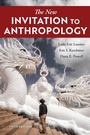
Luke Eric Lassiter | Eric I. Karchmer | Dana E. Powell
The New Invitation to Anthropology
E-Book
10/2023
5th Edition
Rowman & Littlefield Publishers
€38.99
Available for download
Persons
Luke Eric Lassiter is professor of humanities and anthropology and director of the Graduate Humanities Program at Marshall University, where he is also a Distinguished John Deaver Drinko Academy Fellow. His books include The Other Side of Middletown, The Chicago Guide to Collaborative Ethnography, Doing Ethnography Today, and I'm Afraid of that Water: A Collaborative Ethnography of a West Virginia Water Crisis.
Eric I. Karchmer is a visiting assistant professor at China Medical University in Taichung, Taiwan. He is also a trained practitioner of Chinese medicine, with more than 20 years of clinical experience. He is the author of Prescriptions for Virtuosity: The Postcolonial Struggle of Chinese Medicine.
Dana E. Powell is associate professor in the Graduate Institute of Humanities in Medicine, at Taipei Medical University (Taiwan). She is the author of Landscapes of Power: Politics of Energy in the Navajo Nation and has been a recipient of anthropological fellowships from the Wenner-Gren Foundation, the National Science Foundation, Cornell Univ. Society for the Humanities, and the Taiwanese Ministry of Science and Technology.
Eric I. Karchmer is a visiting assistant professor at China Medical University in Taichung, Taiwan. He is also a trained practitioner of Chinese medicine, with more than 20 years of clinical experience. He is the author of Prescriptions for Virtuosity: The Postcolonial Struggle of Chinese Medicine.
Dana E. Powell is associate professor in the Graduate Institute of Humanities in Medicine, at Taipei Medical University (Taiwan). She is the author of Landscapes of Power: Politics of Energy in the Navajo Nation and has been a recipient of anthropological fellowships from the Wenner-Gren Foundation, the National Science Foundation, Cornell Univ. Society for the Humanities, and the Taiwanese Ministry of Science and Technology.
Content
Preface
PART I: ANTHROPOLOGY, CULTURE, AND ETHNOGRAPHY
The Origins of North American Anthropology: Colonialism, Change, and the Critique of RaceStorytelling
The Setting: European Conquest of the Americas and the World
Stasis and Change in European Thought
Darwin and the Question of Change
Natural Selection: The Story of the Peppered Moths
Social Evolution and the Interpretation of "Race"
Social Evolutionism and Social Darwinism
The Story of Franz Boas and the Emergence of the Concept of Culture
The Story's Lesson: A Call for Critical Engagement
Anthropology and CultureThe Subfields of Anthropology
Defining Culture
Implications of the Concept of Culture
Studying Culture - Holism and Comparativism
Ethnocentrism and Cultural Relativity
Summing Up: Anthropological Perspectives on Culture
EthnographyEthnography Across the Atlantic: British Social Anthropology and Bronislaw Malinowski
Ethnography as Field Method: On Participant Observation
Ethnography as a Genre of Literature Today: On the Written Ethnography
Ethnography's Lesson: What's It Good For?
PART II: KEY THEMES IN CULTURAL ANTHROPOLOGY
Cultural Adaptation and Globalization: The Roots of our World SystemIn the Beginning: Adaptation, Culture, and Human Subsistence
Gathering, Hunting, and Moving: On Foraging
The Domestication of Plants and Animals
Agriculture and the Emergence of the State
Agricultural Trends and the Emergence of Social Class
Agriculture and World System Theory
Lessons for the Anthropocene
Conclusion
Sex, Gender, and Inequality: Cross-Cultural PerspectivesSex and Gender: Beyond the Binary
Gender, Inequality, and Power
Intersectionality
Lessons From the Anthropology of Gender
Works, Success, and Kids: On Marriage, Family, and KinshipIntroducing Family: On Kinship
The Incest Taboo, Exogamy, and Endogamy
Defining Marriage Cross-Culturally
What Marriage Creates and Maintains: More on Marriage as a Social Union
Marriage, Family, and Kinship: Lessons for Contemporary Families
Beyond Universal Truth: An Anthropological Approaches to Religion, Healing, and KnowledgeKnowledge and Belief
New Horizons in the Study of Illness
Towards an Anthropology of Knowledge
PART I: ANTHROPOLOGY, CULTURE, AND ETHNOGRAPHY
The Origins of North American Anthropology: Colonialism, Change, and the Critique of RaceStorytelling
The Setting: European Conquest of the Americas and the World
Stasis and Change in European Thought
Darwin and the Question of Change
Natural Selection: The Story of the Peppered Moths
Social Evolution and the Interpretation of "Race"
Social Evolutionism and Social Darwinism
The Story of Franz Boas and the Emergence of the Concept of Culture
The Story's Lesson: A Call for Critical Engagement
Anthropology and CultureThe Subfields of Anthropology
Defining Culture
Implications of the Concept of Culture
Studying Culture - Holism and Comparativism
Ethnocentrism and Cultural Relativity
Summing Up: Anthropological Perspectives on Culture
EthnographyEthnography Across the Atlantic: British Social Anthropology and Bronislaw Malinowski
Ethnography as Field Method: On Participant Observation
Ethnography as a Genre of Literature Today: On the Written Ethnography
Ethnography's Lesson: What's It Good For?
PART II: KEY THEMES IN CULTURAL ANTHROPOLOGY
Cultural Adaptation and Globalization: The Roots of our World SystemIn the Beginning: Adaptation, Culture, and Human Subsistence
Gathering, Hunting, and Moving: On Foraging
The Domestication of Plants and Animals
Agriculture and the Emergence of the State
Agricultural Trends and the Emergence of Social Class
Agriculture and World System Theory
Lessons for the Anthropocene
Conclusion
Sex, Gender, and Inequality: Cross-Cultural PerspectivesSex and Gender: Beyond the Binary
Gender, Inequality, and Power
Intersectionality
Lessons From the Anthropology of Gender
Works, Success, and Kids: On Marriage, Family, and KinshipIntroducing Family: On Kinship
The Incest Taboo, Exogamy, and Endogamy
Defining Marriage Cross-Culturally
What Marriage Creates and Maintains: More on Marriage as a Social Union
Marriage, Family, and Kinship: Lessons for Contemporary Families
Beyond Universal Truth: An Anthropological Approaches to Religion, Healing, and KnowledgeKnowledge and Belief
New Horizons in the Study of Illness
Towards an Anthropology of Knowledge