

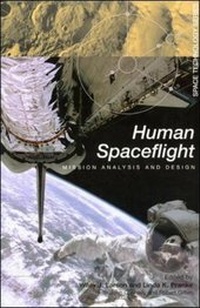
LSC PPK Human Space Flight + website
Published on 16. June 2007
Book
1035 pages
978-0-07-723028-9 (ISBN)
Description
Human Spaceflight: Mission Analysis and Design is essential if you manage, design, or operate systems for human spaceflight. This book provides a much-needed big-picture perspective that can be used by managers, engineers and students to integrate the myriad of elements associated with human spaceflight. With end-to-end coverage of designing human space systems for Earth, Moon, and Mars, Human Spaceflight spotlights key issues and possible problems to consider as part of the design process.
Written by a group of 67 professional engineers, managers, and educators from industry, government, and academia, this book shares industry and government best practices as well as lessons learned from decades of experience.
Topics include: space and surface environments, human factors, safety, orbits and trajectories, space station design, life support systems, thermal controls, guidance and navigation, power systems, robotics, and so much more.
Written by a group of 67 professional engineers, managers, and educators from industry, government, and academia, this book shares industry and government best practices as well as lessons learned from decades of experience.
Topics include: space and surface environments, human factors, safety, orbits and trajectories, space station design, life support systems, thermal controls, guidance and navigation, power systems, robotics, and so much more.
More details
Language
English
Place of publication
United States
Publishing group
McGraw-Hill Education - Europe
Illustrations
Figures; Tables, black and white
Dimensions
Height: 234 mm
Width: 152 mm
Thickness: 38 mm
Weight
1270 gr
ISBN-13
978-0-07-723028-9 (9780077230289)
Copyright in bibliographic data and cover images is held by Nielsen Book Services Limited or by the publishers or by their respective licensors: all rights reserved.
Schweitzer Classification
Content
Chapter 1: An Introduction to Human Spaceflight
Chapter 2: Designing Human Space Missions
Chapter 3: The Space Environment - Hazards and Effects
Chapter 4: Surface Environments
Chapter 5: Physiology of Spaceflight
Chapter 6: Human Factors of Crewed Spaceflight
Chapter 7: Psychology of Spaceflight
Chapter 8: Safety of Crewed Spaceflight
Chapter 9: Orbit Selection and Astrodynamics
Chapter 10: Entry, Descent, Landing, and Ascent
Chapter 11: Designing and Sizing Space Elements
Chapter 12: Transfer, Entry, Landing, and Ascent Vehicles
Chapter 13: Designing, Sizing, and Integrating a Surface Base
Chapter 14: Planetary Surface Vehicles
Chapter 15: In-situ Resources
Chapter 16: Thermal Control
Chapter 17: Environmental Control and Life Support Systems (ECLSS)
Chapter 18: Crew Accommodations
Chapter 19: Attitude Determination and Control
Chapter 20: Designing Power Systems
Chapter 21: Structures
Chapter 22: Extravehicular Activity (EVA) Systems
Chapter 23: Space Robotics
Chapter 24: Propulsion Systems
Chapter 25: Selecting Launch and Transfer Vehicles
Chapter 26: Mission Operations for Crewed Spaceflight
Chapter 27: Command, Control, and Communications Architecture
Chapter 28: Space Logistics Support
Chapter 29: Estimating the Cost of Crewed Space Systems
Chapter 30: International Crewed Missions
Chapter 31: Mars Design Example
Appendix A: Inertias of Geometric Primitives
Appendix B: Explanation of Earth Satellite Parameters
Index
Glossary of Acronyms
Chapter 2: Designing Human Space Missions
Chapter 3: The Space Environment - Hazards and Effects
Chapter 4: Surface Environments
Chapter 5: Physiology of Spaceflight
Chapter 6: Human Factors of Crewed Spaceflight
Chapter 7: Psychology of Spaceflight
Chapter 8: Safety of Crewed Spaceflight
Chapter 9: Orbit Selection and Astrodynamics
Chapter 10: Entry, Descent, Landing, and Ascent
Chapter 11: Designing and Sizing Space Elements
Chapter 12: Transfer, Entry, Landing, and Ascent Vehicles
Chapter 13: Designing, Sizing, and Integrating a Surface Base
Chapter 14: Planetary Surface Vehicles
Chapter 15: In-situ Resources
Chapter 16: Thermal Control
Chapter 17: Environmental Control and Life Support Systems (ECLSS)
Chapter 18: Crew Accommodations
Chapter 19: Attitude Determination and Control
Chapter 20: Designing Power Systems
Chapter 21: Structures
Chapter 22: Extravehicular Activity (EVA) Systems
Chapter 23: Space Robotics
Chapter 24: Propulsion Systems
Chapter 25: Selecting Launch and Transfer Vehicles
Chapter 26: Mission Operations for Crewed Spaceflight
Chapter 27: Command, Control, and Communications Architecture
Chapter 28: Space Logistics Support
Chapter 29: Estimating the Cost of Crewed Space Systems
Chapter 30: International Crewed Missions
Chapter 31: Mars Design Example
Appendix A: Inertias of Geometric Primitives
Appendix B: Explanation of Earth Satellite Parameters
Index
Glossary of Acronyms