

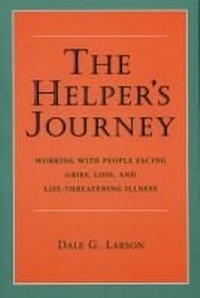
The Helper's Journey
Working with People Facing Grief, Loss, and Life-Threatening Illness
Published on 31. July 1993
Book
Paperback/Softback
292 pages
978-0-87822-344-2 (ISBN)
Description
This groundbreaking work, written for both professionals and volunteers, combines an inspiring view of helpers and helping with a focus on meeting the personal, interpersonal, and team challenges of caring for people facing grief, loss, and life-threatening illness. It teaches specific skills and strategies for stress management, effective helping communication, interdisciplinary teamwork, and increased personal and professional growth. Sensitively exploring the inner world of helping, this award-winning book includes numerous case examples and verbatim disclosures that powerfully convey the joys and sorrows of the helper's journey.
More details
Language
English
Place of publication
IL
United States
Target group
Professional and scholarly
College/higher education
Dimensions
Height: 229 mm
Width: 152 mm
ISBN-13
978-0-87822-344-2 (9780878223442)
Copyright in bibliographic data and cover images is held by Nielsen Book Services Limited or by the publishers or by their respective licensors: all rights reserved.
Schweitzer Classification
Person
Dr Dale G. Larson, Ph.D., (U. C. Berkeley), is Professor, Department of Counseling Psychology, at Santa Clara University, USA. He is a national leader in end-of-life care and training. Dr. Larson co-directed the pioneering NIMH-funded Berkeley Hospice Training Project, chaired NHPCO's First National Conference on Hospice Volunteerism, and created the award-winning Hospice Home Page website. In 2001 he was Senior Editor and a contributing author for the national newspaper series, Finding Our Way: Living with Dying in America, which reached seven million Americans. Dr. Larson has published extensively on psychosocial issues in end-of-life care and on self-concealment and health. A Fulbright Scholar and a Fellow in the American Psychological Association (Divisions 17 and 38), he has been a Summer Scholar at the Stanford Center for Advanced Study in the Behavioral Sciences and a W.K. Kellogg Foundation Expert in Residence. He is a popular national and international speaker, and in 2007 he received the Kara Pioneer Award for his contributions to end-of-life care.