

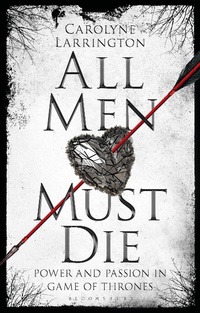
All Men Must Die
Power and Passion in Game of Thrones
Published on 28. January 2021
Book
Paperback/Softback
296 pages
978-1-78453-932-0 (ISBN)
Description
'All men must die': or 'Valar Morghulis', as the traditional Essos greeting is rendered in High Valyrian. And die they do - in prodigious numbers; in imaginatively varied and gruesome ways; and often in terror within the viciously unpredictable world that is HBO's sensational evocation of Game of Thrones. Epic in scope and in imaginative breadth, the stories that are brought to life tell of the dramatic rise and fall of nations, the brutal sweeping away of old orders and the advent of new autarchs in the eternal quest for dominion.
Yet, as this book reveals, many potent and intimate narratives of love and passion can be found within these grand landscapes of heroism, honour and death. They focus on strong relationships between women and family, as well as among the anti-heroes, the 'cripples, bastards and broken things'. In this vital follow-up to Winter Is Coming (2015), acclaimed medievalist Carolyne Larrington explores themes of power, blood-kin, lust and sex in order to draw entirely fresh meanings out of the show of the century.
Yet, as this book reveals, many potent and intimate narratives of love and passion can be found within these grand landscapes of heroism, honour and death. They focus on strong relationships between women and family, as well as among the anti-heroes, the 'cripples, bastards and broken things'. In this vital follow-up to Winter Is Coming (2015), acclaimed medievalist Carolyne Larrington explores themes of power, blood-kin, lust and sex in order to draw entirely fresh meanings out of the show of the century.
Reviews / Votes
All Men Must Die interrogates and analyses the eight-season arc of HBO's Game of Thrones on its own terms-not as an adaptation. Carolyne Larrington succeeds in explaining how, in spite of the glaring flaws of the latter seasons, the 'narrative, themes, and characters' of the show nonetheless represent a compelling version of contemporary medievalist storytelling. Incisively argued and deftly written, this is a worthy follow-up to her earlier, impressive, exploration of the world of Game of Thrones, and an enjoyable read in its own right. * Kavita Mudan Finn, Lecturer in Medieval Literature, Massachusetts Institute of Technology, USA * A thorough and insightful dive into various aspects of the worldbuilding in Game of Thrones. * Dr. Shiloh Carroll, PhD, Tennessee State University, USA. *More details
Language
English
Place of publication
London
United Kingdom
Publishing group
Bloomsbury Publishing PLC
Target group
Professional and scholarly
Product notice
Paperback (trade)
Unsewn / adhesive bound
Illustrations
40 bw illus
Dimensions
Height: 216 mm
Width: 142 mm
Thickness: 20 mm
Weight
370 gr
ISBN-13
978-1-78453-932-0 (9781784539320)
Copyright in bibliographic data and cover images is held by Nielsen Book Services Limited or by the publishers or by their respective licensors: all rights reserved.
Schweitzer Classification
Other editions
Additional editions
E-Book
01/2021
1st Edition
Bloomsbury Academic
€17.49
Available for download
E-Book
01/2021
1st Edition
Bloomsbury Academic
€17.49
Available for download
Person
Carolyne Larrington is Professor of Medieval European Literature at University of Oxford, UK. She is the author of The Women's Companion to Mythology (1997), King Arthur's Enchantresses (2006), The Land of the Green Man (2015) and Winter is Coming (2015), among others.
Content
List of Illustrations
List of Episodes
Preface
Acknowledgements
Introduction
1. Institutions and the Family
2. Identity
3. Power and Knowledge
4. Love, Desire and Hate
5. Gods, Demons and Monsters
6. Us and Them: Gender and Marginalization
Afterword
Bibliography
Index
List of Episodes
Preface
Acknowledgements
Introduction
1. Institutions and the Family
2. Identity
3. Power and Knowledge
4. Love, Desire and Hate
5. Gods, Demons and Monsters
6. Us and Them: Gender and Marginalization
Afterword
Bibliography
Index