


Everyday Architecture of the Mid-Atlantic
Looking at Buildings and Landscapes
Published on 9. September 1997
Book
Hardback
424 pages
978-0-8018-5324-1 (ISBN)
Description
From the 18th-century, single room "mansions" of Delaware's Cypress Swamp district to the early 20th-century suburban housing around Philadelphia and Wilmington, from the gable-fronted barns of Virginia's Eastern Shore to the stone bank barns of south-eastern Pennsylvania, the architectural landscape of the mid-Atlantic region is rich and varied. In this field guide to the region's vernacular architecture, the authors view the mid-Atlantic region as a crossroads, where diverse building traditions have overlapped and influenced one and other for generations. The book explores the character of pre-1940 domestic and agricultural buildings in the towns and rural landscapes of southern New Jersey, Delaware, and coastal Maryland and Virginia. Appraoching their subject "archaeologically", the authors examine the "layers" of a structure's past to show how it changed over time and to reveal telling details about its occupants and the community in which they lived. The text provides architectual information as well as a working methodology for anyone who wants to explore and learn from traditional architecture and landscapes.
The author's conclude that, as a vital cultural artifact, the distinctive architecture of the mid-Atlantic needs to be identified, recorded, and preserved.
The author's conclude that, as a vital cultural artifact, the distinctive architecture of the mid-Atlantic needs to be identified, recorded, and preserved.
Reviews / Votes
"It won't fit in your glove compartment, but 'Everyday Architecture in the Mid-Atlantic'is a book you ought to have along as you drive...It's a serious book but it is aimed at nonprofessionals who enjoy historic buildings and landscapes."--'Potomac Review' "A first-rate book...Profusely illustrated with an excellent selection of drawings and photographs...It will be of great use to everyone interested in our built environment."--'Maryland Historical Magazine' "'Everyday Architecture of the Mid-Atlantic' departs from well-traveled roads to explore the less-celebrated architecture of New Jersey, Deleware, and coastal Maryland and Virginia. The authors use more than 300 illustrations to show readers how to date buildings such as suburban houses that have been through many redesigns and expansions."--'Richmond Times-Dispatch'More details
Series
Language
English
Place of publication
Baltimore, MD
United States
Target group
College/higher education
Professional and scholarly
Illustrations
344 s/w Abbildungen
344 Illustrations, black and white
Dimensions
Height: 267 mm
Width: 216 mm
Thickness: 33 mm
Weight
1429 gr
ISBN-13
978-0-8018-5324-1 (9780801853241)
DOI
10.56021/9780801853241
Copyright in bibliographic data is held by Nielsen Book Services Limited or its licensors: all rights reserved.
Schweitzer Classification
Other editions
Additional editions
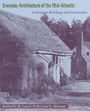
Gabrielle M. Lanier | Bernard L. Herman
Everyday Architecture of the Mid-Atlantic
Looking at Buildings and Landscapes
Book
09/1997
Johns Hopkins University Press
€42.50
Article not available for order
Persons
Gabrielle M. Lanier has taught historic preservation and public history at Mary Washington College, Rutgers University, and Millersville University. Bernard L. Herman is associate professor of art history, history, and urban affairs and public policy at the University of Delaware and associate director of the Center for Historical Architecture and Design. His many books include 'The Stolen House' and 'Architecture and Rural Life in Central Delaware: 1700-1900'.
Content
Acknowledgements
Chapter 1. Introduction
Chapter 2. House Forms and House Lots
Chapter 3. Construction: Underpinnings, Walling, and Roofing
Chapter 4. Popular Architectural Styles
Chapter 5. Farm Outbuildings and Plans
Chapter 6. Commercial, Industrial, and Institutional Architecture
Chapter 7. Landscape Ensembles: The Example of Port Penn, Delaware
Chapter 8. Recording Historic Buildings
Appendix: Directory of Resources
Notes
Glossary
Bibliography
Index
Chapter 1. Introduction
Chapter 2. House Forms and House Lots
Chapter 3. Construction: Underpinnings, Walling, and Roofing
Chapter 4. Popular Architectural Styles
Chapter 5. Farm Outbuildings and Plans
Chapter 6. Commercial, Industrial, and Institutional Architecture
Chapter 7. Landscape Ensembles: The Example of Port Penn, Delaware
Chapter 8. Recording Historic Buildings
Appendix: Directory of Resources
Notes
Glossary
Bibliography
Index