

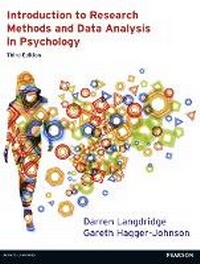
Introduction to Research Methods and Data Analysis in Psychology
3rd Edition
Published on 4. July 2013
Book
Paperback/Softback
640 pages
978-0-273-75687-3 (ISBN)
Description
This third edition of Introduction to Research Methods and Data Analysis in Psychology provides you with a unique, balanced blend of quantitative and qualitative research methods. Highly practical in nature, the book guides you, step-by-step, through the research process and is underpinned by SPSS screenshots, diagrams and examples throughout.
More details
Edition
3rd edition
Language
English
Place of publication
Harlow
United Kingdom
Target group
Professional and scholarly
Dimensions
Height: 247 mm
Width: 189 mm
Thickness: 33 mm
Weight
1206 gr
ISBN-13
978-0-273-75687-3 (9780273756873)
Copyright in bibliographic data and cover images is held by Nielsen Book Services Limited or by the publishers or by their respective licensors: all rights reserved.
Schweitzer Classification
Other editions
Additional editions
Darren Langdridge | Gareth Hagger-Johnson
Introduction to Research Methods and Data Analysis in Psychology
UEL
E-Book
04/2013
3rd Edition
Pearson
from
€69.19
Available for download
Persons
Dr Darren Langdridge is Head of Department of Psychology at The Open University.
Dr Gareth Hagger-Johnson is a psychologist and Senior Research Associate at University College London.
Dr Gareth Hagger-Johnson is a psychologist and Senior Research Associate at University College London.
Content
Section 1 - Introducing research methods
1. Starting out in research
2. Variables: definition and measurement
3. Reliability, validity, sampling and groups
4. Interviews and observation
5. Questionnaires and psychometric tests
6. Experimental and quasi-experimental designs
7. E-research
Section 2 - Analysing quantitative data
8. Fundamentals of statistics
9. Entering and manipulating data
10. Graphical representation and descriptive statistics
11. Bivariate analysis 1: exploring differences between variables
12. Bivariate analysis 2: exploring relationships between variables
13. ANOVA
14. MANOVA
15. Regression
16. Introducing R
Section 3 - Analysing qualitative data
17. Fundamentals of qualitative research
18. Transcribing, coding and organising textual data
19. Phenomenological research methods
20. Grounded theory
21. Discourse analysis
22. Life story and narrative research
23. The use of computers in qualitative analysis
24. Mixed methods
Section 4 - Reporting findings
25. Ethics and politics
26. Reporting and presenting findings
References
1. Starting out in research
2. Variables: definition and measurement
3. Reliability, validity, sampling and groups
4. Interviews and observation
5. Questionnaires and psychometric tests
6. Experimental and quasi-experimental designs
7. E-research
Section 2 - Analysing quantitative data
8. Fundamentals of statistics
9. Entering and manipulating data
10. Graphical representation and descriptive statistics
11. Bivariate analysis 1: exploring differences between variables
12. Bivariate analysis 2: exploring relationships between variables
13. ANOVA
14. MANOVA
15. Regression
16. Introducing R
Section 3 - Analysing qualitative data
17. Fundamentals of qualitative research
18. Transcribing, coding and organising textual data
19. Phenomenological research methods
20. Grounded theory
21. Discourse analysis
22. Life story and narrative research
23. The use of computers in qualitative analysis
24. Mixed methods
Section 4 - Reporting findings
25. Ethics and politics
26. Reporting and presenting findings
References