

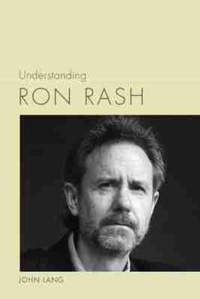
Understanding Ron Rash
Will be published approx. on 21. August 2014
Book
Hardback
152 pages
978-1-61117-411-3 (ISBN)
Description
In this first book-length study of Ron Rash's fiction and poetry, John Lang explores the nature and scope of Rash's achievements, introducing readers to the major themes and stylistic features of his work as well as the literary and cultural influences that shaped it. After a brief survey of Rash's life and career, Lang traces Rash's development through his fourteen books of poetry and fiction published through 2013.
Beginning with Rash's first three collections of short fiction, Lang analyzes the author's literary style and techniques as well as Rash's richly detailed settings and characters drawn from the mountain South, primarily western North Carolina and upstate South Carolina. Then, in an assessment of Rash's four volumes of poetry, Lang investigates their thematic and linguistic grounding in Appalachia and emphasizes their universal appeal, lyrical grace, and narrative efficiency. Moving to the early novels One Foot in Eden, Saints at the River, and The World Made Straight, Lang traces Rash's evolving narrative skills, intricate plotting, and the means by which he creates historical and philosophical resonance. Then Lang examines how vivid characters, striking use of dramatic techniques, and wide range of allusions combine in Rash's best-known book, which is also his most accomplished novel to date, Serena.
After a study of Rash's most recent novel, The Cove, Lang returns to Rash's latest work in short fiction: his Frank O'Connor Award-winning Burning Bright and Nothing Gold Can Stay, both of which demonstrate his wide-ranging subject matter and characters as well as his incisive portraits of both contemporary Appalachian life and the region's history. An extensive bibliography of primary and secondary materials by and about Rash concludes the book.
Beginning with Rash's first three collections of short fiction, Lang analyzes the author's literary style and techniques as well as Rash's richly detailed settings and characters drawn from the mountain South, primarily western North Carolina and upstate South Carolina. Then, in an assessment of Rash's four volumes of poetry, Lang investigates their thematic and linguistic grounding in Appalachia and emphasizes their universal appeal, lyrical grace, and narrative efficiency. Moving to the early novels One Foot in Eden, Saints at the River, and The World Made Straight, Lang traces Rash's evolving narrative skills, intricate plotting, and the means by which he creates historical and philosophical resonance. Then Lang examines how vivid characters, striking use of dramatic techniques, and wide range of allusions combine in Rash's best-known book, which is also his most accomplished novel to date, Serena.
After a study of Rash's most recent novel, The Cove, Lang returns to Rash's latest work in short fiction: his Frank O'Connor Award-winning Burning Bright and Nothing Gold Can Stay, both of which demonstrate his wide-ranging subject matter and characters as well as his incisive portraits of both contemporary Appalachian life and the region's history. An extensive bibliography of primary and secondary materials by and about Rash concludes the book.
More details
Series
Language
English
Place of publication
South Carolina
United States
Target group
College/higher education
Product notice
sewn/stitched
Cloth over boards
With dust jacket
Dimensions
Height: 251 mm
Width: 175 mm
Thickness: 18 mm
Weight
476 gr
ISBN-13
978-1-61117-411-3 (9781611174113)
Copyright in bibliographic data and cover images is held by Nielsen Book Services Limited or by the publishers or by their respective licensors: all rights reserved.
Schweitzer Classification
Other editions
Additional editions
John Lang
Understanding Ron Rash
E-Book
08/2014
1st Edition
University of South Carolina Press
from
€31.69
Available for download
Person
John Lang is a Professor of English Emeritus at Emory & Henry College in Emory, Virginia, where he taught from 1983 to 2012. He is the author of Understanding Fred Chappell (published by the University of South Carolina Press) and Six Poets from the Mountain South as well as the editor of Appalachia and Beyond: Conversations with Writers from the Mountain South, a collection of interviews from The Iron Mountain Review, which he edited for more than twenty years.