

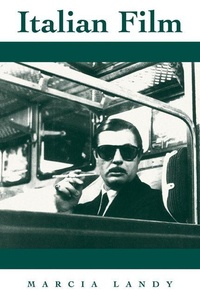
Italian Film
Published on 13. April 2000
Book
Paperback/Softback
460 pages
978-0-521-64977-3 (ISBN)
Description
Italian Film examines the extraordinary cinematic tradition of Italy, from the silent era to the present. Analyzing film within the framework of Italy's historical, social, political, and cultural evolution during the twentieth century, Marcia Landy traces the construction of a coherent national cinema and its changes over time. Examining the cinematic uses of landscape, architecture, regional, rural, and metropolitan locales, and representations of social customs and rituals, Landy also discusses genres, stars, narrative and anti-narrative forms. This study traces how social institutions as well as Italian notions of masculinity and femininity are dealt with in cinema and how they are central to the conceptions (and misconceptions) of national identity. It also demonstrates the vital links between Italian film and other art forms, including opera, popular music, literature, and painting. A comprehensive survey of this subject, Italian Film also offers fresh readings of key films from each period surveyed.
More details
Series
Language
English
Place of publication
Cambridge
United Kingdom
Target group
College/higher education
Professional and scholarly
Product notice
Paperback (trade)
Illustrations
80 Halftones, unspecified
Dimensions
Height: 229 mm
Width: 152 mm
Thickness: 27 mm
Weight
741 gr
ISBN-13
978-0-521-64977-3 (9780521649773)
Copyright in bibliographic data and cover images is held by Nielsen Book Services Limited or by the publishers or by their respective licensors: all rights reserved.
Schweitzer Classification
Other editions
Additional editions
Marcia Landy
Italian Film
Book
04/2000
Cambridge University Press
€68.20
Article exhausted; check for reprint
Previous edition
Marcia Landy
Italian Film
Book
04/2000
Cambridge University Press
€68.20
Article exhausted; check for reprint
Person
Content
Introduction; 1. Early cinema attractions; 2. National history as retrospective illusion; 3. Challenging the folklore romance; 4. Comedy and the cinematic machine; 5. The urban landscape, before and after Neorealism; 6. Gramsci and Italian cinema; 7. History and the Italian Western; 8. The cinematic family and the nation; 9. A cinema of childhood; 10. The Folklore of femininity and stardom; 11. Conversion, impersonation, and masculinity; 12. Cinema on cinema and television.