

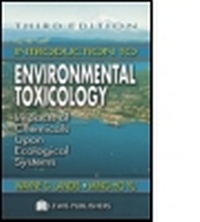
Introduction to Environmental Toxicology
Impacts of Chemicals Upon Ecological Systems, Third Edition
3rd Edition
Published on 29. December 2003
Book
Hardback
512 pages
978-1-56670-660-5 (ISBN)
Description
The rapidly evolving field of environmental toxicology involves the study of toxic compounds and their effect on living organisms, as well as their fate within the natural environment. Since publication of the first edition, Introduction to Environmental Toxicology has found a secure place among the major texts and references in this field.
Introduction to Environmental Toxicology, Third Edition seamlessly covers processes and impacts from the molecular level all the way up to population levels. While retaining the strengths of previous editions, the third edition includes a new chapter on fluoride, an update on endocrine disruption, a discussion of the use of models to reconstruct concentration-response curves, expansion of the metals chapter, and new developments in ecological risk assessment for management decisions at site to regional scales. It is an ideal text for introducing students to the fields of ecotoxicology and risk assessment.
Introduction to Environmental Toxicology, Third Edition seamlessly covers processes and impacts from the molecular level all the way up to population levels. While retaining the strengths of previous editions, the third edition includes a new chapter on fluoride, an update on endocrine disruption, a discussion of the use of models to reconstruct concentration-response curves, expansion of the metals chapter, and new developments in ecological risk assessment for management decisions at site to regional scales. It is an ideal text for introducing students to the fields of ecotoxicology and risk assessment.
More details
Edition
3rd New edition
Language
English
Place of publication
London
United Kingdom
Publishing group
Taylor & Francis Ltd
Target group
College/higher education
Professional and scholarly
Ecotoxicology and risk assessment professionals; students
Edition type
New edition
Illustrations
127 s/w Abbildungen, 48 s/w Tabellen, 2 s/w Photographien bzw. Rasterbilder
2 Halftones, black and white; 48 Tables, black and white; 127 Illustrations, black and white
Dimensions
Height: 235 mm
Width: 159 mm
Weight
816 gr
ISBN-13
978-1-56670-660-5 (9781566706605)
Copyright in bibliographic data and cover images is held by Nielsen Book Services Limited or by the publishers or by their respective licensors: all rights reserved.
Schweitzer Classification
Other editions
New editions
Wayne Landis | Ruth Sofield | Ming-Ho Yu
Introduction to Environmental Toxicology
Molecular Substructures to Ecological Landscapes, Fourth Edition
Book
12/2010
4th Edition
CRC Press
€111.60
Article exhausted; check for reprint
Additional editions

Wayne Landis | Ruth Sofield | Ming-Ho Yu
Introduction to Environmental Toxicology
Impacts of Chemicals Upon Ecological Systems, Third Edition
Other
12/2003
3rd Edition
CRC Press
Unfortunately, price unknown
The article will not be published
Previous edition
Wayne Landis | Ruth Sofield | Ming-Ho Yu
Introduction to Environmental Toxicology
Molecular Substructures to Ecological Landscapes, Second Edition
Book
06/1998
2nd Edition
Lewis Publishers,U.S.
€60.91
Article exhausted; check for reprint
Persons
Author
Western Washington University, Institute of Environmental Toxicology, Huxley College of the Environment, Bellingham, USA
Western Washington University, Bellingham, USA
Western Washington University, Bellingham, USA
Western Washington University, Institute of Environmental Toxicology, Huxley College of the Environment, Bellingham, USA
Content
INTRODUCTION TO ENVIRONMENTAL TOXICOLOGY AND ITS ROLE IN ENVIRONMENTAL DECISION MAKING
Environmental Toxicology as an Interdisciplinary Science
A Brief History of and Organizations in Environmental Toxicology
Interactions and Connections of Environmental Toxicology to the Management of Ecological Systems
Legislation
Use of Models in Environmental Science
Introduction to the Textbook
References
Study Questions
A FRAMEWORK FOR ENVIRONMENTAL TOXICOLOGY
Classical Viewpoint for Classifying Toxicological Effects
Alternative Framework Incorporating Complexity Theory
Spatial and Temporal Scales
Combining Scale and Ecological Dynamics:The Hierarchical Patch Dynamic Paradigm
References and Suggested Readings
Study Questions
AN INTRODUCTION TO TOXICITY TESTING
The Dose-Response Curve
Standard Methods
Classification of Toxicity Tests
Design Parameters for Single Species Toxicity Tests
Overview of Available Statistical Methods for the Evaluation of Single-Species Toxicity Tests
The Design of Multispecies Toxicity Tests
Summary of Design Guidelines for Multispecies Toxicity Tests
References and Suggested Readings
Study Questions
SURVEY AND REVIEW OF TYPICAL TOXICITY TEST METHODS
Single Species Toxicity Tests
Animal Care and Use Considerations
Multispecies Toxicity Tests
Summary
References and Suggested Readings
Study Questions
Appendix: The Natural History and Utilization of Test Species
ROUTES OF EXPOSURE AND MODES OF ACTION
The Damage Process
Atmospheric Pollutants and Plants
Mechanisms of Action
Common Modes of Action in Detail
Introduction to QSAR
Receptor Mediated Toxicity, Endocrine Disruption, and a Mechanistic SAR Analysis of PCB Toxicity
References and Suggested Readings
Study Questions
FACTORS MODIFYING THE ACTIVITY OF TOXICANTS
Introduction
Physicochemical Properties of Pollutants
Environmental Factors
Interaction of Pollutants
Toxicity of Mixtures
Mixture Estimation System 11
Estimating the Toxicity of Polynuclear Aromatic Hydrocarbons
Biological Factors Affecting Toxicity
References and Suggested Readings
Study Questions
INORGANIC GASEOUS POLLUTANTS
Sulfur Oxides
Nitrogen Oxides
Ozone
Carbon Monoxide
References and Suggested Readings
FLUORIDE AS A CONTAMINANT OF DEVELOPING ECONOMIES
Environmental Sources and Forms Of Fluoride
Industrial Sources of Fluoride Pollution
Effects On Plants
Effects on Animals
Effects On Human Health
Biochemical Effect
References and Suggested Readings
Study Questions
HEAVY METALS
Lead
Cadmium
Mercury
Study Questions
References and Suggested Readings
BIOTRANSFORMATION, DETOXIFICATION, AND BIODEGRADATION
Introduction
Metabolism of Environmental Chemicals: Biotransformation
Microbial Degradation
Bioremediation
Isolation and Engineering of Degradative Organisms
The Genetics of Degradative Elements
An Example of a Detoxification Enzyme-the OPA Anhydrolases
References and Suggested Readings
Study Questions
Measuring and Predicting the Responses of Ecological Systems to Toxicants
Introduction
Measurement of Ecological Effects at Various Levels of Biological Organization
Molecular and Physiological Indicators of Chemical Stress Biomarkers
Population Parameters
Assemblage and Community Parameters
Interpretation of effects at the Population, Community and Ecosystem Levels
of Organization
Community and Ecosystem Effects
Application of Multivariate Techniques
Pollution-Induced Community Tolerance
Interpretation of Ecosystem Level Impacts
An Alternative Model: The Community Conditioning Hypothesis
The Problem of the Reference Site
References and Suggested Readings
Study Questions
ECOLOGICAL RISK ASSESSMENT
Introduction
Basics of Risk Assessment
Ecological Risk Assessment
Ecological Risk Assessment Framework
Risk Characterization
Developments in Ecological Risk Assessment
A Ranking Approach to Multiple Stressor, Wide Area Ecological Risk Assessment
A General Model For Regional Risk Assessment - The Ten Steps
Life Cycle Assessment as a Decision Making Tool
References and Suggested Readings
Study Questions
Appendices
Index
Environmental Toxicology as an Interdisciplinary Science
A Brief History of and Organizations in Environmental Toxicology
Interactions and Connections of Environmental Toxicology to the Management of Ecological Systems
Legislation
Use of Models in Environmental Science
Introduction to the Textbook
References
Study Questions
A FRAMEWORK FOR ENVIRONMENTAL TOXICOLOGY
Classical Viewpoint for Classifying Toxicological Effects
Alternative Framework Incorporating Complexity Theory
Spatial and Temporal Scales
Combining Scale and Ecological Dynamics:The Hierarchical Patch Dynamic Paradigm
References and Suggested Readings
Study Questions
AN INTRODUCTION TO TOXICITY TESTING
The Dose-Response Curve
Standard Methods
Classification of Toxicity Tests
Design Parameters for Single Species Toxicity Tests
Overview of Available Statistical Methods for the Evaluation of Single-Species Toxicity Tests
The Design of Multispecies Toxicity Tests
Summary of Design Guidelines for Multispecies Toxicity Tests
References and Suggested Readings
Study Questions
SURVEY AND REVIEW OF TYPICAL TOXICITY TEST METHODS
Single Species Toxicity Tests
Animal Care and Use Considerations
Multispecies Toxicity Tests
Summary
References and Suggested Readings
Study Questions
Appendix: The Natural History and Utilization of Test Species
ROUTES OF EXPOSURE AND MODES OF ACTION
The Damage Process
Atmospheric Pollutants and Plants
Mechanisms of Action
Common Modes of Action in Detail
Introduction to QSAR
Receptor Mediated Toxicity, Endocrine Disruption, and a Mechanistic SAR Analysis of PCB Toxicity
References and Suggested Readings
Study Questions
FACTORS MODIFYING THE ACTIVITY OF TOXICANTS
Introduction
Physicochemical Properties of Pollutants
Environmental Factors
Interaction of Pollutants
Toxicity of Mixtures
Mixture Estimation System 11
Estimating the Toxicity of Polynuclear Aromatic Hydrocarbons
Biological Factors Affecting Toxicity
References and Suggested Readings
Study Questions
INORGANIC GASEOUS POLLUTANTS
Sulfur Oxides
Nitrogen Oxides
Ozone
Carbon Monoxide
References and Suggested Readings
FLUORIDE AS A CONTAMINANT OF DEVELOPING ECONOMIES
Environmental Sources and Forms Of Fluoride
Industrial Sources of Fluoride Pollution
Effects On Plants
Effects on Animals
Effects On Human Health
Biochemical Effect
References and Suggested Readings
Study Questions
HEAVY METALS
Lead
Cadmium
Mercury
Study Questions
References and Suggested Readings
BIOTRANSFORMATION, DETOXIFICATION, AND BIODEGRADATION
Introduction
Metabolism of Environmental Chemicals: Biotransformation
Microbial Degradation
Bioremediation
Isolation and Engineering of Degradative Organisms
The Genetics of Degradative Elements
An Example of a Detoxification Enzyme-the OPA Anhydrolases
References and Suggested Readings
Study Questions
Measuring and Predicting the Responses of Ecological Systems to Toxicants
Introduction
Measurement of Ecological Effects at Various Levels of Biological Organization
Molecular and Physiological Indicators of Chemical Stress Biomarkers
Population Parameters
Assemblage and Community Parameters
Interpretation of effects at the Population, Community and Ecosystem Levels
of Organization
Community and Ecosystem Effects
Application of Multivariate Techniques
Pollution-Induced Community Tolerance
Interpretation of Ecosystem Level Impacts
An Alternative Model: The Community Conditioning Hypothesis
The Problem of the Reference Site
References and Suggested Readings
Study Questions
ECOLOGICAL RISK ASSESSMENT
Introduction
Basics of Risk Assessment
Ecological Risk Assessment
Ecological Risk Assessment Framework
Risk Characterization
Developments in Ecological Risk Assessment
A Ranking Approach to Multiple Stressor, Wide Area Ecological Risk Assessment
A General Model For Regional Risk Assessment - The Ten Steps
Life Cycle Assessment as a Decision Making Tool
References and Suggested Readings
Study Questions
Appendices
Index