

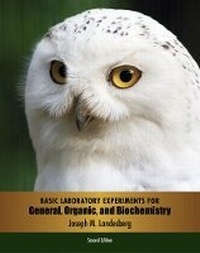
Basic Laboratory Experiments for General, Organic, and Biochemistry
2nd Edition
Published on 4. February 2014
Book
Paperback/Softback
240 pages
978-1-285-45965-3 (ISBN)
Description
Focused, streamlined, and designed throughout to meet the needs of the one-term GOB Lab course, this manual features 14 easy-to-follow experiments (6 general chemistry, 4 organic chemistry, and 4 biochemistry) that include clear directions and illustrate the key concepts important for an allied health career. Pre- and post-lab questions for every experiment test the reader's ability to apply concepts.
Reviews / Votes
Preface. Acknowledgements. Practice Safe Laboratory. 1. Laboratory Measurements. 2. Density Determination. 3. Classes of Chemical Reactions. 4. Physical Properties of Chemicals: Melting Point, Sublimation, and Boiling Point. 5. Factors Affecting Rate of Reactions. 6. The Law of Chemical Equilibrium and the Le Chatelier Principle. 7. pH and Buffer Solutions. 8. Structure in Organic Compounds: Use of Molecular Models. 9. Aspirin: Preparation and Properties (Acetylsalicylic Acid). 10. Carbohydrates. 11. Fats and Oils: Preparation and Properties of Soap. 12. Separation of Amino Acids by Paper Chromotography. 13. Isolation and Identification of Casein. 14. Enzymes. Appendix 1: Use of the Laboratory Gas Burner. Appendix 2: List of Apparatus and Equipment in Student's Locker. Appendix 3: List of Common Equipment and Material in the Laboratory. Appendix 4: Special Equipment and Chemical Preparations for Each Experiment.More details
Edition
2nd edition
Language
English
Place of publication
CA
United States
Publishing group
Cengage Learning, Inc
Target group
College/higher education
Dimensions
Height: 15 mm
Width: 213 mm
Thickness: 269 mm
Weight
390 gr
ISBN-13
978-1-285-45965-3 (9781285459653)
Copyright in bibliographic data and cover images is held by Nielsen Book Services Limited or by the publishers or by their respective licensors: all rights reserved.
Schweitzer Classification
Person
Joseph M. Landesberg is a professor in the Department of Chemistry at Adelphi University. He came to Adelphi University in the fall of 1966. Prior to that, he was at Columbia University where he took a postdoctoral position with Professor Gilbert Stork. He received his Ph.D. from Harvard University where he wrote his thesis under the guidance of Professor Roy A. Olofson. Dr. Landesberg did his undergraduate work at Rutgers University.
Content
Preface.
Acknowledgements.
Practice Safe Laboratory.
1. Laboratory Measurements.
2. Density Determination.
3. Classes of Chemical Reactions.
4. Physical Properties of Chemicals: Melting Point, Sublimation, and Boiling Point.
5. Factors Affecting Rate of Reactions.
6. The Law of Chemical Equilibrium and the Le Chatelier Principle.
7. pH and Buffer Solutions.
8. Structure in Organic Compounds: Use of Molecular Models.
9. Aspirin: Preparation and Properties (Acetylsalicylic Acid).
10. Carbohydrates.
11. Fats and Oils: Preparation and Properties of Soap.
12. Separation of Amino Acids by Paper Chromotography.
13. Isolation and Identification of Casein.
14. Enzymes.
Appendix 1: Use of the Laboratory Gas Burner.
Appendix 2: List of Apparatus and Equipment in Student's Locker.
Appendix 3: List of Common Equipment and Material in the Laboratory.
Appendix 4: Special Equipment and Chemical Preparations for Each Experiment.
Acknowledgements.
Practice Safe Laboratory.
1. Laboratory Measurements.
2. Density Determination.
3. Classes of Chemical Reactions.
4. Physical Properties of Chemicals: Melting Point, Sublimation, and Boiling Point.
5. Factors Affecting Rate of Reactions.
6. The Law of Chemical Equilibrium and the Le Chatelier Principle.
7. pH and Buffer Solutions.
8. Structure in Organic Compounds: Use of Molecular Models.
9. Aspirin: Preparation and Properties (Acetylsalicylic Acid).
10. Carbohydrates.
11. Fats and Oils: Preparation and Properties of Soap.
12. Separation of Amino Acids by Paper Chromotography.
13. Isolation and Identification of Casein.
14. Enzymes.
Appendix 1: Use of the Laboratory Gas Burner.
Appendix 2: List of Apparatus and Equipment in Student's Locker.
Appendix 3: List of Common Equipment and Material in the Laboratory.
Appendix 4: Special Equipment and Chemical Preparations for Each Experiment.