

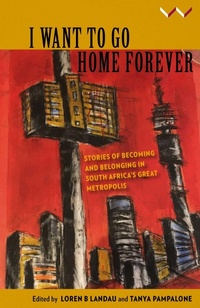
I Want to Go Home Forever
Stories of Becoming and Belonging in South Africa's Great Metropolis
Published on 1. August 2018
Book
Paperback/Softback
260 pages
978-1-77614-221-7 (ISBN)
Description
Thirteen true stories about xenophobia and belonging in Johannesburg
Generations of people from across Africa, Europe and Asia have turned metal from the depths of the earth into Africa's wealthiest, most dynamic and most diverse urban centre, a mega-city where post-apartheid South Africa is being made. Yet for newcomers as well as locals, the golden possibilities of Gauteng are tinged with dangers and difficulties.
Chichi is a hairdresser from Nigeria who left for South Africa after a love affair went bad. Azam arrived from Pakistan with a modest wad of cash and a dream. Estiphanos trekked the continent escaping political persecution in Ethiopia, only to become the target of the May 2008 xenophobic attacks.
Nombuyiselo is the mother of 14-year-old Simphiwe Mahori, shot dead in 2015 by a Somalian shopkeeper in Snake Park, sparking a further wave of anti-foreigner violence. After fighting white oppression for decades, Ntombi has turned her anger towards African foreigners, who, she says are taking jobs away from South Africans and fuelling crime. Papi, a freedom fighter and activist in Katlehong, now dedicates his life to teaching the youth in his community that tolerance is the only way forward.
These are some of the thirteen stories that make up this collection. They are the stories of South Africans, some Gauteng-born, others from neighbouring provinces, striving to realise the promises of democracy. They are also the stories of newcomers, from neighbouring countries and from as far afield as Pakistan and Rwanda, seeking a secure future in those very promises.
The narratives, collected by researchers, journalists and writers, reflect the many facets of South Africa's post-apartheid decades. Taken together they give voice to the emotions and relations emanating from a paradoxical place of outrage and hope, violence and solidarity. They speak of intersections between people and their pasts, and of how, in the making of selves and the other they are also shaping South Africa. Underlying these accounts is a nostalgia for an imagined future that can never be realised. These are stories of forever seeking a place called 'home'.
Generations of people from across Africa, Europe and Asia have turned metal from the depths of the earth into Africa's wealthiest, most dynamic and most diverse urban centre, a mega-city where post-apartheid South Africa is being made. Yet for newcomers as well as locals, the golden possibilities of Gauteng are tinged with dangers and difficulties.
Chichi is a hairdresser from Nigeria who left for South Africa after a love affair went bad. Azam arrived from Pakistan with a modest wad of cash and a dream. Estiphanos trekked the continent escaping political persecution in Ethiopia, only to become the target of the May 2008 xenophobic attacks.
Nombuyiselo is the mother of 14-year-old Simphiwe Mahori, shot dead in 2015 by a Somalian shopkeeper in Snake Park, sparking a further wave of anti-foreigner violence. After fighting white oppression for decades, Ntombi has turned her anger towards African foreigners, who, she says are taking jobs away from South Africans and fuelling crime. Papi, a freedom fighter and activist in Katlehong, now dedicates his life to teaching the youth in his community that tolerance is the only way forward.
These are some of the thirteen stories that make up this collection. They are the stories of South Africans, some Gauteng-born, others from neighbouring provinces, striving to realise the promises of democracy. They are also the stories of newcomers, from neighbouring countries and from as far afield as Pakistan and Rwanda, seeking a secure future in those very promises.
The narratives, collected by researchers, journalists and writers, reflect the many facets of South Africa's post-apartheid decades. Taken together they give voice to the emotions and relations emanating from a paradoxical place of outrage and hope, violence and solidarity. They speak of intersections between people and their pasts, and of how, in the making of selves and the other they are also shaping South Africa. Underlying these accounts is a nostalgia for an imagined future that can never be realised. These are stories of forever seeking a place called 'home'.
Reviews / Votes
These are raw, honest personal stories - some heart-breaking, some up-lifting. Beautifully told, each story is a study of journey-making. No matter where we may have been born, each of us seeks a place where we will be safe and respected for who we are. The stories in this collection illustrate that no journey is easy - each act of leaving and each attempt to begin again is tough. At their core however, these stories grapple with the making of a nation. Taken together, these narratives illustrate the quest for dignity and so they tell the story of humanity and striving, and ambition in the midst of profound diffi culty. This book speaks to South African and African concerns but at its heart, it documents a set of global phenomena that are important to anyone who cares about the state of the world today. - Sisonke Msimang, activist and author of Always Another CountryMore details
Language
English
Place of publication
Johannesburg
South Africa
Product notice
Paperback (trade)
Dimensions
Height: 216 mm
Width: 141 mm
Thickness: 25 mm
Weight
346 gr
ISBN-13
978-1-77614-221-7 (9781776142217)
Copyright in bibliographic data and cover images is held by Nielsen Book Services Limited or by the publishers or by their respective licensors: all rights reserved.
Schweitzer Classification
Other editions
Additional editions
Loren B. Landau | Tanya Pampalone
I Want to Go Home Forever
Stories of becoming and belonging in South Africa's great metropolis
E-Book
08/2018
Abingdon Press
€29.49
Available for download
Persons
Loren B. Landau is the South African Research Chair in Human Mobility and the Politics of Difference at the African Centre for Migration & Society, University of the Witwatersrand, Johannesburg.
Tanya Pampalone is the managing editor of the Global Investigative Journalism Network and moonlights as a non-fiction editor for Pan Macmillan South Africa. She won the prestigious journalism award for creative writing, the Standard Bank Sikuvile, in 2012.
Tanya Pampalone is the managing editor of the Global Investigative Journalism Network and moonlights as a non-fiction editor for Pan Macmillan South Africa. She won the prestigious journalism award for creative writing, the Standard Bank Sikuvile, in 2012.
Content
Foreword by Karabo Kgoleng
Preface
Maps
Introduction by Loren B Landau and Tanya Pampalone
Chapter 1 A bed of his own blood: Nombuyiselo Ntlane. Interviewed by Eliot Moleba
Chapter 2 This country is my home: Azam Khan. Interviewed by Nedson Pophiwa
Chapter 3 On patrol in the dark city: Ntombi Theys. Interviewed by Ryan Lenora Brown
Chapter 4 Johannesburg hustle: Lucas Machel. Interviewed by Oupa Nkosi
Chapter 5 Don't. Expose. Yourself: Papi Thetele. Interviewed by Caroline Wanjiku Kihato
Chapter 6 The big man of Hosaena: Estifanos Worku Abeto. Interviewed by Tanya Pampalone
Chapter 7 Do we owe them just because they helped us? Kopano Lebelo. Interviewed by Thandiwe Ntshinga
Chapter 8 Love in the time of xenophobia: Chichi Ngozi. Interviewed by Ragi Bashonga
Chapter 9 This land is our land: Lufuno Gogoro. Interviewed by Dudu Ndlovu
Chapter 10 Alien: Esther Khumalo*. Interviewed by Greta Schuler
Chapter 11 One day is one day: Alphonse Nahimana*. Interviewed by Suzy Bernstein
Chapter 12 I won't abandon Jeppe: Charalabos (Harry) Koulaxizis. Interviewed by Tanya Zack
Chapter 13 The induna: Manyathela Mvelase. Interviewed by Kwanele Sosibo
Timeline
Glossary
Selected place names
Contributors* Not the narrator's real name
Preface
Maps
Introduction by Loren B Landau and Tanya Pampalone
Chapter 1 A bed of his own blood: Nombuyiselo Ntlane. Interviewed by Eliot Moleba
Chapter 2 This country is my home: Azam Khan. Interviewed by Nedson Pophiwa
Chapter 3 On patrol in the dark city: Ntombi Theys. Interviewed by Ryan Lenora Brown
Chapter 4 Johannesburg hustle: Lucas Machel. Interviewed by Oupa Nkosi
Chapter 5 Don't. Expose. Yourself: Papi Thetele. Interviewed by Caroline Wanjiku Kihato
Chapter 6 The big man of Hosaena: Estifanos Worku Abeto. Interviewed by Tanya Pampalone
Chapter 7 Do we owe them just because they helped us? Kopano Lebelo. Interviewed by Thandiwe Ntshinga
Chapter 8 Love in the time of xenophobia: Chichi Ngozi. Interviewed by Ragi Bashonga
Chapter 9 This land is our land: Lufuno Gogoro. Interviewed by Dudu Ndlovu
Chapter 10 Alien: Esther Khumalo*. Interviewed by Greta Schuler
Chapter 11 One day is one day: Alphonse Nahimana*. Interviewed by Suzy Bernstein
Chapter 12 I won't abandon Jeppe: Charalabos (Harry) Koulaxizis. Interviewed by Tanya Zack
Chapter 13 The induna: Manyathela Mvelase. Interviewed by Kwanele Sosibo
Timeline
Glossary
Selected place names
Contributors* Not the narrator's real name