

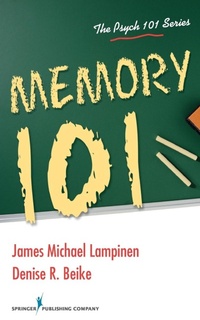
Memory 101
Published on 25. November 2014
Book
Paperback/Softback
312 pages
978-0-8261-0924-8 (ISBN)
Description
Contemporary research has found that memory is much more than the process for recalling information that has been learned and retained??it is a rich, nuanced process that is an important part of every human activity. This highly readable foundational text provides an overview of the theories and research on human memory from a psychological perspective. Grounded in the premise that all psychological processes depend on memory, and that memory is shaped by the functions it serves, the authors look at a wide range of memory processes and discuss the major theories that have been developed to explain how it functions.
This book describes the major structural and functional theories that guide our understanding of memory. The authors then focus on everyday functions of memory, including memorizing things, remembering to do things (prospective memory), and recalling how to do things, such as skills, procedures, and navigation. Disorders of memory including Alzheimer's and amnesia are examined along with exceptional memory skills, such as the phenomenon of individuals with highly superior autobiographical memory. The book also addresses the intriguing and controversial topics of repressed and recovered memories, the validity of memory in courtroom testimony, and the effects of remembering traumatic events. Illustrative examples, metaphors, and humor make for a text that is engaging and entertaining, resulting in a valuable, concise introduction for students.
Key Features:
Provides a concise, easy-to-read, yet scientifically based survey of theory and current research on memory
Grounded in the concept that memory is foundational to all psychological processes and human experience
Covers controversial and intriguing topics including repressed and recovered memories, memory in legal testimony, amnesia, and the phenomenon of super memory
Explores the myths and realities surrounding memory loss
The Psych 101 Series
Short, reader-friendly introductions to cutting-edge topics in psychology. With key concepts, controversial topics, and fascinating accounts of up-to-the-minute research, The Psych 101 Series is a valuable resource for all students of psychology and anyone interested in the field.
This book describes the major structural and functional theories that guide our understanding of memory. The authors then focus on everyday functions of memory, including memorizing things, remembering to do things (prospective memory), and recalling how to do things, such as skills, procedures, and navigation. Disorders of memory including Alzheimer's and amnesia are examined along with exceptional memory skills, such as the phenomenon of individuals with highly superior autobiographical memory. The book also addresses the intriguing and controversial topics of repressed and recovered memories, the validity of memory in courtroom testimony, and the effects of remembering traumatic events. Illustrative examples, metaphors, and humor make for a text that is engaging and entertaining, resulting in a valuable, concise introduction for students.
Key Features:
Provides a concise, easy-to-read, yet scientifically based survey of theory and current research on memory
Grounded in the concept that memory is foundational to all psychological processes and human experience
Covers controversial and intriguing topics including repressed and recovered memories, memory in legal testimony, amnesia, and the phenomenon of super memory
Explores the myths and realities surrounding memory loss
The Psych 101 Series
Short, reader-friendly introductions to cutting-edge topics in psychology. With key concepts, controversial topics, and fascinating accounts of up-to-the-minute research, The Psych 101 Series is a valuable resource for all students of psychology and anyone interested in the field.
More details
Language
English
Place of publication
New York
United States
Target group
College/higher education
Illustrations
20 Illustrations; 20 Illustrations
Dimensions
Height: 203 mm
Width: 127 mm
Thickness: 17 mm
Weight
341 gr
ISBN-13
978-0-8261-0924-8 (9780826109248)
Copyright in bibliographic data and cover images is held by Nielsen Book Services Limited or by the publishers or by their respective licensors: all rights reserved.
Schweitzer Classification
Persons
James Michael Lampinen, PhD, is professor and associate chair in the Department of Psychological Science at the University of Arkansas in Fayetteville.
Denise R. Beike, PhD, is professor and chair of the Department of Psychological Science at the University of Arkansas.
Denise R. Beike, PhD, is professor and chair of the Department of Psychological Science at the University of Arkansas.
Content
Acknowledgments
Share Memory 101
Chapter 1 Everything Is Memory
Chapter 2 Nuts and Bolts: The Basics of Your Memory
Chapter 3 Memory Illusions
Chapter 4 Who Done It? Memory and Eyewitness Identification
Chapter 5 Remembering to Take the Cupcakes Out of the Oven: Prospective Memory
Chapter 6 That's the Story of My Life: The Autobiographical Memory System
Chapter 7 Frozen in Time: Traumatic Memories
Chapter 8 Memory Loss: Amnesia and Other Memory Disorders
Chapter 9 Memory Is Everything: Having Superior Memory
Index
Share Memory 101
Chapter 1 Everything Is Memory
Chapter 2 Nuts and Bolts: The Basics of Your Memory
Chapter 3 Memory Illusions
Chapter 4 Who Done It? Memory and Eyewitness Identification
Chapter 5 Remembering to Take the Cupcakes Out of the Oven: Prospective Memory
Chapter 6 That's the Story of My Life: The Autobiographical Memory System
Chapter 7 Frozen in Time: Traumatic Memories
Chapter 8 Memory Loss: Amnesia and Other Memory Disorders
Chapter 9 Memory Is Everything: Having Superior Memory
Index