


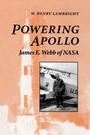
Powering Apollo
James E. Webb of NASA
Published on 26. April 1995
Book
Hardback
288 pages
978-0-8018-4902-2 (ISBN)
Description
From archival evidence and interviews with space agency officials, an in-depth investigation into the relationship between the performance of the American space program and NASA's organizational culture.
When President Kennedy issued his well-known challenge to reach the moon and return safely before the end of the 1960s, the immediate responsibility for undertaking the task fell to 54-year-old NASA director James E. Webb. Eight years later, when the Apollo 11 spacecraft splashed down safely in the Pacific and the screens in NASA's Mission Control at Houston flashed the words "Task Accomplished," it was Webb who deserved much of the credit. In Powering Apollo, W. Henry Lambright explores Webb's leadership role in NASA's spectacular success-success that is rare in ambitious government policies and programs.
A North Carolina native and Congressional staff member, Jim Webb had served in Congress, worked in the Truman administration, and risen to high office in the defense and energy industries by 1961 when Kennedy named him to head the new National Aeronautics and Space Administration. Examining Webb's role as both Washington insider and government program director, Lambright probes the skills and experience that equipped him to handle his enormous responsibilities. He also shows how Webb's performance reflected important changes in twentieth century public life, including the concentration of political power in Washington; expansion of the federal bureaucracy; the rise of big science; and visions of cooperation among government, industry, and higher education.
When President Kennedy issued his well-known challenge to reach the moon and return safely before the end of the 1960s, the immediate responsibility for undertaking the task fell to 54-year-old NASA director James E. Webb. Eight years later, when the Apollo 11 spacecraft splashed down safely in the Pacific and the screens in NASA's Mission Control at Houston flashed the words "Task Accomplished," it was Webb who deserved much of the credit. In Powering Apollo, W. Henry Lambright explores Webb's leadership role in NASA's spectacular success-success that is rare in ambitious government policies and programs.
A North Carolina native and Congressional staff member, Jim Webb had served in Congress, worked in the Truman administration, and risen to high office in the defense and energy industries by 1961 when Kennedy named him to head the new National Aeronautics and Space Administration. Examining Webb's role as both Washington insider and government program director, Lambright probes the skills and experience that equipped him to handle his enormous responsibilities. He also shows how Webb's performance reflected important changes in twentieth century public life, including the concentration of political power in Washington; expansion of the federal bureaucracy; the rise of big science; and visions of cooperation among government, industry, and higher education.
Reviews / Votes
The reputation of James Webb is hostage to Apollo. He, more than any other single individual, made Apollo happen . . . This fine biography will keep his memory warm.-Science
More details
Series
Language
English
Place of publication
Baltimore, MD
United States
Target group
College/higher education
Professional and scholarly
Illustrations
8 s/w Abbildungen
8 Illustrations, black and white
Dimensions
Height: 229 mm
Width: 152 mm
Weight
595 gr
ISBN-13
978-0-8018-4902-2 (9780801849022)
DOI
10.56021/9780801849022
Copyright in bibliographic data is held by Nielsen Book Services Limited or its licensors: all rights reserved.
Schweitzer Classification
Other editions
Additional editions
Book
02/2000
Johns Hopkins University Press
€37.40
Article not available for order