

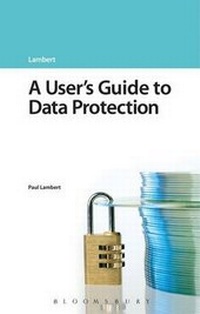
A User's Guide to Data Protection
Published on 28. February 2013
Book
Paperback/Softback
756 pages
978-1-84766-980-3 (ISBN)
Description
A User's Guide to Data Protection explains all the compliance issues that organisations need to be aware of in order to successfully comply with UK data protection rules and regulations. Includes coverage of: Sources of Data Protection Law; Brief History of Data Protection; Definitions and Principles; EU Data Protection; UK Data Protection; Organisational DP Obligations, Inward Facing: Employees; Organisational DP Obligations, Outward Facing: Customers, Prospects & Users; User Rights; Enforcement & Penalties; Security of Data; Outsourcing and Data Processors; Compliance and Policies; Trans Border Data Flows (Transfers); ePrivacy; Spam; EU DP Review and Update.
Reviews / Votes
The book provides a comprehensive review of data protection law and is structured into various easy-to-find categories. Managing Information A User's Guide to Data Protection is the very latest and most intelligible guide to challenges of data protection...[It] is an essential handbook for everyone facing data protection issues in the UK. German-British Chamber of Industry and CommerceMore details
Series
Language
English
Place of publication
London
United Kingdom
Publishing group
Bloomsbury Publishing PLC
Target group
Professional and scholarly
Dimensions
Height: 203 mm
Width: 135 mm
Weight
911 gr
ISBN-13
978-1-84766-980-3 (9781847669803)
Copyright in bibliographic data and cover images is held by Nielsen Book Services Limited or by the publishers or by their respective licensors: all rights reserved.
Schweitzer Classification
Other editions
New editions
Paul Lambert
A User's Guide to Data Protection
Book
07/2016
2nd Edition
Bloomsbury Professional
€170.84
Article is exhausted; no reprint
Person
Paul Lambert, BA LLB LLM, Lecturer, Solicitor, CTMA, has been publishing articles in legal and business journals on topics such as defamation, internet legal issues and intellectual property for many years.
Content
Part 1: How to Comply with the Data Protection Regime: Chapter 1 Data Protection; Chapter 2 Sources of Data Protection Law; Chapter 3 Definitions; Chapter 4 History and EU Data Protection; Chapter 5 Data Protection Principles; Chapter 6 Ordinary Personal Data Legitimate Processing Conditions; Chapter 7 Processing Pre-Conditions: DPA Prior Information Requirements; Chapter 8 Exemptions; Chapter 9 Individual Data Subject Rights; Chapter 10 Notification and Registration; Chapter 11 Time Limits for Compliance; Chapter 12 Enforcement and Penalties for Non-Compliance; Chapter 13 Security of Personal Data; Chapter 14 Outsourcing and Data Processors; Chapter 15 Other Data Protection Issues; Part 2: Inward-Facing Organisational DP Obligations: Chapter 16 Processing Employee Personal Data; Chapter 17 Employee Data Protection Rights; Chapter 18 Employee Considerations; Chapter 19 Employee Monitoring Issues; Part 3: Outward-Facing Organisational DP Obligations: Chapter 20 Outward Facing Issues; Chapter 21 Cookies and Electronic Communications; Chapter 22 Enforcement Powers; Chapter 23 Trans Border Data Flows/ Transfers of Personal Data; Chapter 24 ePrivacy and Electronic Communications; Chapter 25 Electronic Direct Marketing and Spam; Part 4: New EU Regime: Chapter 26 EU DP Review and Update; Chapter 27 Social Networking; Chapter 28 Social Networking and Access; Chapter 29 Jurisdiction, Internet Service Provider and Social Networks; Chapter 30 Privacy by Design; Chapter 31 Leveson, the Press and Data Protection.