

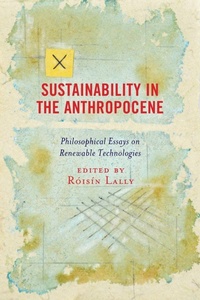
Sustainability in the Anthropocene
Philosophical Essays on Renewable Technologies
Published on 17. December 2021
Book
Paperback/Softback
258 pages
978-1-4985-8424-1 (ISBN)
Description
We are facing an environmental crisis that some say is ushering a new geological epoch, the Anthropocene, one that threatens not only a great deal of life on the planet but also our understanding of who we are and our relation to the natural world. In the face of this crisis it has become clear that we need a more sustainable culture. In fact the language of sustainability has become pervasive in our culture and has deeply ingrained itself in our understanding of what living a good life would entail. "Sustainability," however, is a contested word, and it carries with it, often implicitly and unacknowledged, deep philosophical claims that are entangled with all kinds of assumptions and power relations, some of them very problematic. This book attempts to set this urgent goal of sustainability free from its more reductive and harmful interpretations and to thereby apply a more thoughtful environmental ethics to current and emerging technologies, particularly those involving reproduction and the harnessing of energy that dominate our elemental relations to sun and air, wind and water, earth and forest.
The book is divided into 4 sections: (1) Sustainability: A Contested Term, (2) Sustainability and Renewable Technologies: Sun, Air, Wind, Water, (3) Sustainability and Design, and (4) Sustainability and Ethics. The first section sets the context for our studies and opens a space for thinking sustainability in a more thoughtful way than is often the case in contemporary discussions. The next two sections are the heart of our contribution to postphenomenology and technoscience, and the essays, here, turn to concrete examinations of particular technologies and questions of technological design in the light of our environmental crisis. The fourth section closes the book by drawing some more general implications for ethics from the intersection of the foregoing themes.
The book is divided into 4 sections: (1) Sustainability: A Contested Term, (2) Sustainability and Renewable Technologies: Sun, Air, Wind, Water, (3) Sustainability and Design, and (4) Sustainability and Ethics. The first section sets the context for our studies and opens a space for thinking sustainability in a more thoughtful way than is often the case in contemporary discussions. The next two sections are the heart of our contribution to postphenomenology and technoscience, and the essays, here, turn to concrete examinations of particular technologies and questions of technological design in the light of our environmental crisis. The fourth section closes the book by drawing some more general implications for ethics from the intersection of the foregoing themes.
Reviews / Votes
Roisin Lally's Sustainability in the Anthropocene provides a wealth of essays on the philosophical meanings and implications of renewable technologies, as well as glimpses of novel ways toward a sustainable future that integrate deeply meaningful ways of being for humans.This volume shows us some ways of doing just that, and I commend Lally for putting together such a robust collection on an increasingly important subject. * Journal of the Pacific Association for the Continental Tradition * Offering an alternative to analytical and pragmatic approaches to ecocide, these twelve essays invite readers to rethink economics, technology, and the concept of sustainability in philosophical terms. Phenomenology is here reshaped as applied philosophy, aiming at an alternative future. Contributors to this four-part edited volume adopt a range of angles from which to view the global problem we all face: that when the goods of developing economies sustain human life, those same processes degrade the environment at an alarming rate. Most chapters offer creative alternatives, even hope, supporting the proposition that future generations may flourish. Part 1 looks at the philosophical origins of sustainability; part 2 examines renewable technologies. One instructive example from part 3 ("Sustainability and Design") is Belu's essay (chapter 7) on in vitro fertilization, arguing that the surrogate womb has become a technology and the woman a receptacle or resource. Turning women's reproductive rights on their head, Belu shows how in vitro fertilization is premised on the same consumerist principles that lead to ecological degradation. The three challenging essays of part 4 ("Sustainability and Ethics") complete this philosophical tour de force, linking specific trends in modern thought to the ecological dilemma of our time.Summing Up: Recommended. Upper-division undergraduates through faculty and professionals. * Choice Reviews *
More details
Series
Language
English
Place of publication
United States
Publishing group
Bloomsbury Publishing Plc
Target group
Professional and scholarly
Illustrations
1 b/w photos;
Dimensions
Height: 229 mm
Width: 152 mm
Thickness: 15 mm
Weight
412 gr
ISBN-13
978-1-4985-8424-1 (9781498584241)
Copyright in bibliographic data and cover images is held by Nielsen Book Services Limited or by the publishers or by their respective licensors: all rights reserved.
Schweitzer Classification
Other editions
Additional editions
Sustainability in the Anthropocene
Philosophical Essays on Renewable Technologies
E-Book
04/2019
1st Edition
Lexington Books
€38.99
Available for download
Persons
R?isin Lally is lecturer of philosophy at Gonzaga University.
Content
Introduction: Sustainable Technologies in the Anthropocene
Dan Bradley
Part One: Defining Sustainability
1. Sustainability: a Single Word and a World of Meanings
Cristina Pontes Bonfiglioli
2. Is This the End?
Jan Kyrre Berg Friis
Part Two: Sustainability and Renewable Technologies: Sun, Air, Wind, Water
3. Is it Too Late to "Let the Sun Shine in"?
Don Ihde
4. Talking Weather from Ge-rede to Ge-stell
Babette Babich
5. Water and Oil: Global Struggles in Sustainability
Trish Glazebrook
6. The Ontogenesis of Wind Turbines and the Question of Sustainability
Roisin Lally
Part Three: Sustainability and Design
7. We're in this Together: Climate Change and Reproductive Technology in the Age of Ge-stell
Dana S. Belu
8. An Alternative to Technological Instrumentalism: Considering the Aesthetic Dimension of Sustainable Energy
Brendan Mahoney
9. Digital Cultural Sustainability
Galit Wellner
Part Four: Sustainability and Ethics
10. Sustainable Futures: Ethico-Political Dimensions of Technology
Lars Botin
11. Beyond Naturalism: A Personalist Integral Humanism
Thomas Jeannot
12. The Ethics of Sustainability, Instrumental Reason, and the Goodness of Nature
Daniel Bradley
Dan Bradley
Part One: Defining Sustainability
1. Sustainability: a Single Word and a World of Meanings
Cristina Pontes Bonfiglioli
2. Is This the End?
Jan Kyrre Berg Friis
Part Two: Sustainability and Renewable Technologies: Sun, Air, Wind, Water
3. Is it Too Late to "Let the Sun Shine in"?
Don Ihde
4. Talking Weather from Ge-rede to Ge-stell
Babette Babich
5. Water and Oil: Global Struggles in Sustainability
Trish Glazebrook
6. The Ontogenesis of Wind Turbines and the Question of Sustainability
Roisin Lally
Part Three: Sustainability and Design
7. We're in this Together: Climate Change and Reproductive Technology in the Age of Ge-stell
Dana S. Belu
8. An Alternative to Technological Instrumentalism: Considering the Aesthetic Dimension of Sustainable Energy
Brendan Mahoney
9. Digital Cultural Sustainability
Galit Wellner
Part Four: Sustainability and Ethics
10. Sustainable Futures: Ethico-Political Dimensions of Technology
Lars Botin
11. Beyond Naturalism: A Personalist Integral Humanism
Thomas Jeannot
12. The Ethics of Sustainability, Instrumental Reason, and the Goodness of Nature
Daniel Bradley