

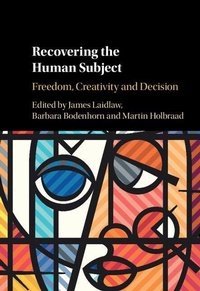
Recovering the Human Subject
Freedom, Creativity and Decision
Published on 15. February 2018
Book
Hardback
206 pages
978-1-108-42496-7 (ISBN)
Description
This volume responds to the often-proclaimed 'death of the subject' in post-structuralist theorizing, and to calls from across the social sciences for 'post-humanist' alternatives to liberal humanism in a distinctively anthropological manner. It asks: can we use the intellectual resources developed in those approaches and debates to reconstruct a new account of how individual human subjects are contingently put together in diverse historical and ethnographic contexts? Anthropologists know that the people they work with think in terms of particular, distinctive, individual human personalities, and that in times of change and crisis these individuals matter crucially to how things turn out. The volume features a classic essay by Caroline Humphrey, 'Reassembling individual subjects', that provides a focus for the debate, and it brings together a distinguished collection of essays, which exhibit a range of theoretical approaches and rich and varied ethnography.
Reviews / Votes
'This collection is something of a Festschrift. It justly highlights Caroline Humphrey's seminal thoughts on the anthropology of sociocultural dynamics and their ethical inflections. All of the contributors pay homage to Humphrey's special gifts in synthesizing the philosophical and the ethnographic, her conceptual originality and, above all, her acute critical reflections on the limitations and incautiousness of the post-humanist turn in social and cultural thought. Yet, it's a Festschrift with a twist. The distinguished scholars whose essays appear in the collection don't rest with paeans. They instead supplement and enlarge Humphrey's insights. In every instance, they demonstrate that those insights enrich anthropological conversations already ongoing, but also open doors to anthropological conversations yet to come. The result is a must-read - analytically sparkling and elegantly composed from start to finish.' James D. FaubionMore details
Language
English
Place of publication
Cambridge
United Kingdom
Target group
Professional and scholarly
Illustrations
Worked examples or Exercises
Dimensions
Height: 235 mm
Width: 157 mm
Thickness: 16 mm
Weight
459 gr
ISBN-13
978-1-108-42496-7 (9781108424967)
Copyright in bibliographic data and cover images is held by Nielsen Book Services Limited or by the publishers or by their respective licensors: all rights reserved.
Schweitzer Classification
Other editions
Additional editions
E-Book
02/2018
Cambridge University Press
€73.99
Available for download
James Laidlaw | Barbara Bodenhorn | Martin Holbraad
Recovering the Human Subject
Freedom, Creativity and Decision
E-Book
01/2018
Cambridge University Press
€88.99
Available for download

James Laidlaw | Barbara Bodenhorn | Martin Holbraad
Recovering the Human Subject
Freedom, Creativity and Decision
Book
Cambridge University Press
€61.39
The article will not be published
Persons
James Laidlaw is the William Wyse Professor of Social Anthropology and a Fellow of King's College at the University of Cambridge. His most recent book is The Subject of Virtue: An Anthropology of Ethics and Freedom (Cambridge, 2014). Barbara Bodenhorn is a former Newton Trust Lecturer in Social Anthropology and is currently Fellow Emerita of Pembroke College at the University of Cambridge. She is co-editor of An Anthropology of Names and Naming (Cambridge, 2006). Martin Holbraad is Professor of Social Anthropology at University College London. He is author of Truth in Motion: The Recursive Anthropology of Cuban Divination (2012), and co-author of The Ontological Turn: An Anthropological Exposition (Cambridge, 2017).
Content
1. Introduction: freedom, creativity, and decision in recovering human subject Barbara Bodenhorn, Martin Holbraad and James Laidlaw; 2. Reassembling individual subjects: events and decisions in troubled times Caroline Humphrey; Part I. Decision: 3. On singularity and the event: further reflections on the ordinary Veena Das; 4. Apathy and revolution: temporal sensibilities in contemporary Mongolia Lars Hojer; 5. Apparitions of the Virgin Mary as decision-events Agnieszka Halemba; Part II. Freedom: 6. Incidental connections: freedom and urban life in Mongolia Morten Axel Pedersen; 7. The return to slavery? Nostalgia and a new generation of escape in Southwest China Katherine Swancutt (???) and Jiarimuji (????); Part III. Creativity: 8. Paradoxical pedagogies and humanist double binds Matei Candea; 9. Where in the world are values? Exemplarity, morality, and social process Joel Robbins.