

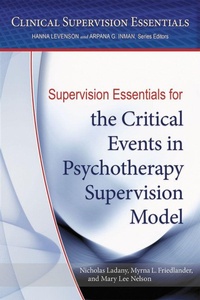
Supervision Essentials for the Critical Events in Psychotherapy Supervision Model
Published on 18. April 2016
Book
Paperback/Softback
184 pages
978-1-4338-2251-3 (ISBN)
Description
Many supervisors need help navigating challenging dilemmas and conflicts that arise in supervision of trainees, such as addressing skill deficits and competency concerns, working through role conflicts, and resolving gender or ethnicity-related misunderstandings. Because these interpersonal conflicts can be so challenging, however, they often represent a golden opportunity for real progress.
This book presents a process model with specific strategies-such as exploration of feelings, focus on self-efficacy, and attention to parallel processes-that together enable supervisors and trainees to successfully resolve the problem at hand and achieve lasting success.
This book presents a process model with specific strategies-such as exploration of feelings, focus on self-efficacy, and attention to parallel processes-that together enable supervisors and trainees to successfully resolve the problem at hand and achieve lasting success.
More details
Series
Language
English
Place of publication
Washington DC
United States
Target group
Professional and scholarly
Product notice
Paperback (trade)
Dimensions
Height: 229 mm
Width: 152 mm
Thickness: 8 mm
Weight
227 gr
ISBN-13
978-1-4338-2251-3 (9781433822513)
Copyright in bibliographic data and cover images is held by Nielsen Book Services Limited or by the publishers or by their respective licensors: all rights reserved.
Schweitzer Classification
Persons
Nicholas Ladany, PhD, is the dean of the School of Leadership and Education Sciences at the University of San Diego. He previously served as dean of the School of Education and Counseling Psychology at Santa Clara University in Santa Clara, California director of the Counseling Program at Loyola Marymount University in Los Angeles, California chair of the Department of Education and Human Services and program coordinator and director of doctoral training of the Counseling Psychology Program at Lehigh University in Bethlehem, Pennsylvania and has served as a faculty member at Temple University and the University of Maryland, College Park.
He received his doctorate from the University at Albany, State University of New York, in 992. Dr. Ladany has more than 8 publications and has conducted more than 24 national and international presentations in more than 2 countries in the area of counseling and psychotherapy supervision and training. In particular, his primary research interest and activity include such issues as the working alliance, self-disclosures and nondisclosures, multicultural training, ethics, and social justice.
He has served as an associate editor of Psychotherapy: Theory, Research, Practice, and Training and as a member of the editorial boards of the Journal of Counseling Psychology, The Counseling Psychologist, and Counselor Education and Supervision. He has published five books, including: Practicing Counseling and Psychotherapy: Insights From Trainees, Clients, and Supervisors Critical Events in Psychotherapy Supervision: An Interpersonal Approach and Counselor Supervision (4th ed.).
Myrna L. Friedlander, PhD, is a professor in the Counseling Psychology PhD program at the University at Albany, State University of New York, where she served as training director from 999 to 2 .
She has supervised master's and doctoral students for more than 35 years and published more than 4 book chapters and journal articles, including several self-report instruments and observational coding systems, primarily related to the processes of psychotherapy and supervision. In 2 she co-authored Therapeutic Alliances With Couples and Families: An Empirically Informed Guide to Practice.
A fellow of APA, Dr. Friedlander has served on the editorial boards of six journals and received awards for her lifetime contribution to research by the University at Albany, APA Division 7 (Society of Counseling Psychology), and the American Family Therapy Association. A licensed psychologist in New York State, she has been in independent practice for more than 3 years.
Mary Lee Nelson, PhD, is retired and serving as an adjunct professor at the University of Missouri amp ndash St. Louis, where she teaches supervision theory, research, and practice. She previously was visiting professor of counseling and family therapy at the University of Missouri amp ndash St. Louis professor and department chair of counseling psychology at the University of Wisconsin amp ndash Madison and associate professor of counseling in educational psychology at the University of Washington.
Dr. Nelson also served as staff psychologist in student counseling services at the University of Oregon, University of Washington, and University of Missouri amp ndash St. Louis and maintained a private practice in Seattle, Washington. She currently is a licensed psychologist in the state of Missouri.
Dr. Nelson conducted research and published articles on interpersonal process in supervision for more than 2 years. She has served on the editorial boards of The Counseling Psychologist, Psychotherapy Research, The Clinical Supervisor, and the Journal of Counseling and Development.
He received his doctorate from the University at Albany, State University of New York, in 992. Dr. Ladany has more than 8 publications and has conducted more than 24 national and international presentations in more than 2 countries in the area of counseling and psychotherapy supervision and training. In particular, his primary research interest and activity include such issues as the working alliance, self-disclosures and nondisclosures, multicultural training, ethics, and social justice.
He has served as an associate editor of Psychotherapy: Theory, Research, Practice, and Training and as a member of the editorial boards of the Journal of Counseling Psychology, The Counseling Psychologist, and Counselor Education and Supervision. He has published five books, including: Practicing Counseling and Psychotherapy: Insights From Trainees, Clients, and Supervisors Critical Events in Psychotherapy Supervision: An Interpersonal Approach and Counselor Supervision (4th ed.).
Myrna L. Friedlander, PhD, is a professor in the Counseling Psychology PhD program at the University at Albany, State University of New York, where she served as training director from 999 to 2 .
She has supervised master's and doctoral students for more than 35 years and published more than 4 book chapters and journal articles, including several self-report instruments and observational coding systems, primarily related to the processes of psychotherapy and supervision. In 2 she co-authored Therapeutic Alliances With Couples and Families: An Empirically Informed Guide to Practice.
A fellow of APA, Dr. Friedlander has served on the editorial boards of six journals and received awards for her lifetime contribution to research by the University at Albany, APA Division 7 (Society of Counseling Psychology), and the American Family Therapy Association. A licensed psychologist in New York State, she has been in independent practice for more than 3 years.
Mary Lee Nelson, PhD, is retired and serving as an adjunct professor at the University of Missouri amp ndash St. Louis, where she teaches supervision theory, research, and practice. She previously was visiting professor of counseling and family therapy at the University of Missouri amp ndash St. Louis professor and department chair of counseling psychology at the University of Wisconsin amp ndash Madison and associate professor of counseling in educational psychology at the University of Washington.
Dr. Nelson also served as staff psychologist in student counseling services at the University of Oregon, University of Washington, and University of Missouri amp ndash St. Louis and maintained a private practice in Seattle, Washington. She currently is a licensed psychologist in the state of Missouri.
Dr. Nelson conducted research and published articles on interpersonal process in supervision for more than 2 years. She has served on the editorial boards of The Counseling Psychologist, Psychotherapy Research, The Clinical Supervisor, and the Journal of Counseling and Development.
Content
Foreword to the Clinical Supervision Essentials Series
Introduction
Overview of the Critical Events Model
Ambiguity and Conflict in the Supervision Relationship: It's All About the Roles!
Addressing Skill Difficulties, Deficits, and Competency Concerns
Working Through Parallel Processes and Heightening Multicultural Awareness: Two Critical Events for the Price of One
Using the Critical Events Model in Practice and Training
Suggested Readings
References
Index
About the Authors
Introduction
Overview of the Critical Events Model
Ambiguity and Conflict in the Supervision Relationship: It's All About the Roles!
Addressing Skill Difficulties, Deficits, and Competency Concerns
Working Through Parallel Processes and Heightening Multicultural Awareness: Two Critical Events for the Price of One
Using the Critical Events Model in Practice and Training
Suggested Readings
References
Index
About the Authors