

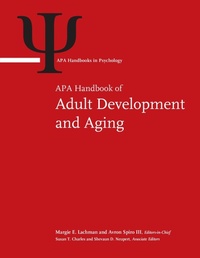
APA Handbook of Adult Development and Aging Volume 1
Volume 1
Will be published approx. on 30. June 2026
Book
Hardback
814 pages
978-1-4338-4093-7 (ISBN)
Description
The study of adult development and aging is a rapidly growing field, as the older adult population continues to increase. This handbook provides a comprehensive overview of adult development and aging, including theory and methods, biological factors and health, personality and individual differences, cognition, mental health and clinical issues, variability and diversity in development, and social and contextual factors.
Each chapter provides a state-of-the-art review of a different domain of adult development and aging and applies a lifespan developmental lens to the topic, addressing aspects of continuity and change in biopsychosocial processes across multiple aspects of adult development, with an emphasis on midlife and later adulthood. Distinguished scholars and researchers included in this handbook contribute a broad variety of perspectives, approaches, and methods, demonstrating the heterogeneity and diversity of adult development and aging. The volume provides foundational research and explication of theories as well as insight into current topics of growing importance within the field, such as alternative therapies including mindfulness and meditation; technology support for aging adults; the health of LGBTQ+ older adults; health inequities related to race, ethnicity, socioeconomic status, and other sociocultural factors; cultural variability in aging; and addressing ageism.
Each chapter provides a state-of-the-art review of a different domain of adult development and aging and applies a lifespan developmental lens to the topic, addressing aspects of continuity and change in biopsychosocial processes across multiple aspects of adult development, with an emphasis on midlife and later adulthood. Distinguished scholars and researchers included in this handbook contribute a broad variety of perspectives, approaches, and methods, demonstrating the heterogeneity and diversity of adult development and aging. The volume provides foundational research and explication of theories as well as insight into current topics of growing importance within the field, such as alternative therapies including mindfulness and meditation; technology support for aging adults; the health of LGBTQ+ older adults; health inequities related to race, ethnicity, socioeconomic status, and other sociocultural factors; cultural variability in aging; and addressing ageism.
More details
Series
Language
English
Place of publication
Washington DC
United States
Target group
Professional and scholarly
Product notice
sewn/stitched
Cloth over boards
Dimensions
Height: 279 mm
Width: 216 mm
ISBN-13
978-1-4338-4093-7 (9781433840937)
Copyright in bibliographic data and cover images is held by Nielsen Book Services Limited or by the publishers or by their respective licensors: all rights reserved.
Schweitzer Classification
Persons
Margie E. Lachman, PhD, the Minnie and Harold Fierman Professor of Psychology at Brandeis University, is director of the Lifespan Developmental Psychology Lab and the Boston Roybal Center for Active Lifestyle Interventions. With funding from the National Institute on Aging, her current work focuses on identifying modifiable factors that can protect against, minimize, or compensate for declines in cognition and health. Dr. Lachman is a Fellow of the Gerontological Society of America (GSA) and Division 20 (Adult Development and Aging) of the American Psychological Association (APA). She received the Distinguished Research Achievement Award from APA Division 20 in 2003, the Distinguished Career Contribution to Gerontology Award in Behavioral and Social Sciences (BSS) from the GSA in 2015, and the Distinguished Mentorship in Gerontology Award from the GSA BSS in 2021.
Avron (Ron) Spiro III, PhD, is research professor of epidemiology at Boston University School of Public Health and of psychiatry at Boston University Chobanian and Avedisian School of Medicine. He is a research health scientist at Veterans Affairs Boston Healthcare System, where he serves as associate director of the Normative Aging Study at the Massachusetts Veterans Epidemiology and Research Information Center; study director at the Boston Cooperative Studies Coordinating Center; and codirector of the Stress, Health and Aging Research Program. Dr. Spiro is a Fellow of Divisions 5 (Quantitative and Qualitative Methods) and 20 (Adult Development and Aging) of the American Psychological Association, and of the Gerontological Society of America.
Susan T. Charles, PhD, is professor of psychological science and nursing science, and associate dean of academic programs in the School of Social Ecology at the University of California-Irvine. Her research examines social and socioemotional processes across the adult lifespan, and how they are related to cognitive, physical, and mental health, with a focus on theories of socioemotional aging. She is a Fellow of the Gerontological Society of America and the Association for Psychological Science, and her work has been continually funded by the National Institutes of Health for over 2 decades.
Shevaun D. Neupert, PhD, is professor in the Department of Psychology at North Carolina State University. Her work focuses on contextual and individual differences in processes that occur before, during, and after stressors, and the connection of these processes with health outcomes across the adult lifespan. She has received the postdoctoral research award from American Psychological Association (APA) Division 20 (Adult Development and Aging), and at NC State she has received the Outstanding Graduate Professor award, designation as a University Faculty Scholar, and induction into the Academy of Outstanding Teachers. She is a Fellow of APA Division 20 and the Gerontological Society of America.
Avron (Ron) Spiro III, PhD, is research professor of epidemiology at Boston University School of Public Health and of psychiatry at Boston University Chobanian and Avedisian School of Medicine. He is a research health scientist at Veterans Affairs Boston Healthcare System, where he serves as associate director of the Normative Aging Study at the Massachusetts Veterans Epidemiology and Research Information Center; study director at the Boston Cooperative Studies Coordinating Center; and codirector of the Stress, Health and Aging Research Program. Dr. Spiro is a Fellow of Divisions 5 (Quantitative and Qualitative Methods) and 20 (Adult Development and Aging) of the American Psychological Association, and of the Gerontological Society of America.
Susan T. Charles, PhD, is professor of psychological science and nursing science, and associate dean of academic programs in the School of Social Ecology at the University of California-Irvine. Her research examines social and socioemotional processes across the adult lifespan, and how they are related to cognitive, physical, and mental health, with a focus on theories of socioemotional aging. She is a Fellow of the Gerontological Society of America and the Association for Psychological Science, and her work has been continually funded by the National Institutes of Health for over 2 decades.
Shevaun D. Neupert, PhD, is professor in the Department of Psychology at North Carolina State University. Her work focuses on contextual and individual differences in processes that occur before, during, and after stressors, and the connection of these processes with health outcomes across the adult lifespan. She has received the postdoctoral research award from American Psychological Association (APA) Division 20 (Adult Development and Aging), and at NC State she has received the Outstanding Graduate Professor award, designation as a University Faculty Scholar, and induction into the Academy of Outstanding Teachers. She is a Fellow of APA Division 20 and the Gerontological Society of America.
Content
Editorial Board
About the Editors-in-Chief
About the Associate Editors
Contributors
A Note From the Publisher
Introduction
Part I. Theory and Methods
Chapter 1. Current Psychological Theories and Models of Aging
Susan T. Charles and Joseph A. Mikels
Chapter 2. Developmental Methodology: Macro Perspectives
Kevin J. Grimm and Matt L. Miller
Chapter 3. Understanding Development Over Micro-Timescales
Stacey B. Scott, Samantha S. Corley, and Kelly A. Romano
Chapter 4. Childhood Socioeconomic Antecedents of Adult Health and Aging in a Rapidly Changing World: Toward a Theoretically Rooted Actionable Knowledge
Thomas E. Fuller-Rowell and Colby Leonard
Chapter 5. Studying Adult Development and Aging the Long Way: 100 Years of U.S. Longitudinal Studies of Aging
Avron Spiro III and Robert J. Waldinger
Chapter 6. Open Science, Replication, and Reproducibility in Psychological Aging Research: The Case of Emotion Research
Derek M. Isaacowitz and Hannah E. Wolfe
Part II. Biological Factors and Health
Chapter 7. Biological Aging
Tara L. Gruenewald
Chapter 8. Health-Promoting Behaviors and Lifestyles in Adulthood
Nicholas A. Turiano, Damaris Aschwanden, and Sarah J. Miller
Chapter 9. Age-Related Changes to Sensation and Perception
Jennifer L. Campos, Karen Z. H. Li, Natalie A. Phillips, M. Kathleen Pichora-Fuller, and Walter Wittich
Chapter 10. Stress and Biological Aging
Agus Surachman, Elissa Hamlat, and Elissa Epel
Chapter 11. Genetics and Epigenetics in Adulthood and Aging
Chandra A. Reynolds
Part III. Personality and Individual Differences
Chapter 12. Personality Change and Development in Adulthood
Daniel K. Mroczek, Eileen K. Graham, Tomiko Yoneda, and Jing Luo
Chapter 13. Psychosocial Factors and Health: Toward a Psychosocial Prescription for Healthy Aging
Margie E. Lachman and Shevaun D. Neupert
Chapter 14. Subjective Views of Aging
Manfred Diehl
Chapter 15. Motivation and Goal Development Across the Adult Lifespan: Goal Engagement, Disengagement, and Adjustment
Jutta Heckhausen, Carsten Wrosch, Jacob Shane, and Richard Schulz
Chapter 16. Emotion Regulation Across Adulthood: From Me to Us?
Claudia M. Haase
Chapter 17. The Daily Stress of Adult Development
David M. Almeida, Jennifer Piazza, Jacquie Mogle, Kelly E. Cichy, and Robert S. Stawski
Part IV. Cognition
Chapter 18. Cognitive Changes in Adulthood and Aging
Christopher Hertzog
Chapter 19. Peering Into the Mind of the Perceiver: Age Differences in Social Cognitive Abilities
Anne C. Krendl and Lucas J. Hamilton
Chapter 20. Wisdom and Age: A Complex Association
Ute Kunzmann
Chapter 21. Multiple Facets of Brain Aging: Associations With Age-Related Cognitive Changes
Lars Nyberg and Nina Karalija
Chapter 22. Neurocognitive Disorders, Alzheimer's Disease, and Related Disorders
Daniel A. Nation
Chapter 23. Cognitive Reserve and Resilience
Laura B. Zahodne and Kiana A. Scambray
Part V. Mental Health and Clinical Issues
Chapter 24. Genetic and Environmental Influences on Health in Adulthood and Aging
Robert F. Krueger, Colin D. Freilich, and Susan C. South
Chapter 25. Depression and Anxiety in Adulthood
Amy Fiske, Montgomery T. Owsiany, Amanda R. W. Steiner, and Julie Loebach Wetherell
Chapter 26. Deciphering Resilience: Frameworks for Study and Future Research
Frank J. Infurna and Nutifafa E. Y. Dey
Chapter 27. Clinical Geropsychology
Rebecca S. Allen, Shayne S.-H. Lin, Timothy K. Ly, and Michael R. Buxton
Chapter 28. Alternative Therapies, Mindfulness, and Meditation
Paul Verhaeghen, Grazia Mirabito, and Shelley N. Aikman
Part VI. Variability and Diversity in Development
Chapter 29. Why Historical Context Matters for Adult Development and Aging
Johanna Drewelies, Nilam Ram, and Denis Gerstorf
Chapter 30. Variability and Diversity in Adult Development: Cross-Cultural Perspectives
Nicole Long Ki Fung, Hongmei Lin, Hanyu Zhang, and Helene H. Fung
Chapter 31. Racial and Ethnic Health Inequities in Middle-Aged and Older Adults
Adolfo G. Cuevas, Ruijia Chen, Danielle M. Krobath, Patrick J. Smith, Michael V. Stanton, Agus Surachman, and Haowei Wang
Chapter 32. Health and Well-Being in Queer Older Adults: Overcoming a Lifetime of Stigma
Toni L. Bisconti, Michael T. Vale, and Aimee Trunko
Part VII. Social and Contextual Factors
Chapter 33. Worker Aging and Retirement
Mo Wang, Zhefan Huang, Chengquan Huang, and Junhui Yang
Chapter 34. Close Ties, Weak Ties, and Social Integration Across Adulthood
Karen L. Fingerman, Nicole Richards, and Susan T. Charles
Chapter 35. A Cross-Cultural, Life Course Approach to Understanding Ageism
Liat Ayalon
Chapter 36. Family Caregiving: Theory, Research, and Practice
Steven H. Zarit and Allison R. Heid
Chapter 37. The Impact of Religion and Congregational Social Support on Well-Being and Mental Health in Adulthood and Later Life
Robert Joseph Taylor, Ann W. Nguyen, Meredith O. Hope, and Linda M. Chatters
Chapter 38. Loneliness: Age Differences in Measurement, Risk Factors, and Associations With Health
Louise C. Hawkley, Susanne Buecker, and Maike Luhmann
Chapter 39. Technology Support for Aging Adults
Sara J. Czaja and Walter R. Boot
Chapter 40. Aging in Context: A Synthesis of Accumulated Conceptualizations, Insights From Empirical Research, and Their Implications
Hans-Werner Wahl and Denis Gerstorf
Index
About the Editors-in-Chief
About the Associate Editors
Contributors
A Note From the Publisher
Introduction
Part I. Theory and Methods
Chapter 1. Current Psychological Theories and Models of Aging
Susan T. Charles and Joseph A. Mikels
Chapter 2. Developmental Methodology: Macro Perspectives
Kevin J. Grimm and Matt L. Miller
Chapter 3. Understanding Development Over Micro-Timescales
Stacey B. Scott, Samantha S. Corley, and Kelly A. Romano
Chapter 4. Childhood Socioeconomic Antecedents of Adult Health and Aging in a Rapidly Changing World: Toward a Theoretically Rooted Actionable Knowledge
Thomas E. Fuller-Rowell and Colby Leonard
Chapter 5. Studying Adult Development and Aging the Long Way: 100 Years of U.S. Longitudinal Studies of Aging
Avron Spiro III and Robert J. Waldinger
Chapter 6. Open Science, Replication, and Reproducibility in Psychological Aging Research: The Case of Emotion Research
Derek M. Isaacowitz and Hannah E. Wolfe
Part II. Biological Factors and Health
Chapter 7. Biological Aging
Tara L. Gruenewald
Chapter 8. Health-Promoting Behaviors and Lifestyles in Adulthood
Nicholas A. Turiano, Damaris Aschwanden, and Sarah J. Miller
Chapter 9. Age-Related Changes to Sensation and Perception
Jennifer L. Campos, Karen Z. H. Li, Natalie A. Phillips, M. Kathleen Pichora-Fuller, and Walter Wittich
Chapter 10. Stress and Biological Aging
Agus Surachman, Elissa Hamlat, and Elissa Epel
Chapter 11. Genetics and Epigenetics in Adulthood and Aging
Chandra A. Reynolds
Part III. Personality and Individual Differences
Chapter 12. Personality Change and Development in Adulthood
Daniel K. Mroczek, Eileen K. Graham, Tomiko Yoneda, and Jing Luo
Chapter 13. Psychosocial Factors and Health: Toward a Psychosocial Prescription for Healthy Aging
Margie E. Lachman and Shevaun D. Neupert
Chapter 14. Subjective Views of Aging
Manfred Diehl
Chapter 15. Motivation and Goal Development Across the Adult Lifespan: Goal Engagement, Disengagement, and Adjustment
Jutta Heckhausen, Carsten Wrosch, Jacob Shane, and Richard Schulz
Chapter 16. Emotion Regulation Across Adulthood: From Me to Us?
Claudia M. Haase
Chapter 17. The Daily Stress of Adult Development
David M. Almeida, Jennifer Piazza, Jacquie Mogle, Kelly E. Cichy, and Robert S. Stawski
Part IV. Cognition
Chapter 18. Cognitive Changes in Adulthood and Aging
Christopher Hertzog
Chapter 19. Peering Into the Mind of the Perceiver: Age Differences in Social Cognitive Abilities
Anne C. Krendl and Lucas J. Hamilton
Chapter 20. Wisdom and Age: A Complex Association
Ute Kunzmann
Chapter 21. Multiple Facets of Brain Aging: Associations With Age-Related Cognitive Changes
Lars Nyberg and Nina Karalija
Chapter 22. Neurocognitive Disorders, Alzheimer's Disease, and Related Disorders
Daniel A. Nation
Chapter 23. Cognitive Reserve and Resilience
Laura B. Zahodne and Kiana A. Scambray
Part V. Mental Health and Clinical Issues
Chapter 24. Genetic and Environmental Influences on Health in Adulthood and Aging
Robert F. Krueger, Colin D. Freilich, and Susan C. South
Chapter 25. Depression and Anxiety in Adulthood
Amy Fiske, Montgomery T. Owsiany, Amanda R. W. Steiner, and Julie Loebach Wetherell
Chapter 26. Deciphering Resilience: Frameworks for Study and Future Research
Frank J. Infurna and Nutifafa E. Y. Dey
Chapter 27. Clinical Geropsychology
Rebecca S. Allen, Shayne S.-H. Lin, Timothy K. Ly, and Michael R. Buxton
Chapter 28. Alternative Therapies, Mindfulness, and Meditation
Paul Verhaeghen, Grazia Mirabito, and Shelley N. Aikman
Part VI. Variability and Diversity in Development
Chapter 29. Why Historical Context Matters for Adult Development and Aging
Johanna Drewelies, Nilam Ram, and Denis Gerstorf
Chapter 30. Variability and Diversity in Adult Development: Cross-Cultural Perspectives
Nicole Long Ki Fung, Hongmei Lin, Hanyu Zhang, and Helene H. Fung
Chapter 31. Racial and Ethnic Health Inequities in Middle-Aged and Older Adults
Adolfo G. Cuevas, Ruijia Chen, Danielle M. Krobath, Patrick J. Smith, Michael V. Stanton, Agus Surachman, and Haowei Wang
Chapter 32. Health and Well-Being in Queer Older Adults: Overcoming a Lifetime of Stigma
Toni L. Bisconti, Michael T. Vale, and Aimee Trunko
Part VII. Social and Contextual Factors
Chapter 33. Worker Aging and Retirement
Mo Wang, Zhefan Huang, Chengquan Huang, and Junhui Yang
Chapter 34. Close Ties, Weak Ties, and Social Integration Across Adulthood
Karen L. Fingerman, Nicole Richards, and Susan T. Charles
Chapter 35. A Cross-Cultural, Life Course Approach to Understanding Ageism
Liat Ayalon
Chapter 36. Family Caregiving: Theory, Research, and Practice
Steven H. Zarit and Allison R. Heid
Chapter 37. The Impact of Religion and Congregational Social Support on Well-Being and Mental Health in Adulthood and Later Life
Robert Joseph Taylor, Ann W. Nguyen, Meredith O. Hope, and Linda M. Chatters
Chapter 38. Loneliness: Age Differences in Measurement, Risk Factors, and Associations With Health
Louise C. Hawkley, Susanne Buecker, and Maike Luhmann
Chapter 39. Technology Support for Aging Adults
Sara J. Czaja and Walter R. Boot
Chapter 40. Aging in Context: A Synthesis of Accumulated Conceptualizations, Insights From Empirical Research, and Their Implications
Hans-Werner Wahl and Denis Gerstorf
Index