

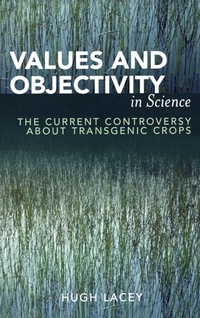
Values and Objectivity in Science
The Current Controversy about Transgenic Crops
Published on 28. June 2005
Book
Hardback
304 pages
978-0-7391-1045-4 (ISBN)
Description
Values and Objectivity in Science illuminates many of the ethical issues that arise concerning scientific practices and applications, offering an account of how social and ethical values play important roles within science. Hugh Lacey develops and clarifies his previous analysis by arguing for the importance of research being conducted under a plurality of strategies, contrasting "materialist strategies" with "agro-ecological strategies." By displaying the structure of current ethical controversies about the legitimacy of planting transgenic crops, this book illustrates that sound thinking on such issues must be grounded on an adequate philosophy of science, one that can clearly distinguish between the proper and the distorting roles of values in scientific practices. This book will prove useful for science students and practitioners as well as those interested in the growing ethical questions involved in scientific practices.
Reviews / Votes
This book successfully combines an original account of values and objectivity in science with an application to the case of transgenic crops. It brings careful analysis to a politically charged set of issues, and shows through this case study how philosophy of science has global import. -- Miriam Solomon, Professor of Philosophy, Temple University Hugh Lacey is one of our most careful thinkers about the interrelations of social values and scientific inquiry. Values and Objectivity in Science updates his philosophical account of these relations and then applies them to illuminating a series of issues in contemporary agricultural science. It is a timely and welcome volume, indeed. -- Helen Longino, University of Minnesota Hugh Lacey places his thoughtful and well-researched observations on the controversy that has surrounded the development of agricultural biotechnology within a new philosophical interpretation of objectivity and values in science. The result is a "must read" for anyone with a serious interest in transgenic crops, including working scientists, science administrators, regulators and scholars of this debate. His approach is also an important contribution to science studies (and especially the philosophy of science) that demonstrates how lack of attention to the philosophical dimensions of scientific inquiry and science policy can blossom into full blown public debate. -- Paul B. Thompson, Michigan State University, W.K. Kellogg Professor of Agricultural, Food, and Community Ethics This book manifests long and serious engagement with the pressing issue of identifying the impact of social values on the pursuit of science, and then it provides informed arguments for separating legitimate and useful impacts from illegitimate and ideological ones. Its treatment of debates about multicultural science is especially sophisticated. -- Michael R. Matthews, University of New South Wales Hugh Lacey's new book should be required reading for anyone interested in questions of values (or ethics) and their role in science. His discussion of research strategies also brings new insights concerning the nature and practice of science itself. The second part on transgenic agriculture is a brilliant and exemplary case study. -- Peter Machamer, University of PittsburghMore details
Language
English
Place of publication
United States
Publishing group
Bloomsbury Publishing Plc
Dimensions
Height: 235 mm
Width: 157 mm
Thickness: 22 mm
Weight
647 gr
ISBN-13
978-0-7391-1045-4 (9780739110454)
Copyright in bibliographic data and cover images is held by Nielsen Book Services Limited or by the publishers or by their respective licensors: all rights reserved.
Schweitzer Classification
Other editions
Additional editions
E-Book
06/2005
1st Edition
Lexington Books
€47.49
Available for download
E-Book
06/2005
1st Edition
Bloomsbury eBooks US
€47.49
Available for download
Person
Hugh Lacey is Emeritus Professor of Philosophy at Swarthmore College.
Content
Chapter 1 Introduction
Part 2 Part I: The Interplay of Science and Values
Chapter 3 How the Sciences Are and Are Not Value Free
Chapter 4 Objectivity and Serving Human Well-Being
Chapter 5 The Distinction Between Cognitive and Social Values
Chapter 6 Incommensurability and "Multicultural Science"
Chapter 7 The Social Location of Scientific Practices
Part 8 Part II: Current Controversy About Transgenic Crops
Chapter 9 The Controversy ABout Transgenics: Structure and Opposing Interests
Chapter 10 Strategies for Research in Agricultural Science
Chapter 11 Benefits of Using Transgenics
Chapter 12 Environmental Risks of the Development and Use of Transgenics
Chapter 13 Alternative ("Better") Forms of Farming
Part 14 Prolegomenon to Empirical Investigation of Future Social Possibilities
Chapter 15 The Socio-Cultural Location of Alternatives to Transgenics
Part 2 Part I: The Interplay of Science and Values
Chapter 3 How the Sciences Are and Are Not Value Free
Chapter 4 Objectivity and Serving Human Well-Being
Chapter 5 The Distinction Between Cognitive and Social Values
Chapter 6 Incommensurability and "Multicultural Science"
Chapter 7 The Social Location of Scientific Practices
Part 8 Part II: Current Controversy About Transgenic Crops
Chapter 9 The Controversy ABout Transgenics: Structure and Opposing Interests
Chapter 10 Strategies for Research in Agricultural Science
Chapter 11 Benefits of Using Transgenics
Chapter 12 Environmental Risks of the Development and Use of Transgenics
Chapter 13 Alternative ("Better") Forms of Farming
Part 14 Prolegomenon to Empirical Investigation of Future Social Possibilities
Chapter 15 The Socio-Cultural Location of Alternatives to Transgenics