

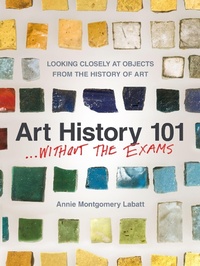
Art History 101 . . . Without the Exams
Looking Closely at Objects from the History of Art
Will be published approx. on 20. October 2022
Book
Paperback/Softback
536 pages
978-1-59534-878-4 (ISBN)
Description
Why is something a masterpiece? Art History 101 . . . Without the Exams is about revisiting famous works of art that we may have studied in an art history class or seen in a textbook. Each discussion delves into one great masterpiece and asks the questions that help us understand how it has shaped history. What is the piece about? How did the original owner look at this piece? Where was it originally placed? Why is it in this museum now? How did it get famous? From the sixth-century mosaics of Ravenna and the painted bulls of Altamira, Spain, dated 12,500 BCE, to an incense burner from twelfth-century Seljuk Iran, frescoes from a Late Byzantine funerary chapel, and masterworks by Botticelli, Caravaggio, Monet, and Sargent, this book shows readers how to look closely. It welcomes us to the joy of art history-but without the papers, notes, and exams.
Reviews / Votes
"Dr. Labatt's engaging introduction to looking at art uses a select number of great works from the prehistoric? past to the present to demonstrate what can be learned from careful looking and study. She engages readers? in thinking more deeply and broadly about the original meaning of her choices to their own times and their? relevance to current issues. Remarkably readable, her connections of works to Texas, where she gave the? talks on which the book is based, should encourage everyone to look around them and see how the art of the past is reflected in the present." - Helen C. Evans, curator,? ?Metropolitan Museum of Art"What a fun journey to travel with Annie Labatt to twenty iconic works of art! Through her words you will? engage with science and history, following the hand of the maker, engaging with the context of both today and the world into which the work was once born. Best of all, no quiz!" - Mary Miller, director, Getty Research Institute
"With this magnificent book, Annie Labatt leads the charge back to an object-centered Art History. A? rigorous scholar, university professor, gallery director, and public educator, Dr. Labatt brings an at once? ?sensitive and perceptive vision to works of art. Although the title suggests another version of Gardner's Art? Through the Ages or Janson's History of Art, the book is something more useful and enlightening: a? ?series of twenty discussions of major monuments and works of art spanning fourteen thousand years of? ?western visual art, architecture, and the arts of design. Labatt combines careful 'readings' of each work? ?or monument-with discussions of the context of each work in its period and in the wider domain of the? ?Humanities. Labatt brings an arsenal of up-to-date art historical tools to bear on her subjects. The book? ?actually does cover much of the territory of a hypothetical 'Art 101' course. Readers will be well prepared if asked to take an exam." - Marcus B. Burke, senior curator, Hispanic Society of America
"This playfully titled book is a work of great erudition. Annie Labatt is at home explaining technical? ?details in each art object, as she is in making inferences and associations anchored in the profound? ?knowledge of the world. Her words are a tour de force, commingling with the visual objects to allow? ?the reader to imagine and experience art in new and powerful ways. The result is a rare and almost phantasmagoric introduction to art history." - Meredith Woo, president, Sweet Briar College
"Perusing the paintings and reading the scholarly text, you will sense the depth and breadth of knowledge? ?Dr. Labatt gained through years of study at Yale and the Metropolitan Museum of Art in New York." - Charles Butt, chairman and president, H-E-B Grocery Company
More details
Language
English
Place of publication
San Antonio
United States
Product notice
Paperback (trade)
Illustrations
approximately 120 color and b/w images throughout
Dimensions
Height: 196 mm
Width: 147 mm
Thickness: 33 mm
Weight
862 gr
ISBN-13
978-1-59534-878-4 (9781595348784)
Copyright in bibliographic data and cover images is held by Nielsen Book Services Limited or by the publishers or by their respective licensors: all rights reserved.
Schweitzer Classification
Other editions
Additional editions
Annie Montgomery Labatt
Art History 101 . . . Without the Exams
Looking Closely at Objects from the History of Art
E-Book
09/2022
Trinity University Press
€27.49
Available for download
Person
Annie Montgomery Labatt is Associate Professor of Visual Studies and Director of Galleries and Museums at Sweet Briar College in Virginia. She graduated with High Honors from Barnard College of Columbia University in 2002, and received her PhD from Yale University in 2011. While a graduate student, she won a two-year Rome Prize at the American Academy of Rome, and was also a fellow at Harvard University's Dumbarton Oaks Research Library and Collection. She has worked at the Metropolitan Museum of Art on two major exhibitions, once as a research assistant and once as a Chester Dale Fellow. Laboratory of Images: Emerging Iconographies in 8th- and 9th- Century Rome, her study of the development of Christian imageries, is forthcoming.
Content
Introduction;
1. Prehistoric Art (13,000 BCE) - Altamira
2. Assyrian Art (883-859 BCE) - Assurnasirpal II Killing the Lions
3. Greek Art (c. 515 BCE) - The Euphronios Krater
4. Greek Art (Second century BCE) - Nike of Samothrace
5. Roman Art (Last decade of first century BCE) - Villa at Boscotrecase
6. Early Byzantine Art (c. 547) - San Vitale, Ravenna
7. Romanesque Art (1123) - Sant Climent de Tauell
8. Islamic Art (1181-82) - Incense Burner of Amir Saif al-Dunya wa'l-Din ibn
Muhammad al-Mawardi
9. Gothic Art (1239-1248) - Sainte-Chapelle
10. Late Byzantine Art (1316-1321) - The Chora Church
11. Northern Renaissance Art (1434-1436) - Jan van Eyck, The Annunciation
12. Italian Renaissance Art (1483-1485) - Botticelli, The Birth of Venus
13. Netherlandish Art (1565) - Bruegel the Elder, The Harvesters
14. Italian Baroque Art (1599-1600) - Caravaggio, The Calling of Saint Matthew
15. Dutch Baroque Art (1642) - Rembrandt, The Night Watch
16. Spanish Baroque Art (1655-60) - Velazquez, Las Hilanderas
17. Romantic Art (1818-1819) - Gericault, The Raft of the Medusa
18. Impressionism (1872) - Monet, Impression Sunrise
19. American Art (1882) - Sargent, El Jaleo
20. Modern Art (1907) - Picasso, Les Demoiselles d'Avignon
Suggested Readings
1. Prehistoric Art (13,000 BCE) - Altamira
2. Assyrian Art (883-859 BCE) - Assurnasirpal II Killing the Lions
3. Greek Art (c. 515 BCE) - The Euphronios Krater
4. Greek Art (Second century BCE) - Nike of Samothrace
5. Roman Art (Last decade of first century BCE) - Villa at Boscotrecase
6. Early Byzantine Art (c. 547) - San Vitale, Ravenna
7. Romanesque Art (1123) - Sant Climent de Tauell
8. Islamic Art (1181-82) - Incense Burner of Amir Saif al-Dunya wa'l-Din ibn
Muhammad al-Mawardi
9. Gothic Art (1239-1248) - Sainte-Chapelle
10. Late Byzantine Art (1316-1321) - The Chora Church
11. Northern Renaissance Art (1434-1436) - Jan van Eyck, The Annunciation
12. Italian Renaissance Art (1483-1485) - Botticelli, The Birth of Venus
13. Netherlandish Art (1565) - Bruegel the Elder, The Harvesters
14. Italian Baroque Art (1599-1600) - Caravaggio, The Calling of Saint Matthew
15. Dutch Baroque Art (1642) - Rembrandt, The Night Watch
16. Spanish Baroque Art (1655-60) - Velazquez, Las Hilanderas
17. Romantic Art (1818-1819) - Gericault, The Raft of the Medusa
18. Impressionism (1872) - Monet, Impression Sunrise
19. American Art (1882) - Sargent, El Jaleo
20. Modern Art (1907) - Picasso, Les Demoiselles d'Avignon
Suggested Readings