

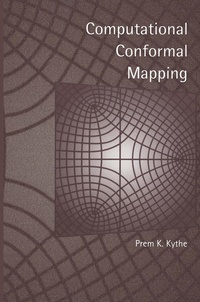
Computational Conformal Mapping
Published on 5. November 2012
Book
Paperback/Softback
XV, 462 pages
978-1-4612-7376-9 (ISBN)
Description
This book evolved out of a graduate course given at the University of New Orleans in 1997. The class consisted of students from applied mathematics andengineering. Theyhadthebackgroundofatleastafirstcourseincomplex analysiswithemphasisonconformalmappingandSchwarz-Christoffeltrans- formation, a firstcourse in numerical analysis, and good to excellent working knowledgeofMathematica* withadditionalknowledgeofsomeprogramming languages. Sincetheclasshad nobackground inIntegralEquations, thechap- tersinvolvingintegralequationformulations werenotcoveredindetail,except for Symm's integral equation which appealed to a subsetofstudents who had some training in boundary element methods. Mathematica was mostly used for computations. In fact, it simplified numerical integration and other oper- ations very significantly, which would have otherwise involved programming inFortran, C, orotherlanguageofchoice, ifclassical numericalmethods were attempted. Overview Exact solutions of boundary value problems for simple regions, such as cir- cles, squares or annuli, can be determined with relative ease even where the boundaryconditionsarerathercomplicated.
Green'sfunctionsforsuchsimple regions are known. However, for regions with complex structure the solution ofa boundary value problem often becomes more difficult, even for a simple problemsuchastheDirichletproblem. Oneapproachtosolvingthesedifficult problems is to conformally transform a given multiply connected region onto *Mathematica is a registered trade mark of Wolfram Research, Inc. ix x PREFACE simpler canonical regions. This will, however, result in change not only in the region and the associated boundary conditions but also in the governing differential equation. As compared to the simply connected regions, confor- mal mapping ofmultiply connected regions suffers from severe limitations, one of which is the fact that equal connectivity ofregions is not a sufficient condition to effect a reciprocally connected map ofone region onto another.
Green'sfunctionsforsuchsimple regions are known. However, for regions with complex structure the solution ofa boundary value problem often becomes more difficult, even for a simple problemsuchastheDirichletproblem. Oneapproachtosolvingthesedifficult problems is to conformally transform a given multiply connected region onto *Mathematica is a registered trade mark of Wolfram Research, Inc. ix x PREFACE simpler canonical regions. This will, however, result in change not only in the region and the associated boundary conditions but also in the governing differential equation. As compared to the simply connected regions, confor- mal mapping ofmultiply connected regions suffers from severe limitations, one of which is the fact that equal connectivity ofregions is not a sufficient condition to effect a reciprocally connected map ofone region onto another.
Reviews / Votes
"There are more than 75 case studies of concrete conformal maps and more than 95 end-of-chapter exercises... Accessible to graduate students...it can also serve as a handbook for scientists and engineers who want to work with conformal maps... The book is a welcome addition to the literature. Its ample supply of case studies of conformal maps between given domains and the end-of chapter exercises are particularly attractive and helpful."
--Mathematical Reviews
More details
Edition
Softcover reprint of the original 1st ed. 1998
Language
English
Place of publication
Boston
United States
Target group
Professional and scholarly
Research
Illustrations
XV, 462 p.
Dimensions
Height: 235 mm
Width: 155 mm
Thickness: 27 mm
Weight
727 gr
ISBN-13
978-1-4612-7376-9 (9781461273769)
DOI
10.1007/978-1-4612-2002-2
Schweitzer Classification
Other editions
Additional editions
Prem Kythe
Computational Conformal Mapping
Book
12/1998
Birkhauser Boston Inc
€53.49
Shipment within 15-20 days
Content
0. Introduction.- 1. Basic Concepts.- 2. Conformal Mappings.- 3. Schwarz-Christoffel Integrals.- 4. Polynomial Approximations.- 5. Nearly Circular Regions.- 6. Green's Functions.- 7. Integral Equation Methods.- 8. Theodorsen's Integral Equation.- 9. Symm's Integral Equation.- 10. Airfoils.- 11. Doubly Connected Regions.- 12. Singularities.- 13. Multiply Connected Regions.- 14. Grid Generation.- Appendix A. Cauchy P. V. Integrals.- A.1. Numerical Evaluation.- Appendix B. Green's Identities.- Appendix C. Riemann-Hilbert Problem.- C.1. Homogeneous Hilbert Problem.- C.2. Nonhomogeneous Hilbert Problem.- C.3. Riemann-Hilbert Problem.- Appendix D. Successive Approximations.- D.1. Tables.- Appendix E. Catalog of Conformal Mappings.- Bibliography 431 Notation.